Checking in with K-12 Outreach's Data & Evaluation Team
For years, the “education community” has made it a point of pride “to be ‘completely data-driven'” (The Washington Post). In fact, this idea has become enshrined in educational institutions as “a mantra of educators from the central office, to the school, to the classroom” (RAND). Emblematically, policy-makers have been encouraged to embrace a “data-driven education...renaissance” that “bring[s] a new level of technological sophistication to...school systems;” administrators have been told to collect “all forms of data” to assess progress and plan adjustments; and educators have been reminded to practice “data-driven instruction,” where they use “data about student performance” to “tailor their teaching” (Government Technology; Center for Professional Education of Teachers; HMH; Lindenwood University). There is merit in this approach. Data-driven practices can “enhanc[e] personalized learning, improv[e] assessment and feedback, optimiz[e] resource allocation and [foster] early intervention” to “directly affect student learning and school effectiveness” (EdSurge; January 2025 In the Spotlight).
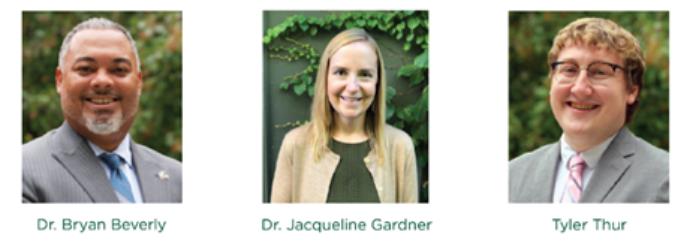
However, this emphasis on data is not riskless. Rather, some voices have raised concerns that many “organizations are drowning in numbers, dashboards, and reports,” unable to “extract real value and insights from them,” “overwhelmed by an endless stream of metrics,” and experiencing “data fatigue” where “data-driven decision-making is stifled—not by a lack of data, but by the overwhelming processes associated with accessing and interpreting it” (Barakçin, 2025). Recognizing the upsides of the faithful incorporation of education data into every K-12 function but also understanding practical barriers, the Office of K-12 Outreach has developed its own Data & Evaluation Team to support partners across Michigan (January 2025 and December 2023 In the Spotlight). Over the last few years, this K-12 Outreach subcomponent, including Dr. Jacqueline Gardner, Director of Data & Evaluation, Tyler Thur, Associate Director of Data & Evaluation, and Reis Davis, Student Data Assistant, has adopted an outreach framework that prioritizes making the incorporation of data manageable, focuses on delivering customized tools and personalized engagement, and approaches data through a different, more accessible lens – one that views different data points as components of a broader story to be told, understood, and analyzed. These threads inform all elements of its work with Michigan districts, its support of K-12 Outreach’s offerings, and its independent action research into pressing education policy controversies and practical questions. This month, In the Spotlight reviews some of the Data & Evaluation Team's recent efforts to demonstrate how this vision is implemented and how data can make a difference.
In terms of directly partnering with K-12 educators and administrators, the Data & Evaluation Team's work is visible in a few representative, though non-exhaustive, examples. First, during the 2024-25 school year, alongside Outreach Specialists Becky Stauffer and Patty Trelstad, Dr. Jacqueline Gardner provided direct support to Lansing Eastern High School during a series of professional learning sessions focused on accentuating educators’ understanding of student achievement data and their knowledge of aligned instructional strategies (February 2025 In the Spotlight). Second, throughout the 2025-26 school year, the Data & Evaluation Team has aided Grosse Pointe Academy with the development of a needs assessment that can inform future school-wide reforms. With Outreach Specialists Dr. Jamii Hitchcock and Elizabeth Donovan, this Team has reviewed previous action planning done by Grosse Pointe Academy, analyzed their school data, developed and implemented a follow-up survey instrument for educators and administrators, and supported the creation of a findings-and-recommendations blueprint. Additionally, beyond the scope of a single partner, the Data & Evaluation Team led the design and implementation of the workshop “One Lens, Many Eyes: Building Inter-Rater Reliability.” In August 2025, this event united educator evaluators for a hands-on training designed to enhance the consistency and accuracy of their evaluations in fulfillment of Michigan's Inter-Rater Reliability (IRR) requirement. Finally, across state lines, Tyler Thur was invited to lead a virtual session titled “Leading Evaluation from the Field” as part of the “ExpandED: Broadening the Understanding of Contemporary Issues in Education and Policy” series developed by the Texas Tech University Educational Leadership Policy faculty and the Center for Innovative Research in Change, Leadership, and Education (CIRCLE) (September 2025 In the Spotlight). During this presentation, he weaved together insights from various K-12 Outreach initiatives to discuss how educators can move from being agents acted upon to serving as data-driven policy entrepreneurs who leverage classroom and district data, alongside program evaluation, to support advocacy.
On top of engaging in their own outreach partnerships, the Data & Evaluation Team spent the last year supporting K-12 Outreach’s programs writ large. For one, nearly every professional learning offering from the Office of K-12 Outreach concludes with a short formative evaluation administered by this Team. In the last twelve months, insights from these surveys have helped shape the design, content, and facilitation of sessions with academic and vocational educators from the Michigan Department of Corrections, programming supporting the Michigan Consortium for Addressing Rural Education Expansion and Retention (MiCAREER) Resource Hub, policy-related professional learning opportunities like Michigan EPLP and AEPLP, and gatherings with educators and administrators at Eastpointe Community Schools. Second, the Data & Evaluation Team has backed K-12 Outreach facilitators behind the scenes in terms of generating reports and designing presentations in anticipation of data-heavy professional learning sessions. During the 2024-25 school year, this idea was especially evident in the case of K-12 Outreach’s relationship with Flint Community Schools when it came to the Fellowship of Instructional Leaders (FIL) and this program’s consideration of academic, attendance, and behavior metrics. Finally, as noted in this month’s edition of In Focus, the Data & Evaluation Team is supporting broader efforts to measure K-12 Outreach’s scope and transformative impact to better understand the importance of this work and scale up its empirically-efficacious initiatives.
Lastly, the Data & Evaluation Team’s efforts have included action research in a range of theaters to generate insights that can inform policy and practice. An example of such an area of emerging expertise relates to the educator workforce. Recently, Dr. Gardner published “Gaining A Better Understanding of Teacher Absenteeism: How Structural and Organizational Factors Impact A Teacher’s Decision to be Absent” with Dr. Chris Torres, Associate Professor of Educational Policy and Leadership at the Marsal Family School of Education at the University of Michigan, and “Bring in the Subs: A Mixed-Method Investigation of the Substitute Teacher Labor Market in Michigan” with Dr. Torres, Dr. Nathan Burroughs, Dr. Dirk Zuschlag, Dr. Rebecca Frausel, and Calandra Reichel (October 2025 Emerging Research; May 2025 Emerging Research). She also supported the development of “Closing the Opportunity Divide: Addressing Michigan’s Teacher Shortage Problem for Students Most in Need” from the Education Trust-Midwest (January 2025 Emerging Research). Similarly, Dr. Gardner and Tyler Thur, alongside Dr. Bryan Beverly, Director of the Office of K-12 Outreach, and Abigail Bies, then a K-12 Outreach Graduate Research Assistant, spent much of 2025 studying how districts were navigating the expiration of Elementary and Secondary School Emergency Relief (ESSER) funds (July 2025 Emerging Research). Following months of surveys and interviews, the researchers generated insights on various budgetary questions and identified some recommendations for administrators and policymakers via a one-pager and policy brief (K-12 Outreach 2024-25 MAPPR Grant). Additionally, they shared their reflections during an Institute for Public Policy and Social Research (IPPSR) Public Policy Forum in October 2025, via an interview on WLNS 6, and on a State of the State podcast. Of course, the Data & Evaluation Team also supported other ongoing, office-wide research projects, such as a food shocks study funded by a $10 million USDA-funded grant and an exploration of student discipline data and potentially useful interventions for educators and administrators funded by the William T. Grant Foundation and the Brady Education Foundation.
Through this direct district engagement, support of K-12 Outreach’s broader programming, and action research, the Data & Evaluation Team demonstrated, thanks to incredible partners and support from Michigan State University’s College of Education, how making data analysis manageable, customized, and approachable through narratives and storytelling can ensure that the broader movement toward data-driven decision-making in education is sustainable. In 2026, this Data & Evaluation Team is eager to continue these efforts and find new opportunities to support teachers, administrators, and education partners. For interested readers, more information is available via the Data and Evaluation Team’s website and this publication. Additionally, prospective partners can reach out to Dr. Jacqueline Gardner at swans126@msu.edu.