At many higher education institutions, students are given course surveys at the end of the semester. In these evaluations, they might answer questions such as: What did they like about the course, what did they learn and what did they think of their professors? The evaluations are critical because department, college and university leaders use them to assess the effectiveness of courses and faculty.
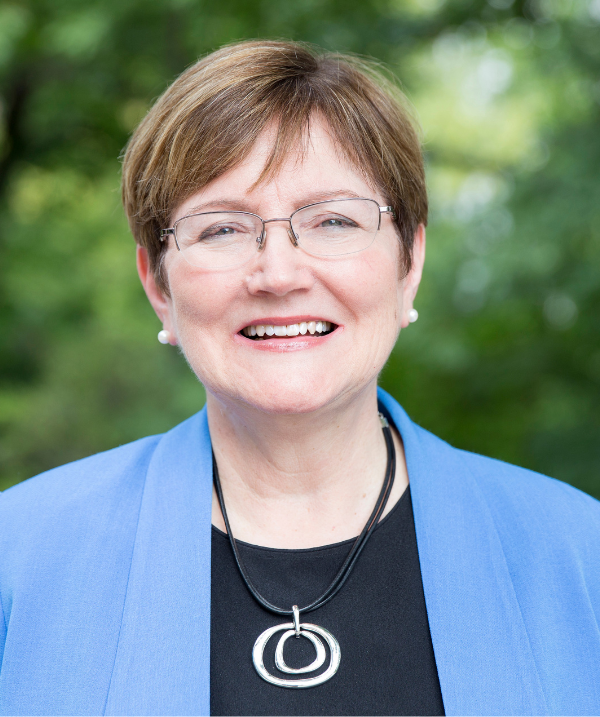
Yet, according to University Distinguished Professor Ann E. Austin, a transformed approach to teaching evaluation — one that recognizes the multiple dimensions of teaching practice and gathers input from multiple sources, including peers and instructors' self-reflections, as well as from students — could be a more productive way to improve teaching and assess faculty effectiveness.
She is the lead author of a new book, “Transforming College Teaching Evaluation: A Framework for Advancing Instructional Excellence,” published by Harvard Education Press in November 2025, an evidence-based tool to improve teaching excellence.
"The book asserts that teaching evaluation can be a significant pathway to more effective teaching and learning,” Austin said. “It can lead to better student learning outcomes, fairer recognition of faculty work, deeper conversations among colleagues about professional values and commitments and stronger institutional cultures that foster teaching and learning excellence.”
The scholars wrote the book after a seven-year study, funded by the National Science Foundation, that implemented a “model for high-quality teaching evaluation that considers seven dimensions of educational practice, spanning the full array of teaching activities inside and out of the classroom.” More than 70 departments across the University of Colorado Boulder, the University of Kansas and the University of Massachusetts, Amherst were part of the study. The scholars also drew upon decades of work from those dedicated to research on teaching and teaching evaluation at higher education institutions.
The resulting framework and principles detailed in the book will help institutions “guide and create more comprehensive, holistic, valid, and effective approaches to teaching evaluation,” Austin shared.
The book highlights new approaches to teaching evaluation that encourage individual faculty members to pursue deep reflection on their teaching and to engage with colleagues in meaningful discussions about teaching and learning processes in their departments.
Austin and her co-writers hope that the book helps leaders and stakeholders in higher education institutions use teaching evaluation as a powerful lever for strengthening the quality of teaching in higher education.
Her co-authors are Noah Finkelstein (University of Colorado Boulder), Andrea Follmer (University of Kansas), Doug Ward (University of Kansas) and Gabriela Cornejo Weaver (University of Massachusetts, Amherst).
Interested in learning more? Austin will join her co-authors on a book panel discussion sponsored by the Association of American Universities (AAU) on December 11 at 1:00 p.m. EST. Learn more and register for the Zoom conference.