MSU Professor Amelia Wenk Gotwals was a national leader on the development team for open-access science K-5 curriculum materials that integrate literacy and mathematics — now online and freely available to educators across the country and around the world.
Called OpenSciEd, the integrated materials are aligned with the national Next Generation Science Standards (NGSS) and aspects of the Common Core Mathematics and English Language Arts (ELA) standards.
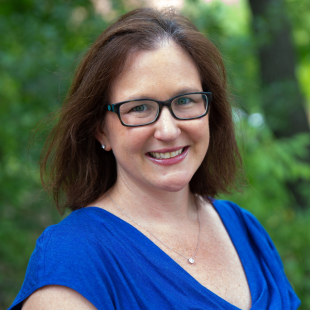
Gotwals co-led the development of all materials developed for grades K-2 with Professor Tanya S. Wright (University of Michigan). She also was the head of assessment for all K-5 materials where she coordinated and led the development of resources to support teachers in assessing students’ learning.
The efforts were funded through an $8 million grant from several foundations. MSU had about $1.8 million of the overall grant to conduct the work; Gotwals was the principal investigator representing Michigan State University. Prior to the national spring 2026 launch, the materials were piloted by at least 900 teachers in 9 states (including Michigan). In addition, all curriculum units were externally reviewed by the National Science Teacher Association and were awarded the NGSS Design Badge, denoting them as “top-rated science lessons and units designed for [NGSS].”
A SOLID foundation
The roots of Gotwals’ contribution date to 2013, when NGSS first launched.
Partnering with Wright, Gotwals realized that there were, “overlaps in the standards for ELA and the types of work that the NGSS was going to require.” Gotwals said. “Specifically, there were overlaps in standards for speaking and listening, reading of informational texts, and writing. Instead of considering science separately from literacy development, we felt we could support teachers by developing curriculum materials aligned with professional learning opportunities with supports for enacting this integrated vision.”
Gotwals coordinated with Wright to launch their idea in a single Michigan school district in 2014. From there, they developed SOLID Start (Science, Oral Language and Literacy Development from the Start of School), a series of K-2 integrated science and literacy lessons.
Like OpenSciEd, SOLID Start was developed in tandem with educators, who tested it in real-world classrooms. Their feedback helped Gotwals, Wright and others, including MSU graduate students and alums, iterate upon and improve the effort.
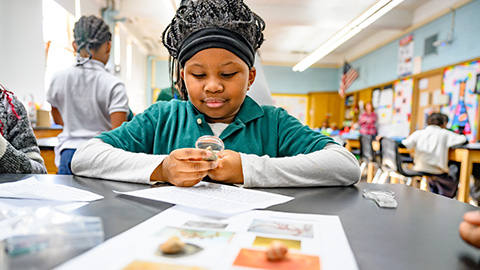
“We don’t want materials that only work in ideal situations,” Gotwals explained. “We want something that works in real classrooms.”
The successful curricula is still freely available on the College of Education website. SOLID Start includes curricula, tools and professional development, which Gotwals and colleagues have proven to be effective.
Gotwals’ OpenSciEd leadership and contributions to OpenSciEd were built upon foundational lessons and research stemming from SOLID Start efforts.
Now with its national, free distribution, the sky is the limit for how it could transform students’ lives, according to Gotwals.
“OpenSciEd provides free curriculum materials that allow teachers who may never have had access to high quality science curriculum a resource to use,” she explained. “There are limited resources for elementary science educators. With this free curriculum, districts can now spend their money on additional transformative measures, such as money on professional learning to support teachers’ initial implementation of the new materials.”
Supporting science learning
The elementary (K-5) materials add to previously existing middle school and high school OpenSciEd resources. The national effort began with the middle school curriculum, and Gotwals was involved in the earliest phases leading a team that developed design specifications for assessment systems.
But her heart and her leadership is most evident in the new materials, which she has been developing since 2022. Yet she is also quick and clear to say that the work was not done in isolation: It was intentionally done for and with educators.
“We worked with teachers across the country. We looked at things like: ‘What does it mean to teach this in Louisiana versus Michigan versus Washington?’ The teachers were our collaborators and gave us insight into what was happening in real classrooms,” Gotwals explained. "We wanted teachers to feel comfortable and confident in using these materials, because their leadership will help us expand how we’re teaching science and therefore help kids become more connected to learning science.”