By Lauren Knapp & Jane Deacon
For decades, we have offered programs related to education, health and well-being that prepare leaders to transform the world around them.
But it isn’t just about offering programs: It is about reevaluating, reflecting and reformatting.
“The educational, social and occupational landscape is constantly evolving. The programs that prepare people to engage in these systems need to be dynamic to respond to changing needs and anticipate emerging opportunities,” said Jennifer A. Schmidt, interim chair of the Department of Counseling, Educational Psychology and Special Education (CEPSE). “I am proud that faculty in CEPSE put in the considerable work to re-envision our programs to meet current and future needs.”
CEPSE faculty have examined broader contexts and shaped programming in their respective areas to support current and future realities — which resulted in new and reimagined programs and certifications. (The programs highlighted here are included amongst the department’s many undergraduate and graduate-level programs.)
Rehabilitation Counseling
- Established in 1956
- 1,300+ master’s degree alums
- 200+ doctoral degree alums
- Accredited by the Council for Accreditation of Counseling and Related Educational Programs (CACREP)
Accreditation is a thorough process — with ongoing data collection regarding program and student performance, a rigorous self-study and report, as well as a site visit before a decision from CACREP, the national accreditation agency.
Yet, MSU College of Education rehabilitation leaders intentionally sought out additional data to analyze the efficacy of their programs. They reviewed national data, established and analyzed information from an internal advisory council, and conducted regular faculty retreats to determine the professional needs.

Put together, the directive was clear: Change was imminent, and MSU wanted to be a step ahead.
“All of these activities pointed to the direction of broadening our training of counselor educators beyond our expertise in rehabilitation,” said Gloria Lee, professor and program director of master’s- and doctoral-level rehabilitation counseling programs.
The rehabilitation counseling faculty embarked on two initiatives to meet broad workforce demands: reimagining the doctoral program and starting a new master’s program.
Counselor Education & Supervision (Ph.D.)
“The redesign [of the doctoral program] ... leverages all of the elements MSU is best known for,” said Lee.
That includes MSU’s longstanding commitment to hands-on experiences in research, teaching, supervision, leadership and counseling in tandem with faculty who have diverse clinical experience and research backgrounds. The program, offered since 1956, is also known for robust collaborative opportunities with community agencies and institutional partners at the state, national and international levels.
The doctoral program is often in the top-ranked programs for rehabilitation counseling, according to U.S. News & World Report. In 2025, the program is listed at #2 in the nation.

Well-regarded it may be, but it could also have once been described as limited. For example, in the former program structure (known as the Rehabilitation Counselor Education program), MSU could only admit those who obtained master’s-level credentials in the rehabilitation counseling specialty. Now, the Counselor Education and Supervision doctoral program can admit individuals with master’s-level credentials from any of the eight counseling specialties defined by CACREP. With the longstanding reputation of the program as well as its faculty members’ active engagement and leadership in disability research and practice, the program created a formal Rehabilitation and Disability concentration. Since its creation, 90% of our students have been pursuing this optional training.
Graduates from the previous program primarily landed roles as faculty members in rehabilitation at higher education institutions. Now, alums of the realigned program will be equipped to pursue career paths including university-level jobs in other counseling fields (such as mental health counseling) or pursue careers in research centers, community-based organizations and human services agencies.

“This change allows us to expand our training to a broader range of prospective students and prepare them for more options in their career paths,” said Associate Professor Hung Jen Kuo.
Clinical Mental Health Counseling (M.A.)
“There is a shortage of professionals working to meet the increasing pandemic of mental health issues in our society,” said Lee. Beyond national data, rehabilitation counseling leaders repeatedly saw a demand for mental health support in the community in exit interviews with graduating students.
“Our program is designed to train future professional counselors who specialize in promoting mental health and wellness by helping individuals faced with mental health and emotional challenges.”
Enter the Clinical Mental Health Counseling program, which launched in Fall 2025 and is the first of its kind at MSU. Thirteen students joined the first cohort.
The CMHC program is designed according to national CACREP standards. Graduates will be eligible for the Licensed Professional Counselor (LPC) or Licensed Clinical Mental Health Counselor (LCMHC) designations upon successful completion of the licensure exam and required clinical hours. These licensures are mandatory for practice in many states, including Michigan.
Students can apply what they learn from the classroom into practice while they are in the program. They are required to complete a practicum and internship under agency supervision and faculty supervision.

“You can only learn by doing. You have to get in there and practice the skills you have been working on throughout the entire program,” said Assistant Professor and Clinical Coordinator Trisha Easley. Students have many options for their supervised clinical training, such as on campus — like in MSU’s Counseling and Psychiatric Services unit — or with local organizations and private practices.
CMHC students will also learn alongside M.A. in Rehabilitation Counseling students. The programs share about two-thirds of classes and all faculty members — including Red Cedar Distinguished Professor Phillip Rumrill, who joined the faculty in Fall 2025.
Once licensed, alums might find employment in mental health agencies, hospitals, addiction clinics, counseling centers, schools and more.
Learning Experience Design
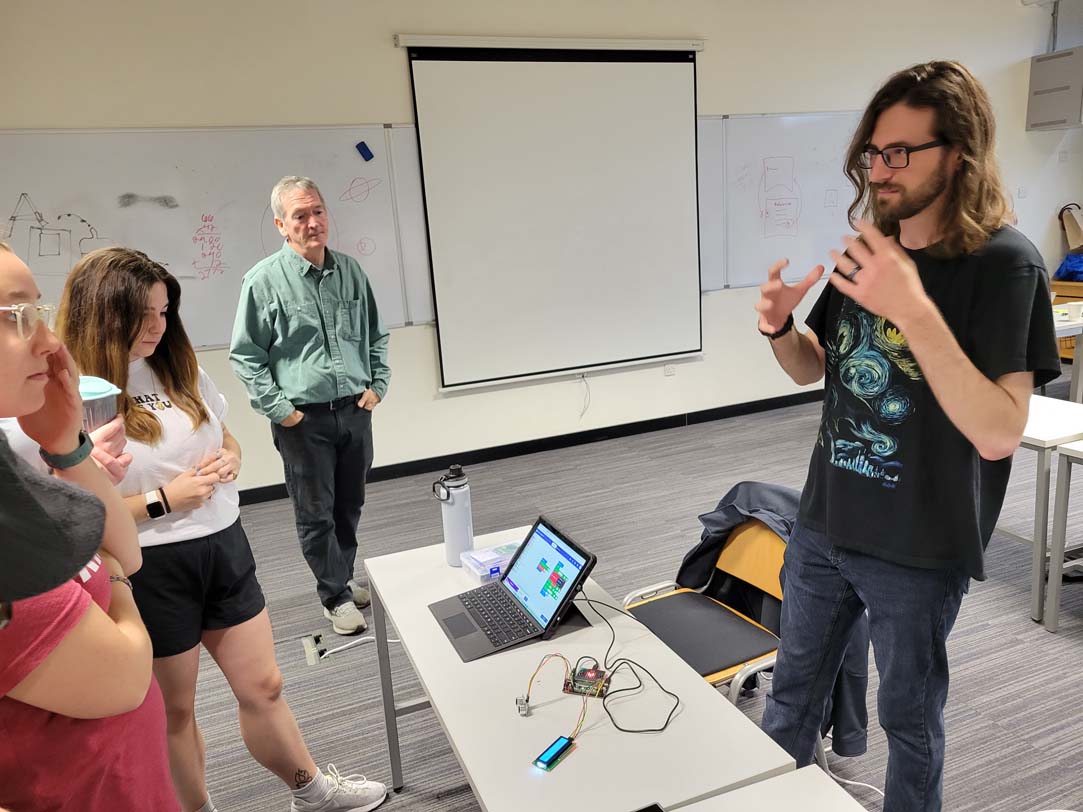
With an award-winning program in Educational/Instructional Media Design that consistently ranks top-10 in the nation, MSU was already well-positioned to innovate within the field of learning experience design. The new Master of Arts in Learning Experience Design (MALXD) was created in response to trends identified by the college’s M.A. in Educational Technology (MAET) program, which has traditionally supported K–12 educators interested in the purposeful use of learning technologies.
“Through our conversations with practicing educators and designers, analysis of recent trends and understanding of the field, we recognized that an increasing number of learners were focused on substantially different professional outcomes, seeking careers in corporate training and development, higher education, medical training, virtual learning and instructional design,” said Liz Owens Boltz, program director and assistant professor. “MALXD was developed not only to adapt to the evolving landscape of the broader field, but to do so in ways that enact the mission and values of the College of Education.”
The fully online, asynchronous program is grounded in learning experience design. Students learn to design accessible and inclusive learning experiences and environments, rooted in educational psychology, social justice and theories of teaching and learning. The skills fostered in MALXD prepare graduates to design learner-centered experiences, improve training and professional development programs, and implement new teaching techniques and technologies in a wide range of professional contexts.

MALXD’s tagline is “Meaningful learning experiences through intentional design.” With this in mind, the program was purposefully developed in consultation with a team of Critical Thought Partners — an international group of leaders in accessibility, design, pedagogy and research with diverse life experiences — to ensure that a variety of perspectives and areas of expertise guided its design.
The MALXD program employs a cohort model to scaffold and support students within the context of a strong learning community. The first cohort launched in Fall 2024, and the second began in Fall 2025.
Graduates not only earn a degree, but three certificates along the way: Learning Sciences, Learning Design and Learning Design Leadership. These credentials position MALXD graduates to become leaders in the creation of well-informed, playful and powerful learning design solutions.
A distinguishing feature of the program is MALXD’s programmatic promise, which outlines the purposeful approach learners can expect:
- We connect with our dynamic community.
- We care about you, your identities and your contexts.
- We believe learning environments should be accessible, anti-racist and inclusive.
- We critically examine and evaluate frameworks, theories and technologies.
- We design learning experiences that are applicable to your professional practice.
- We iterate in our design to provide the highest-quality learning experience.
- We spark creativity and play.
Learn more about these and other programs in the Department of Counseling, Educational Psychology and Special Education.