Using the 2025 GEPLP to Draw Education Policy Lessons from Costa Rica
Broadly speaking, various research organizations have studied international education programs and institutional efforts to analyze students’ experiences in other countries and found that they are essential strategies to develop “cross-cultural understanding,” address problems that “transcend national borders,” support diplomatic efforts by “building mutual understanding and goodwill,” drive personal and professional growth, and advance national interests through “collaboration, dialogue, and shared learning” (The Institute of International Education). Additionally, they have observed that international education initiatives can help participants “learn from all different parts of the world” and create pathways to match international solutions with local challenges in their home countries (American University).
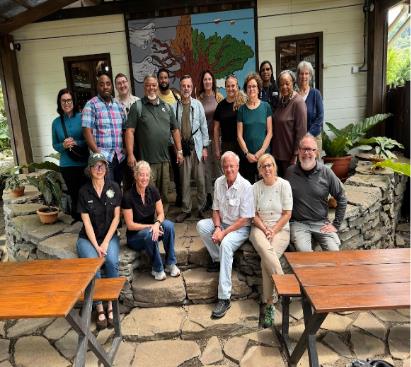
Recognizing these upsides, more than a decade ago, Dan Schultz, Senior Policy and Program Advisor for the Office of K-12 Outreach and Coordinator Emeritus for the Michigan Education Policy Leadership Program (EPLP), and Dr. Robert Monson, New York Co-Coordinator of the Advanced Education Policy Leadership Program (AEPLP) and former senior lecturer in education leadership at Teachers College, Columbia University, launched the Global Education Policy Leadership Program (GEPLP). In the years since then, these program coordinators, with the support of the Office of K-12 Outreach, have taken education leaders to Bhutan, China, England, Germany, Iceland, India, New Zealand, Norway, and Switzerland to “develop greater awareness of how other countries prepare young people,” generate “a multi-cultural perspective on U.S. efforts to ensure its schools are globally competitive,” “observe and engage with leaders shaping school reform efforts,” and connect with global education leaders (GEPLP). This year, the 2025 GEPLP Fellows studied education in Costa Rica through this program and a new partnership between K-12 Outreach and MSU’s Program on Sustainability in Costa Rica in the Residential College in the Arts and Humanities, represented by Program Director Vincent Delgado.
Through three pre-departure virtual sessions, a 10-day field experience in this country, and a post-trip reflection meeting online, the cohort analyzed environmental education and sustainability policies in Costa Rica, how this nation has fostered a tradition of community autonomy and organizing, this country's balancing of economic considerations (especially related to tourism) with environmental ones and indigenous rights, national and regional efforts to improve student literacy and learning opportunities in primary and secondary schools, and Costa Rican vocational programs. Starting with the program’s pre-travel virtual sessions, the 2025 Fellows from higher education institutions, non-profit organizations, and school districts in Michigan, New York, Ohio, and Pennsylvania had the chance to acclimate themselves with Costa Rica, the program’s goals, and their peer learners. During the opening session in August, “Ego to Eco: Environmental Sustainability and Community Autonomy in Costa Rica” with Vincent Delgado, the group developed an understanding of this country’s history and some national narratives that guide its policies and politics, in education and otherwise. From there, the cohort heard about the importance of various Costa Rican institutions from Dr. Steven Palmer, Professor of History at the University of Windsor, during a virtual session in September. Finally, the program dug into Costa Rica’s K-12 and higher education systems, its Ministry of Public Education, and the daily experiences of students and educators with a presentation in October from Costa Rican practitioners and non-profit leaders. With this background, the Fellows were ready to travel to Costa Rica from October 16th to 25th to experience this country’s schools and universities firsthand and glean insights into how American educational institutions might benefit from best practices in this nation.
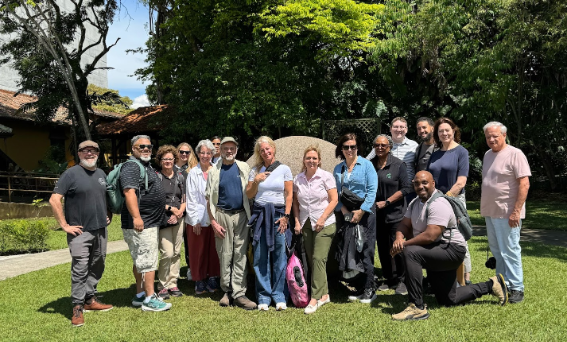
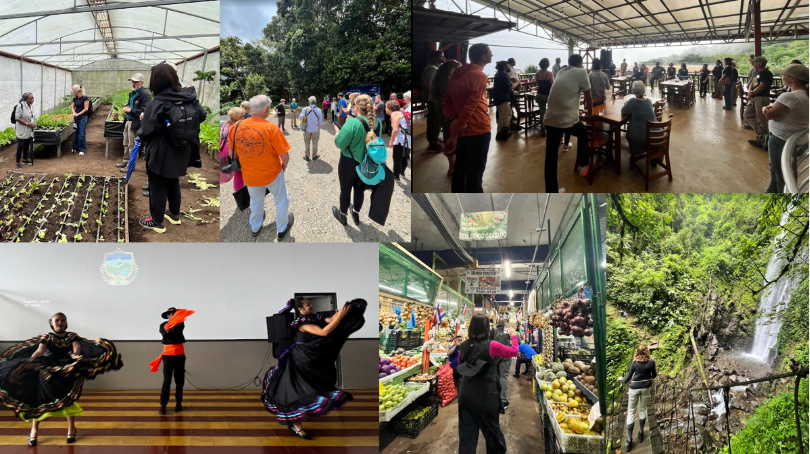
Broadly speaking, the 2025 GEPLP field experience was split into two segments – one in San José, Costa Rica’s national capital and largest city, and Monteverde, an internationally-recognized model of environmental sustainability, ecotourism, and community engagement. Concerning the San José portion of the field study, the group balanced cultural immersion with chances to observe the Costa Rican educational system. This former program element, which included a walking tour of San José and exploration of various national museums and cultural sites, was essential for providing some in-country context for the latter thread. With their new experiential knowledge, the Fellows could better understand the schools and universities they visited, the cultural performances students put on at these stops, and the policy-focused presentations they heard. In Monteverde, the group similarly benefited from these types of experiences, including visits to a high school focused on vocational education, a Quaker school, and a one-room schoolhouse. That said, they also dug into some of the program’s other focus areas, such as environmental education at the Children's Eternal Rainforest; community engagement and outreach initiatives at the Monteverde Institute, a community-based cultural center, and San Luis’ tourism and development organization; and sustainability efforts at the Valle Escondido Nature Reserve and LIFE Monteverde Coffee Farm. Finally, as a capstone experience, the 2025 GEPLP Fellows, program coordinators, and Monteverde community and education leaders gathered to share their mutual takeaways and insights on each country’s successes and areas for growth. Of course, along the way, the group benefited from excursions into Costa Rica’s breathtaking nature (e.g., Monteverde’s El Tigre Waterfalls and the rainforests surrounding Valle Escondido), meals shared with peers, and cultural experiences designed to help the Fellows appreciate the unique context they were studying.
Once the Fellows completed this year's field experience, returned to their home organizations, and had some time to individually reflect on their core takeaways, the group reconvened at the end of November to discuss what resonated most with them and how they might, individually or collectively, translate some of their learning into action. Among the many thoughts shared were the following testimonials:
- “I started this journey with a focus on what national leaders are doing to have such a high literacy rate in this country. After the first meeting, I realized this country has something unique about it that far exceeds my narrow interest in literacy. Following the numerous sessions and experiences, I walked away feeling that Costa Rica’s ability to build a sense of community and relationships is their greatest contribution to education for their students while understanding the difference between ‘Having and Being.’” – Dr. JoAnn Andrees (Senior Outreach Specialist – Office of K-12 Outreach – Michigan State University)
- “This year's Global EPLP experience inspired me to think deeply about local asset-building and mutual aid to leverage partnerships and build community.” – Michelle Connavino (Deputy Director – PRE4CLE)
- “During my time in Costa Rica with MSU’s Global Education Policy Leadership Program, I saw how education policy truly comes alive through relationships – with people, culture, and the environment. The experience reminded me why I chose this path and renewed my commitment to learning with purpose.” – Dr. Lisa Rivard (Outreach Specialist – Office of K-12 Outreach – Michigan State University)
Altogether, this year’s GEPLP experience offered its thirteen 2025 Fellows the chance to explore another country’s approach to educating its students, supporting its teachers and administrators, and partnering with community organizations to balance economic, environmental, and cultural priorities. Additionally, it offers a case study of the potential benefits of international education programs for individuals, their organizations, and the United States writ large. In the short- and long-term, the 2025 GEPLP Fellows will have the opportunity to connect their learning to on-the-ground practices across the United States, thereby further demonstrating the impact of this initiative. Looking ahead, senior-level leaders who are EPFP/EPLP alums (in Michigan or other states) and are interested in global education policy should keep an eye out for the 2026 program announcement this spring. Until then, individuals with questions are invited to explore the GEPLP website or contact the GEPLP coordinators. Dan Schultz can be reached at dws@msu.edu, and Dr. Robert Monson is available at rjm747@mac.com.