Three doctoral students across the Colleges of Education and Natural Science earned Distinguished Graduate Student Awards in Justice and Equity Pedagogy, honoring their work in teaching and research that advances access, inclusion and community-based approaches in education.
"It is always a difficult task to choose the final awardees for this award, as each nominee is doing truly outstanding work in our college,” said Scott Farver, associate professor in the Department of Teacher Education. “We were especially moved by the letters of support undergraduate students shared, detailing the ways their instructors centered love and humanity in their classrooms, while continuing the rigor our college is known for.”
The 2026 honorees are:
C. Davis (Program in Mathematics Education*)
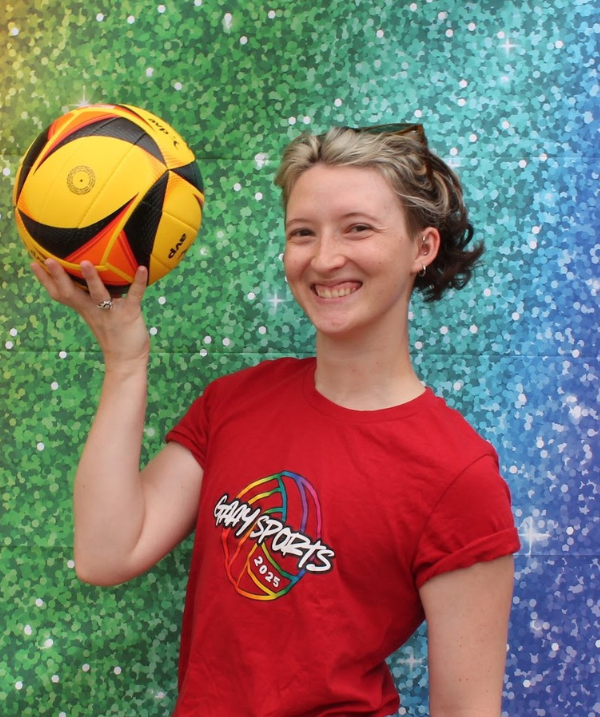
Davis’ work is boundless.
Mathematics, Davis writes in their teaching philosophy, can feel constrained through the “boundaries of mathematics’ ... traditional frameworks.” Thus, Davis’ work sets to break free from this and challenge mathematical perspectives. Davis was selected for the award due to their consistent efforts to push against normative understanding — both about the subject matter and who gets to be positioned as a mathematician. Through their career, Davis hopes to empower both teachers and students with inclusivity, accessibility and equitability at the forefront of mathematical learning experiences and imagines a world where “difference is not just acknowledged but celebrated.”
“Davis is an outstanding educator,” wrote Assistant Professor Kristen Vroom (College of Natural Science). “Davis consistently sought feedback and reflected thoughtfully on how to best support their students — whether through building an inclusive and caring classroom community, making thoughtful choices about content or ensuring clarity in their explanations. ... Davis’s warmth and authenticity are evident in their classroom presence and their openness as a proudly visible queer mathematician sends powerful messages about who can belong in mathematics and STEM [science, technology, engineering and mathematics] more broadly.”
(Read about Davis’ award from the PRIME program!)
Cassie Sheets-Kavanagh (Curriculum, Instruction and Teacher Education)
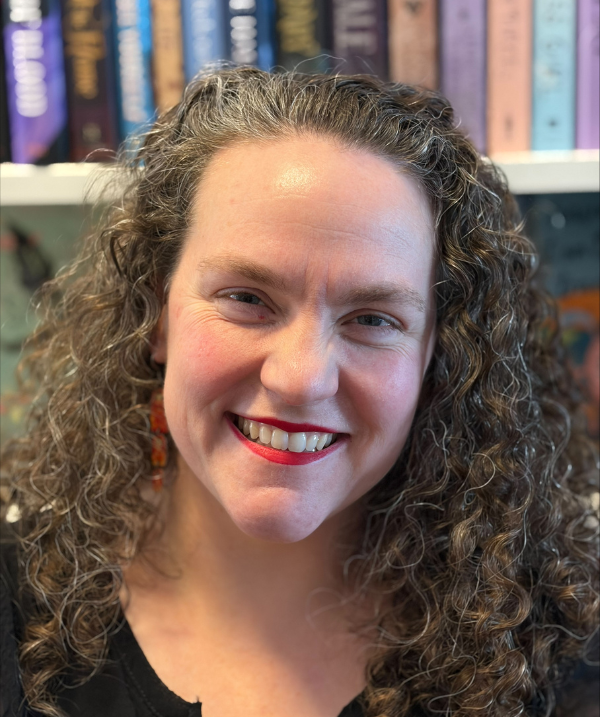
Sheets-Kavanagh works with pre-service teachers in MSU’s Teacher Preparation Program and guides students across all three degree-granting programs to self-reflect. This consistent effort is a “favorite” practice of Sheets-Kavanagh, who uses it personally and with students to help challenge worldviews and sense of self. This practice, which Sheets-Kavanagh shares with TE 101 students in the form of a poetry assignment (among other efforts throughout the semester), can help enforce the notion of education as a humanizing experience, and one that can be taken together.
“Cassie really took the time to make sure we understood what equity is,” a student wrote. “Equity is everyone getting what they need to be successful, not everyone getting the same thing.”
Sheets-Kavanagh also explores self-reflection as assignments in other undergraduate Teacher Preparation courses.
“Cassie is a naturally dialogic instructor, facilitating the classroom so all students can participate in different ways,” wrote fellow doctoral student Maggie McConnaha. “She opened her classroom to fellow CITE [Curriculum, Instruction and Teacher Education] women scholars to come in and guest speak about their experiences and research areas, building connections between her undergraduates and doctoral students.”
Angie Valbuena Rojas (Curriculum, Instruction and Teacher Education & Chicano and Latino Studies)
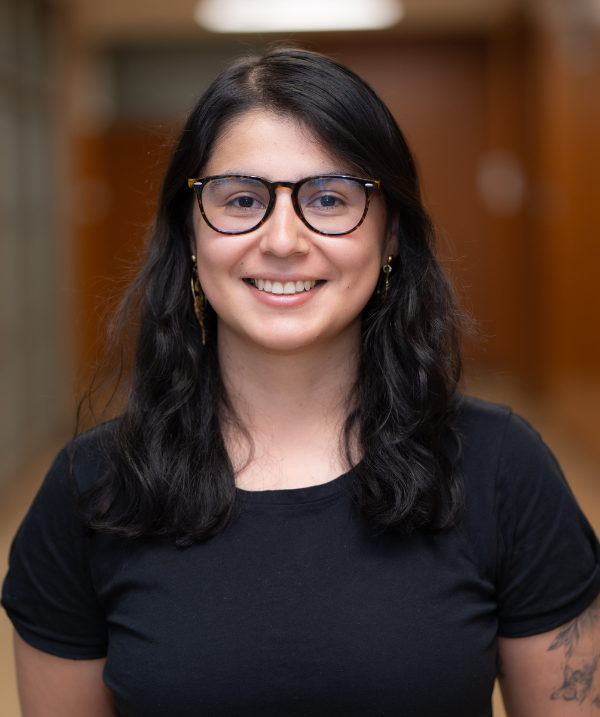
Valbuena Rojas’ work is guided by a single question: What kind of science does she want to teach?
She was selected for the award due to her consistent ways of recognizing, valuing and using dialogue in her learning spaces to bolster teaching. Valbuena Rojas believes science should not be based solely off of fact-based learning, but that learning is enhanced by absorbing and uplifting the identities and experiences of the students she teaches. She invites her students, all future educators, to consider ways they can use science to question and resist how science has historically been taught and reimagine it in ways that are approachable, engaging and inclusive for all learners.
“My teaching practice is committed to preparing educators who can recognize, question and transform inequities in science education,” wrote Valbuena Rojas. “My goal is for future teachers to design learning spaces where all students can see themselves as capable participants in science, and where knowledge is understood as a dynamic, human and collective endeavor. Ultimately, my teaching is a commitment to justice: to expanding who can participate in science, whose knowledge is valued and what futures we make possible through education.”
The award began in 2023 to celebrate graduate student instructors for their contributions to the college. This year, awardees were selected by Farver, Assistant Professor Terrance Burgess, Assistant Professor Alexanda “Alex” Allweiss and Academic Specialist Mary Patillo-Dunn. Nominations were and are welcomed across the college. Recipients earn a $1,000 award and a certificate. Funding is provided by the MSU Graduate School.
The doctoral Program in Mathematics Education is jointly administered by the Colleges of Education and Natural Science.