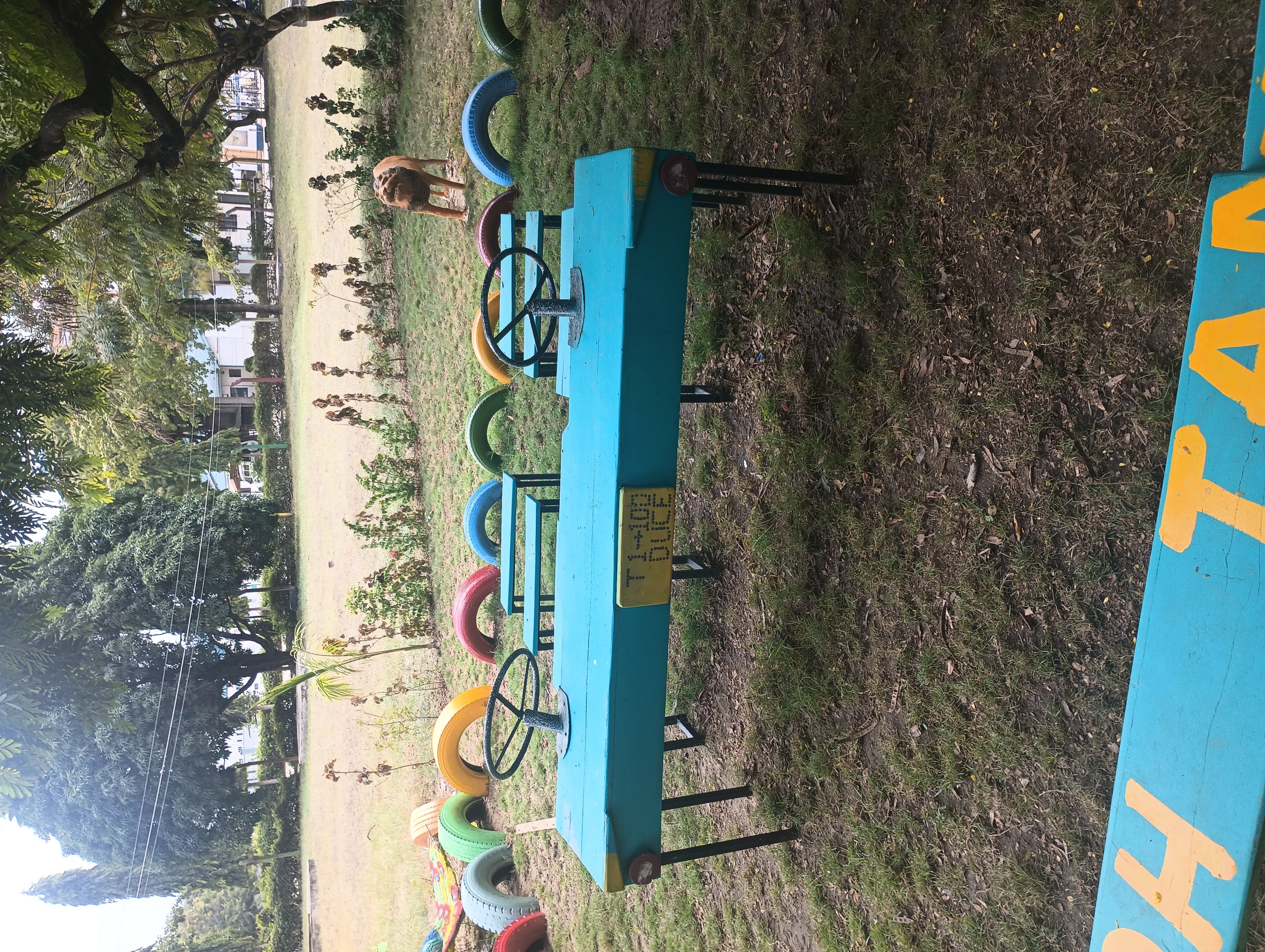
While adults may see a sandbox, a child might see an opportunity to play in a make-believe kitchen. A series of boxes might transform into a pretend market stall. A series of benches might become a train or a car.
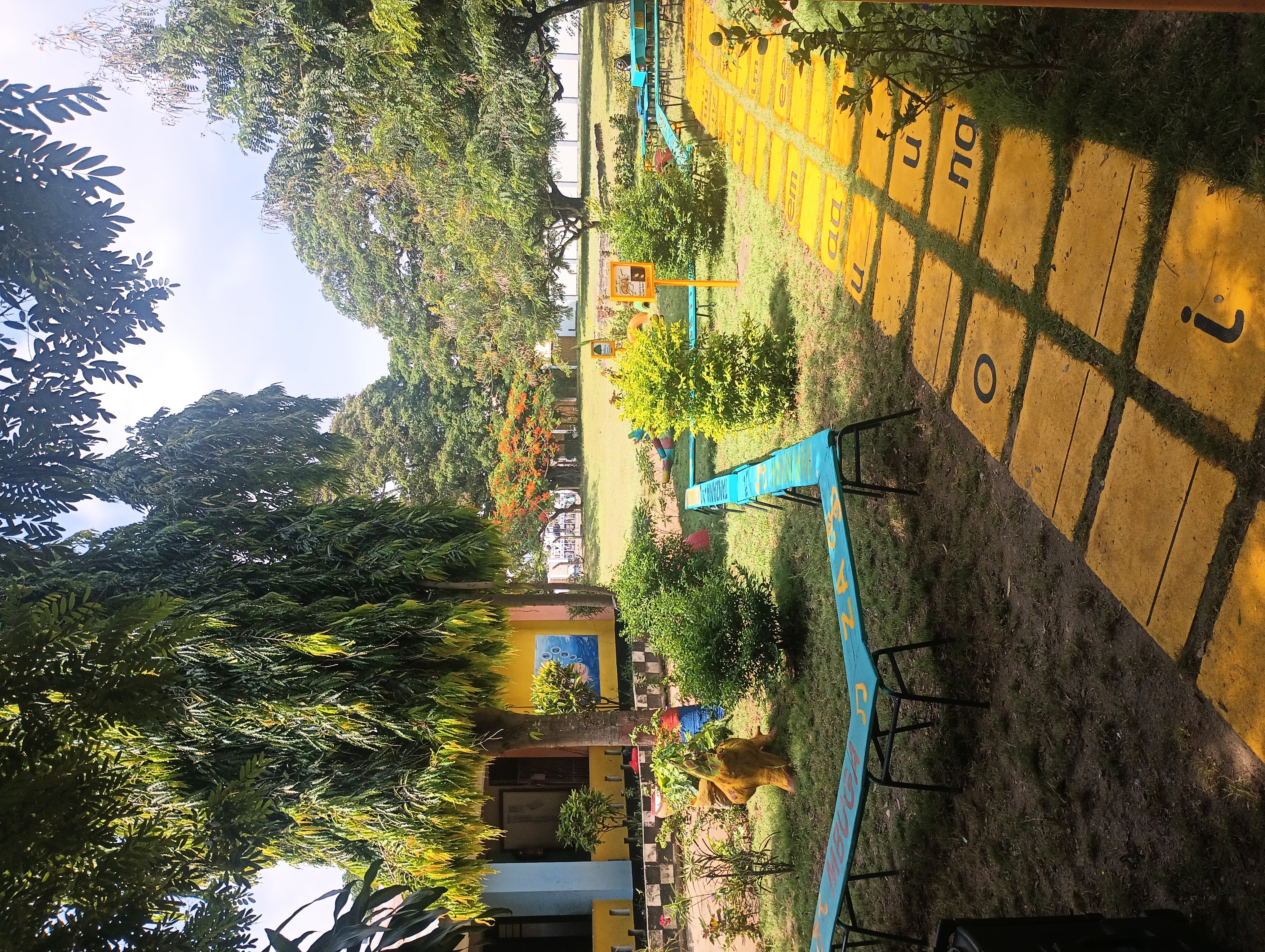
Playgrounds are meant for just that, play. MSU scholars say they are also vital resources for learning. A playscape in the heart of Tanzania, co-created with expertise from MSU scholars, will help systemically introduce play into Tanzanian education.
“We’re trying to reshape what learning can look like in early childhood settings in Tanzania,” said Associate Professor Bethany Wilinski, part of the Department of Teacher Education.

In recent years, Tanzanian national policy shifted to require pre-primary teachers to use play-based approaches in learning. Its actual implementation, however, has been arguably inconsistent. That’s why the playscape was built on the campus of the Dar es Salaam University College of Education (DUCE), where aspiring educators learn to teach.
“There has been a long, sustained effort to move Tanzanian educators from teaching only by lectures at all levels,” Wilinski said. “If we want to change how they will work in their future classrooms, we need to start at the beginning: where they get their teacher training.”
From idea to imaginative play
In 2016, Ray Ginther approached MSU with the idea of creating play areas in the Tanzania Partnership Program (TPP) village schools. After completing similar projects in other areas of the world, Ginther celebrated a place to play and increase school attendance and wanted to contribute a financial gift to create it.
TPP is an interdisciplinary, sustainable community development platform that builds long-term partnerships among donors, scholars, development practitioners, governments and local communities to improve livelihoods while generating knowledge about the development process. It brings together academic leadership from MSU’s International Studies and Programs, the College of Education and other units across the university, working in close collaboration with Tanzanian institutional and community partners. Wilinski has co-led TPP education activities since joining MSU in 2015 and initiated the work to connect play, learning and teacher training. Several education- and health-related projects have been completed, including a 100-bed girls dormitory facility providing housing and life skills training to over 300 students, a cattle dip and veterinary facility servicing over 2000 cattle per month, and school feeding programs.
For Ginther, MSU scholars (including Wilinski) and Tanzanian officials, all projects center around collective participation and sustainable outcomes.
Beginning in 2020, Wilinski and others worked with educational stakeholders, including school-aged children, and architects to understand play and education in the Tanzanian context.
“Often when you think of a playground, slides or swings come to mind,” explained Wilinski. “Those are great, but focus only on repetitive movement and provide limited imaginative opportunities. Our research, coupled with architectural expertise, helped us think of how constructing a variety of different elements can foster different types of learning.”
Think back to the sandbox or the benches. To some, the benches are just benches. To a child, they can transform into a daladala (the Tanzanian equivalent of a bus).
This is what makes the playscape so exciting — learning and brain development thrive in imaginative play — but it’s also why the location at DUCE, in Tanzania’s largest city of Dar es Salaam, is critical.
“For many aspiring Tanzanian teachers, they haven’t been exposed to using play as part of learning,” Wilinski explained. “If you have only ever been taught through lectures, you might assume lectures are the only way to learn."
The problem is potentially compounded by the Tanzanian system’s reliance on standardized testing and worksheets, making the open-ended learning through play hard to discern and quantify.
That’s where the next phase of the project comes in.
Coming soon: Free trainings
Now that the playscape is complete, Wilinski will continue to build teachers’ capacity. She is the co-principal investigator on a $100,000 Partnerships for Innovative Research in Africa (PIRA) grant, part of MSU’s Alliance for African Partnership (AAP).
Wilinski is co-creating professional development for aspiring teachers on play-based learning, as well as a forthcoming website where DUCE students and beyond can download and utilize learning modules. A complementary report, “From Conceptualization to Construction: A Model Playscape in Tanzania,” was published in 2025 in the Childhood Education journal and chronicles the playscape’s creation.
Wilinski believes the training materials, when publicly available, can be utilized broadly, and will be particularly useful for teachers in low-resource contexts.
“It doesn’t matter where you are in the world,” Wilinski shared. “An educator might have a similar challenge of needing or wanting to incorporate play into learning. They can learn with what we’re creating.”
Related links
Learn more about Tanzania Partnership Project, including Wilinski's work to “curriculum for teachers that links play to national educational standards.”