Jump to HeaderJump to Main ContentJump to Footer
Michigan State University
College of Education
  • Strategic Plan
  • Resources
  • People Directory
  • Alums
  • Contact
  • Give

College of Education

  • About
    • Mission & History
    • Strategic Plan
    • Points of Distinction
    • Leadership
    • Academic Departments, Centers, Institutes & Offices
    • Faculty and Staff Directory
    • Inclusion & Diversity
    • Outreach Efforts
    • Buildings & Facilities
    • Career Opportunities
    • Ways to Give
    Dean Jerlando Jackson stands in front of a sign that reads Michigan State University.

    Meet Dean Jackson

    Meet Dean Jerlando F. L. Jackson
  • |
  • Academics
    • Majors & Degree-Granting Programs
    • Undergraduate Programs
    • Master's Studies
    • Doctoral Studies
    • Online Studies
    • Graduate Certificates & Specializations
    • Undergraduate Student Support
    • Graduate Student Support
    • Assistantships
    • Scholarships
    • Accreditation
    Five Spartans pose for a photo in a row during an awards ceremony; three are holding paper awards and wearing medallions around their neck with a turquiose ribbon.

    Record-setting KIN Spartans

    Alums make history with national KIN honors
  • |
  • Certifications
    • Become Certified or Add an Endorsement
    • School Psychologist Certification
    • Student Affairs Office
    • MSU Academic Programs Catalog
    • MSU Office of Accreditation, Assessment, Curriculum & Compliance
    Individual bikes on MSU's campus

    Educator Preparation & Accreditation

    Explore our efforts
  • |
  • Research
    • Office of Research Administration
    • Centers & Institutes
    • Student Research Opportunities
    • Research & Award News
    • Faculty Directory
    Spartan statue with the sun peeking around the top of the statue

    MSU scholars earn William T. Grant Foundation awards

    Read about our research objectives
  • |
  • Outreach
    • Policy
    • K-12 Schools & Districts
    • Urban Areas
    • International Areas
    • Alumni
    • Institute for the Study of Youth Sports
    • Office of Access & Community Engagement
    • Office of International Studies in Education
    • Office of K-12 Outreach
    • All Offices, Centers & Institutes
    Young children line up for an activity in IM Sports circle. The children wear bright green shirts.

    Detroit youth learn about movement at MSU

    Explore the KIN Day of Action
  • |
  • News & Events
    • News
    • New Educator Magazine
    • Subscribe: ReviewED Newsletter
    • Events Listing
    Kristen Bieda wearing a blue blouse and glasses. There is a bookshelf full of books in the background.

    Celebrating: Kristen Bieda

    Bieda named Department of Teacher Education Chair
College of Education
  • About
  • Academics
  • Certifications
  • Research
  • Outreach
  • News & Events

< About

  • Mission & History
  • Strategic Plan
  • Points of Distinction
  • Leadership
  • Academic Departments, Centers, Institutes & Offices
  • Faculty and Staff Directory
  • Inclusion & Diversity
  • Outreach Efforts
  • Buildings & Facilities
  • Career Opportunities
  • Ways to Give
Dean Jerlando Jackson stands in front of a sign that reads Michigan State University.

Meet Dean Jackson

Meet Dean Jerlando F. L. Jackson

< Academics

  • Majors & Degree-Granting Programs
  • Undergraduate Programs
  • Master's Studies
  • Doctoral Studies
  • Online Studies
  • Graduate Certificates & Specializations
  • Undergraduate Student Support
  • Graduate Student Support
  • Assistantships
  • Scholarships
  • Accreditation
Five Spartans pose for a photo in a row during an awards ceremony; three are holding paper awards and wearing medallions around their neck with a turquiose ribbon.

Record-setting KIN Spartans

Alums make history with national KIN honors

< Certifications

  • Become Certified or Add an Endorsement
  • School Psychologist Certification
  • Student Affairs Office
  • MSU Academic Programs Catalog
  • MSU Office of Accreditation, Assessment, Curriculum & Compliance
Individual bikes on MSU's campus

Educator Preparation & Accreditation

Explore our efforts

< Research

  • Office of Research Administration
  • Centers & Institutes
  • Student Research Opportunities
  • Research & Award News
  • Faculty Directory
Spartan statue with the sun peeking around the top of the statue

MSU scholars earn William T. Grant Foundation awards

Read about our research objectives

< Outreach

  • Policy
  • K-12 Schools & Districts
  • Urban Areas
  • International Areas
  • Alumni
  • Institute for the Study of Youth Sports
  • Office of Access & Community Engagement
  • Office of International Studies in Education
  • Office of K-12 Outreach
  • All Offices, Centers & Institutes
Young children line up for an activity in IM Sports circle. The children wear bright green shirts.

Detroit youth learn about movement at MSU

Explore the KIN Day of Action

< News & Events

  • News
  • New Educator Magazine
  • Subscribe: ReviewED Newsletter
  • Events Listing
Kristen Bieda wearing a blue blouse and glasses. There is a bookshelf full of books in the background.

Celebrating: Kristen Bieda

Bieda named Department of Teacher Education Chair
  • Strategic Plan
  • Resources
  • People Directory
  • Alums
  • Contact
  • Give
Faculty and Staff

May 4, 2023 | Read time 4 min

Is HIIT effective? MSU scholar seeks answers in six-paper series

Summary

A series of six academic papers led by MSU Department of Kinesiology Chair Paddy Ekkekakis is challenging widely held claims about high-intensity interval training (HIIT), including its effectiveness, sustainability and purported appeal to the general public. The research scrutinizes the quality of evidence behind HIIT-related claims, examines how findings have been communicated by researchers and the media, and argues for greater interdisciplinary collaboration when evaluating exercise science. Ekkekakis ultimately encourages consumers and practitioners to approach fitness claims with healthy skepticism, particularly when they appear to promise outsized benefits with minimal effort.

The fitness trend of HIIT (high-intensity interval training) and studies that support its benefits are being questioned by Department of Kinesiology Chairperson Paddy Ekkekakis and other scholars through a series of six papers. As defined by Harvard University’s School of Public Health, HIIT is a type of interval training where short bursts of high-intensity movements alternate with brief periods of lower-intensity movements to elevate the heart rate to 80% of one’s maximum potential.

The articles — five of which have been published to date by Elsevier and Human Kinetics journals — are titled “Extraordinary Claims in the Literature on High-Intensity Interval Training,” and examine not only claims made by media, literature and research, but foundational issues in the field of kinesiology, which has resulted in a HIIT frenzy around the globe. Ekkekakis is the lead author on all six papers, the last of which is in the final round of peer review.
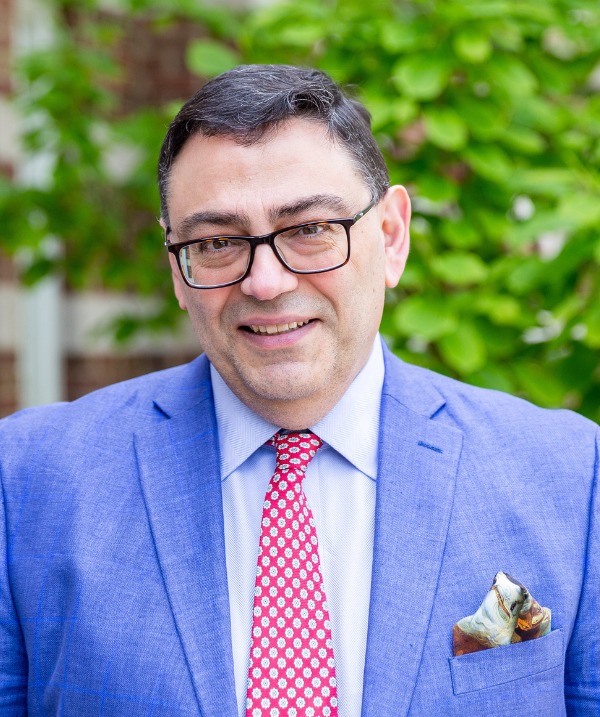
Ekkekakis smiles for the camera while standing outside of IM Sports Circle, home of the MSU Department of Kinesiology. Ekkekakis wears a blue button-down shirt under a blue blazer, dark-rimmed glasses and a red tie with white polka dots. Ekkekakis' black hair is short.

A summary of the articles

The first article examines the quality of evidence supporting the argument for HIIT. The most extensively studied outcome — an improvement in aerobic capacity, which is how well the body uses oxygen to keep going during activities that require sustained effort — has been studied in samples that are far too small to carry any validity, according to Ekkekakis and statistical experts.

The second paper of the series highlights false claims made by media about HIIT — or as Ekkekakis puts it, their “spin on research.” Headlines promoting how HIIT can lead to longevity or cut mortality risk in mere moments each day can be common in the media. Specifically, Ekkekakis cites examples where reporters have portrayed research findings to the public in a misleading way by misinterpreting research.

In the third paper, Ekkekakis and colleagues from the United States and Canada reviewed evidence contradicting several arguments for HIIT. For instance, the belief that the primary reason for physical inactivity is the absence of free time or that a significant proportion of adults are drawn to the idea of high-intensity exercise. HIIT is often perceived as an ideal solution by individuals who do not regularly engage in physical activity because they believe it takes only a few minutes of exercise each day to lose weight, but this is not entirely accurate.

An emphasis is placed on the absence of interdisciplinary communication and collaboration. “The lack of interdisciplinarity is an existential problem or threat to the field of kinesiology,” said Ekkekakis. For example, a psychologist may find different findings in the same research done by an exercise physiologist, but both findings must be considered when making conclusions.

According to Ekkekakis, the argument for HIIT and its supporting research began in the field of exercise physiology and was brought to the domain of public health without collaboration from other health disciplines.

In the fourth paper, Ekkekakis examines the sustainability of high-intensity interval training as a form of exercise by reviewing eight randomized controlled trials that compared it to moderate-intensity continuous exercise. The findings indicate most of the individuals assigned to HIIT either reduced their exercise intensity or quit the program altogether when left unsupervised.

The last two papers in the series examine how HIIT makes people feel. According to Ekkekakis, claims that HIIT is an enjoyable or pleasant form of exercise go against decades of research. “There’s a level of intensity [of exercise] and if you exceed that level of intensity, inevitably, everybody starts feeling worse.”

Less is more? Think twice

Fascination with messages that seem to question or defy conventional wisdom is a well-studied phenomenon in psychology, according to Ekkekakis, and especially prevalent in fitness, where many people want to believe that they can reap more health or fitness benefits with less time and effort.

“These types of messages have been used by politicians and religious leaders,” he said. “They capture your attention, and you want to believe them, especially when the message is, ‘forget 150 minutes of exercise, you just need to do one.’”

In summary, Ekkekakis recommends being skeptical of claims that seem “too good to be true” and appear to question or undercut the credibility of any heavily researched discipline.

Faculty and StaffResearch and Grants

Programs

  • Undergraduate Programs
  • Master's Programs
  • Doctoral Programs
  • Online Programs

Academic Departments

  • Counseling, Educational Psychology & Special Education
  • Educational Administration
  • Kinesiology
  • Teacher Education

For Students

  • Graduate Support
  • Undergraduate Support
  • Scholarships
  • Assistantships

For Faculty & Staff

  • Communications
  • Data & Analytics
  • Human Resources
  • Policies, Committees & More
  • Tech Services

Our College

  • Office of the Dean
  • Imagin[ED] 2030 Strategic Plan
  • Mission
  • Directory
  • Centers & Institutes
  • Accolades & Awards
  • Rankings
  • Subscribe to our Newsletter
  • "New Educator" Magazine
  • News
  • Jobs

Contact us

(517) 355-1734

Address

Michigan State University College of Education 620 Farm Lane East Lansing, MI 48824

Releases and Statements

Follow Us

  • Visit our Facebook page
  • Visit our page on X
  • Visit our Instagram page
  • Visit our LinkedIn page
  • Visit our YouTube page

If you're having accessibility issues, please let us know.

Know More: Campus Safety Information and ResourcesTransparency Reporting: Budget & Salary/Compensation
  • Contact Information|
  • Site Map|
  • Privacy Statement|
  • Site Accessibility|
  • Call MSU: (517) 355-1855|
  • Visit: msu.edu|
  • Notice of Nondiscrimination|

SPARTANS WILL|© Michigan State University|