Jump to HeaderJump to Main ContentJump to Footer
Michigan State University
College of Education
  • Strategic Plan
  • Resources
  • People Directory
  • Alums
  • Contact
  • Give

College of Education

  • About
    • Mission & History
    • Strategic Plan
    • Points of Distinction
    • Leadership
    • Academic Departments, Centers, Institutes & Offices
    • Faculty and Staff Directory
    • Inclusion & Diversity
    • Outreach Efforts
    • Buildings & Facilities
    • Career Opportunities
    • Ways to Give
    Dean Jerlando Jackson stands in front of a sign that reads Michigan State University.

    Meet Dean Jackson

    Meet Dean Jerlando F. L. Jackson
  • |
  • Academics
    • Majors & Degree-Granting Programs
    • Undergraduate Programs
    • Master's Studies
    • Doctoral Studies
    • Online Studies
    • Graduate Certificates & Specializations
    • Undergraduate Student Support
    • Graduate Student Support
    • Assistantships
    • Scholarships
    • Accreditation
    Five Spartans pose for a photo in a row during an awards ceremony; three are holding paper awards and wearing medallions around their neck with a turquiose ribbon.

    Record-setting KIN Spartans

    Alums make history with national KIN honors
  • |
  • Certifications
    • Become Certified or Add an Endorsement
    • School Psychologist Certification
    • Student Affairs Office
    • MSU Academic Programs Catalog
    • MSU Office of Accreditation, Assessment, Curriculum & Compliance
    Individual bikes on MSU's campus

    Educator Preparation & Accreditation

    Explore our efforts
  • |
  • Research
    • Office of Research Administration
    • Centers & Institutes
    • Student Research Opportunities
    • Research & Award News
    • Faculty Directory
    Individual holds scans of a brain in two hands.

    Uncovering processes that lead to learning outcomes

    Read about our research
  • |
  • Outreach
    • Policy
    • K-12 Schools & Districts
    • Urban Areas
    • International Areas
    • Alumni
    • Institute for the Study of Youth Sports
    • Office of Access & Community Engagement
    • Office of International Studies in Education
    • Office of K-12 Outreach
    • All Offices, Centers & Institutes
    Young children line up for an activity in IM Sports circle. The children wear bright green shirts.

    Detroit youth learn about movement at MSU

    Explore the KIN Day of Action
  • |
  • News & Events
    • News
    • New Educator Magazine
    • Subscribe: ReviewED Newsletter
    • Events Listing
    Kristen Bieda wearing a blue blouse and glasses. There is a bookshelf full of books in the background.

    Celebrating: Kristen Bieda

    Bieda named Department of Teacher Education Chair
College of Education
  • About
  • Academics
  • Certifications
  • Research
  • Outreach
  • News & Events

< About

  • Mission & History
  • Strategic Plan
  • Points of Distinction
  • Leadership
  • Academic Departments, Centers, Institutes & Offices
  • Faculty and Staff Directory
  • Inclusion & Diversity
  • Outreach Efforts
  • Buildings & Facilities
  • Career Opportunities
  • Ways to Give
Dean Jerlando Jackson stands in front of a sign that reads Michigan State University.

Meet Dean Jackson

Meet Dean Jerlando F. L. Jackson

< Academics

  • Majors & Degree-Granting Programs
  • Undergraduate Programs
  • Master's Studies
  • Doctoral Studies
  • Online Studies
  • Graduate Certificates & Specializations
  • Undergraduate Student Support
  • Graduate Student Support
  • Assistantships
  • Scholarships
  • Accreditation
Five Spartans pose for a photo in a row during an awards ceremony; three are holding paper awards and wearing medallions around their neck with a turquiose ribbon.

Record-setting KIN Spartans

Alums make history with national KIN honors

< Certifications

  • Become Certified or Add an Endorsement
  • School Psychologist Certification
  • Student Affairs Office
  • MSU Academic Programs Catalog
  • MSU Office of Accreditation, Assessment, Curriculum & Compliance
Individual bikes on MSU's campus

Educator Preparation & Accreditation

Explore our efforts

< Research

  • Office of Research Administration
  • Centers & Institutes
  • Student Research Opportunities
  • Research & Award News
  • Faculty Directory
Individual holds scans of a brain in two hands.

Uncovering processes that lead to learning outcomes

Read about our research

< Outreach

  • Policy
  • K-12 Schools & Districts
  • Urban Areas
  • International Areas
  • Alumni
  • Institute for the Study of Youth Sports
  • Office of Access & Community Engagement
  • Office of International Studies in Education
  • Office of K-12 Outreach
  • All Offices, Centers & Institutes
Young children line up for an activity in IM Sports circle. The children wear bright green shirts.

Detroit youth learn about movement at MSU

Explore the KIN Day of Action

< News & Events

  • News
  • New Educator Magazine
  • Subscribe: ReviewED Newsletter
  • Events Listing
Kristen Bieda wearing a blue blouse and glasses. There is a bookshelf full of books in the background.

Celebrating: Kristen Bieda

Bieda named Department of Teacher Education Chair
  • Strategic Plan
  • Resources
  • People Directory
  • Alums
  • Contact
  • Give

April 9, 2020

How should applied behavior analysts respond to COVID-19?

Summary

During the ongoing novel coronavirus pandemic, many questions are being raised about who is considered essential in their work duties, and therefore should continue to go to work as normal, often in-person. A new paper co-written by Michigan State University scholars addresses this question in the field of applied behavior analysis (ABA): Are ABA providers… Read More »

During the ongoing novel coronavirus pandemic, many questions are being raised about who is considered essential in their work duties, and therefore should continue to go to work as normal, often in-person.

A new paper co-written by Michigan State University scholars addresses this question in the field of applied behavior analysis (ABA): Are ABA providers considered essential personnel?

A behavior technician works with a young child at the Early Learning Institute.
A behavior technician works with a child at MSU’s Early Learning Institute.
Photo taken in 2015.

There are a number of things to take into consideration, the scholars say, which is why they developed a framework to help ABA providers (a general term the scholars used to cover many jobs ranging from clinical directors to front-line technicians working with individuals with autism spectrum disorder, or ASD) come to a determination on their essential personnel status.

Joshua Plavnick and Matthew Brodhead collaborated with David J. Cox from Johns Hopkins University on the paper, accepted into Behavior Analysis in Practice. In less than 48 hours post-publication, the paper generated more than 1,000 downloads, demonstrating the demand the field of ABA had for guidance on this issue.

“We have done a lot of previous work in ethics and practice-related issues, and have worked hard to understand the challenges ABA providers and consumers are always facing, even outside of the pandemic,” said Matthew Brodhead, assistant professor and paper co-author.
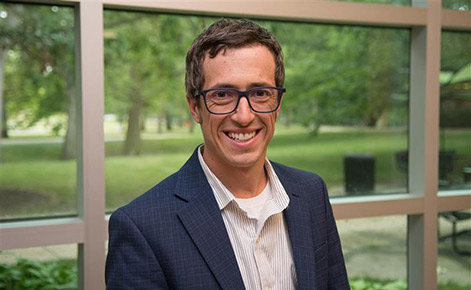
Matthew Brodhead
Matthew Brodhead

The authors argue making blanket decisions for all ABA providers is concerning and to be avoided. Naming providers as essential, and continuing with in-person consultations, puts providers, clients and families at an increased risk of contracting and spreading the disease. On the other hand, stopping all ABA services may not be in the best interest of the client physically or mentally.

How to move forward

The authors instead argue for decisions to be made on a case-by-case basis, and with ongoing, thorough and careful risk assessments, in conjunction with relevant local, state and federal policies and laws.

The framework they constructed centers around several key points:

  • ABA providers in leadership roles should not force unnecessary risk on clients and families, behavior technicians or the larger geographical community.
  • If clients have not requested services to continue, services should stop until the pandemic subsides.
  • If clients have requested services to continue, transition to telehealth using video conferencing, phone or other remote options, if at all possible. If telehealth services cannot be delivered, providers, clients and families must work together to assess how to effectively and safely provide services during this time.

“If there’s one thing we have learned from this pandemic, it is that things such as risk and resources can change at a moments notice,” Brodhead said. “If a decision is to be made about how to deliver ABA treatment, providers and consumers should be in continuous conversation about whether to stay the course or change directions.”

Joshua Plavnick headshot
Joshua Plavnick

Plavnick notes that resources grow daily for ABA providers—such as the Council of Autism Service Providers, which includes information on creating a telehealth program, federal guidelines, insurance issues and more.

Plavnick himself had to make a decision similar to the one addressed in the paper. As director of MSU’s Early Learning Institute (where Brodhead serves as research director), he needed to determine how to move forward.

“I kept hearing stories from other providers and former students about continuing to provide services, even when they thought it might be placing people at risk,” he said. “I wanted to do something to help provide guidance on this topic.”

The Early Learning Institute, serving preschool-aged children with ASD through evidence-based intervention practices and therapy, has transitioned from in-center services to only delivering telehealth-based family training.

In Michigan, Medicaid and insurance companies will authorize and pay for specific telehealth services, including family training in applied behavior analysis. Thus, ELI behavior analysts are conducting video conferences with parents through Zoom or another platform to provide training and coaching regarding procedures that will fulfill goals on the child’s treatment plan. ELI’s workers are continuing to monitor each case to decide if or when in-person visits would become a necessity, such as if a child would present a risk to themselves or others.

The shift to remote services can be challenging for all, families included, the scholars say. It is worth it, however, in the long-run to ensure the health and safety of the greater community.

“Listen to experts and do due diligence in building your own skills and competencies,” Brodhead shared as advice for ABA providers. “Recognize mistakes will be made, and be ready to rapidly learn from those mistakes. Above anything else, always act in the best interest of your clients.”


Additional resources

Keep up-to-date with university and college-level responses to the novel coronavirus.

Download the paper, “A Proposed Process for Risk Mitigation During the COVID-19 Pandemic.”

Matthew Brodhead is co-author of “Practical Ethics for Effective Treatment of Autism Spectrum Disorder” (Elsevier, 2018), and co-authored a recent study on improving the decision-making skills of ABA behavior technicians.

Brodhead and Plavnick are both faculty in MSU’s Applied Behavior Analysis master’s program.

The Early Learning Institute (ELI) meets the early intervention needs of children with autism spectrum disorders (ASD) in Mid-Michigan and provides “hands-on” training for service providers across a range of disciplines to implement evidence-based practices with children with ASD and their families.

Learn more about Plavnick and ELI:

Programs

  • Undergraduate Programs
  • Master's Programs
  • Doctoral Programs
  • Online Programs

Academic Departments

  • Counseling, Educational Psychology & Special Education
  • Educational Administration
  • Kinesiology
  • Teacher Education

For Students

  • Graduate Support
  • Undergraduate Support
  • Scholarships
  • Assistantships

For Faculty & Staff

  • Communications
  • Data & Analytics
  • Human Resources
  • Policies, Committees & More
  • Tech Services

Our College

  • Office of the Dean
  • Imagin[ED] 2030 Strategic Plan
  • Mission
  • Directory
  • Centers & Institutes
  • Accolades & Awards
  • Rankings
  • Subscribe to our Newsletter
  • "New Educator" Magazine
  • News
  • Jobs

Contact us

(517) 355-1734

Address

Michigan State University College of Education 620 Farm Lane East Lansing, MI 48824

Releases and Statements

Follow Us

  • Visit our Facebook page
  • Visit our page on X
  • Visit our Instagram page
  • Visit our LinkedIn page
  • Visit our YouTube page

If you're having accessibility issues, please let us know.

Know More: Campus Safety Information and ResourcesTransparency Reporting: Budget & Salary/Compensation
  • Contact Information|
  • Site Map|
  • Privacy Statement|
  • Site Accessibility|
  • Call MSU: (517) 355-1855|
  • Visit: msu.edu|
  • Notice of Nondiscrimination|

SPARTANS WILL|© Michigan State University|