By Lauren Knapp and Chris Reimann
William Schmidt is a Michigan State University Distinguished Professor, a member of the National Academy of Education, an International Academy of Education Fellow, an American Educational Research Association Fellow and an Organisation for Economic Co-operation and Development (OECD) Thomas J. Alexander Fellow for education quality and equity. Schmidt is the former national director of the Third International Mathematics and Science Study (TIMSS), the most extensive international study of math and science achievement ever conducted, and a leading expert on education policy concerning equitable learning opportunities for disadvantaged students.
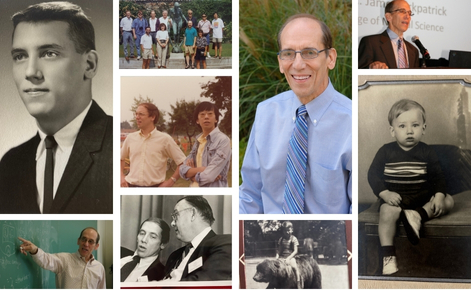
From there to here
How did a middle-class kid from Chicago find himself riding in a presidential motorcade, briefing a United States president and the national press corps on the results of an international study of education that he helped create and direct? Testifying before the U.S. Congress and state legislatures, meeting with governors, ambassadors and officials from more than 40 nations? Spending two days one-on-one discussing how to improve education globally with the world’s richest philanthropist? Working with a Physics Nobel Laureate?
“I often ask myself that very question,” admits Bill Schmidt.
“As a kid, I loved sports, especially baseball and playing with my friends. My parents believed in education, so college was always expected in my family, but we weren’t in a position to send me to a top-tier university. I figured I would eventually graduate and wind up teaching high school math somewhere locally.”
Turning points
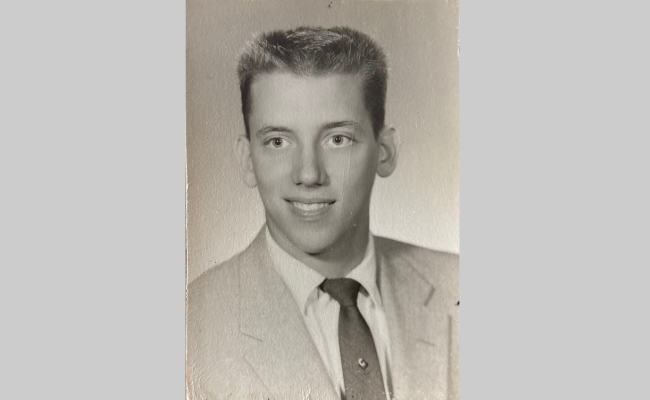
A few key events have made all the difference.
His middle school principal called his mother after Schmidt and his classmates took a standardized IQ test. “Your Billy is quite bright,” he told her. It was the first time anyone said anything like that about him.
“I was surprised. I was just a normal kid,” recalls Schmidt. But the revelation prompted him to start taking school seriously. He became a top student in high school, after which he enrolled in a small private school in Chicago, Concordia College. Schmidt excelled in math, to the point where he and two classmates would drive to De Paul University for advanced coursework.
On a lark, he enrolled in a course on experimental psychology in his senior year.
“[That was] the beginning of my life as an academic,” says Schmidt. “For the first time, I saw a connection between math and real life issues, how math could play an important social role.”
His professor was so impressed with Schmidt that he took it upon himself to investigate post-baccalaureate scholarship opportunities.
“I didn’t even consider the possibility of attending grad school,” admits Schmidt. “I was one of those kids with no clear plan in my head, but I had done well in school so far, so why not?”
The University of Chicago gave Schmidt a three-year scholarship, where he truly fell in love with mathematics and statistics. Schmidt finished his Ph.D. in three years.
By age 23, he was an assistant professor in the MSU’s College of Education’s Measurement and Quantitative Methods doctoral program.
An MSU career begins
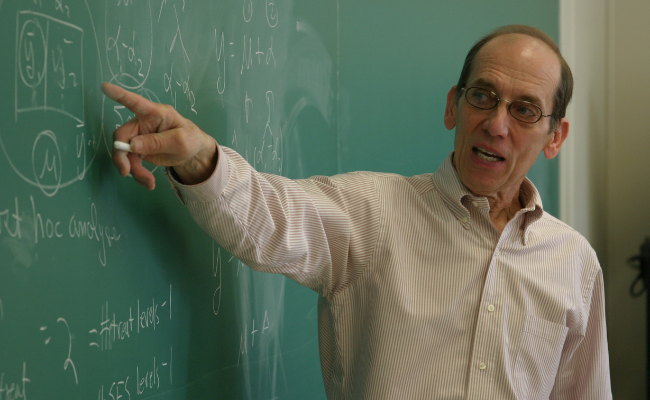
“My first class was CEP 932, beginning statistics,” recalled Schmidt. “My students thought they were getting a grad student – over half the class was older than I was.”
Schmidt’s career as a professor of statistics was taking off, when serendipity struck.
John “Jack” Schwille, now a professor emeritus, was heavily involved in the International Association for the Evaluation of Educational Achievement, which was beginning plans for the Second International Mathematics Study. Schwille knew that the project was in need of a statistical analyst.
“Jack asked me if I would work with the planning team in New Zealand for several months to help get the study organized. Jack opened that door for me.”
International comparisons of educational achievement became a strong line of inquiry for Schmidt and his team. His work caught the attention of the U.S. National Center for Educational Statistics, and Schmidt spent a year as statistical analyst for what would be a national report of the results of a study of education in the U.S. Schmidt also served a two-year stint as a senior staff member in the Office of Research and Evaluation at the National Science Foundation.
That sound you might hear is serendipity knocking, again.
A colleague in Canada was laying the groundwork for the Third International Mathematics and Science Study (TIMSS) and made a phone call; would Schmidt be willing to be the US lead for this new study?
Indeed, he would.
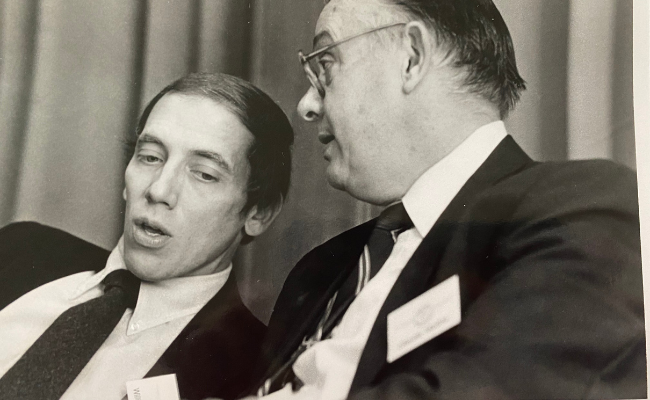
Reflection on TIMSS
He was put in charge of the study’s U.S. participation, and he helped craft its focus, not just on achievement but also on what students were asked to do in class. He secured a $2 million grant from the National Science Foundation to develop the notion of opportunity to learn (OTL) based on the reasoning that students do not arbitrarily learn math, and cannot learn what they are not taught. In addition, Schmidt together with his lifelong colleague Richard Houang and several graduate students developed the instrumentation to capture OTL.
President Clinton and the U.S. Congress then approved funding to expand the study from 8th grade, to include students in 4th and 12th grades, and to include literacy, science and mathematics. Schmidt oversaw the study’s mathematics portion.
As the TIMSS results became available, Schmidt was in high demand for interviews for local and national news outlets (such as CNN, ABC, CBS, Washington Post, the Wallstreet Journal, and the New York Times) as well as for major policymaker briefings. He even joined President Clinton at a press conference regarding the results — hence the presidential motorcade.
“All this has been done for us by Bill Schmidt from Michigan State University,” Schmidt recalls Clinton telling the press corps as he requested Bill rise for recognition from his front row seat in the Rose Garden.
Schmidt traveled around the world to present and explain the findings; he made presentations in over 50 countries, and visited all but five U.S. states.
While in San Diego to train contractors who would do the data collection in thousands of U.S. schools, a young woman from the educational nonprofit WESTAT organization stayed after to talk to Schmidt about his work. They have been married now for 27 years and have two daughters.
“At the time, I thought I was done with dating. I was wrong,” admits Schmidt with a smile.
Promising research
The impact of the international data on race, social class and student achievement and OTL has been far-reaching. It played a large part in efforts to create a national Common Core curriculum in mathematics intended to level the playing field for students whose life and school circumstances put them at a disadvantage. Schmidt argues all students deserve the opportunity to learn rich content from well-prepared teachers.
Schmidt and colleagues earned a five-year, $35 million Promoting Rigorous Outcomes in Math and Science Education project (PROM/SE) from the National Science Foundation. The ambitious, collaborative project brought together intermediate and local district superintendents from 60 rural and urban school districts in Michigan and Ohio whose students typically have the least opportunity to learn meaningful content in math and science.
Supported by an advisory board featuring Nobel Laureates, professional development experts from MSU’s Office for K-12 Outreach, the SMART Consortium (Cleveland area) and HighAIMS (Cincinnati area), PROM/SE collected valuable data pre-and post-intervention from students and teachers to evaluate the effectiveness of reform-oriented curriculum and instruction in math and science.
The goal was to change the way science is taught. With the help of academics including two Nobel laureates, we identified eight major concepts which undergird all of science. Inquiry was included as the central means by which we come to understand nature and the universe.
A major challenge to improved OTL has been resistance from many parents. Schmidt and other reformers seek to take math from a focus on computation and calculation to a richer set of understandings of what math really is and how it can be applied to solve real world problems.
“This is not how most parents experienced math when they were in school,” explains Schmidt. Compounding this challenge is that the typical U.S. teacher has much less training in mathematics than their international counterparts, another finding borne out by the data.
Schmidt and his Center for the Study of Curriculum Policy have focused on OTL by examining the content of mathematics textbooks at various grade levels, and on the relationship between race and social class on course-taking patterns in schools. One of their important findings is that opportunity to learn varies as much from classroom to classroom as it does from school to school, district to district or state to state.
“If we want all kids to learn, shouldn’t all kids get the same opportunities?” asks Schmidt.
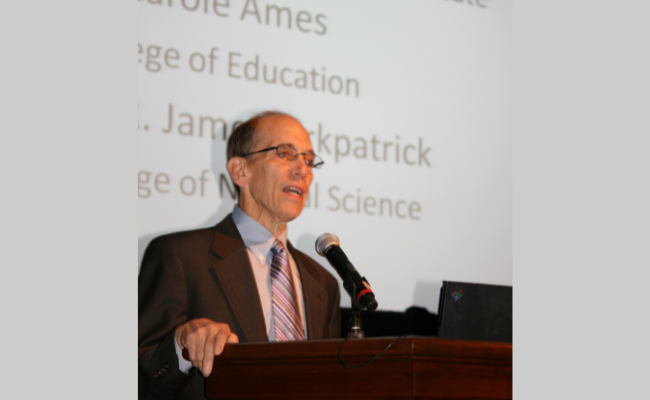
Recent years
In 2009 Schmidt was nominated by President Barak Obama to become commissioner of the U.S. National Center for Educational Statistics, where he would have been responsible for the measurement of all aspects of U.S. education, including conducting the National Assessment of Educational Progress and coordinating participation in international assessments. Schmidt reluctantly declined.
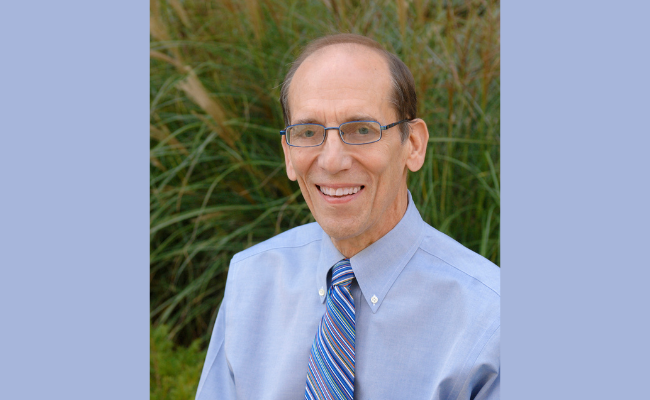
Often seen walking his ten-speed through Erickson Hall – he typically rode his bike to work – in 2014, Schmidt began to deal with effects from Lou Gehrig’s disease (ALS), a progressive and debilitating disease of the nervous system. Thanks to the dedication of his administrative assistant Jenn Cady, his research team and his home health care support, this has hardly slowed Schmidt down. He continues to direct the center and its continuing research only now he arrives on campus via his electric wheelchair.
His doctors tell him they are impressed because, “Despite the odds; You just keep pressing forward.”
In 2024, Schmidt and his team published three papers:
- The first is an experimental study indicating the value of supplemental art enrichment programs for Chicago’s disadvantaged high school students. Art foundations across the U.S. are taking note and plan to scale the program in other states.
- The second paper examines 19 countries, and the degree of emphasis placed on quantitative literacy in their curriculum standards. It also sought to determine the degree to which textbooks provide opportunities to develop that quantitative literacy. In the paper Bill and his co-authors identified a major policy-practice gap.
- The third paper analyzes how inequality in OTL is built into the U.S. education both at the system- and the classroom- levels, which Schmidt describes as his most important work to date. “Why do we treat some children differently?” His analyses suggest a more nuanced answer to the questions related to the relationship of race and opportunity to learn. They indicate the places in schooling where different aspects of student background have their impact and can, perhaps, guide us as to where to put our policy focus together with future research to better understand and, as a result, eliminate the inequalities that operate within the USA educational system.
What drives Schmidt in his work? “I was raised to believe in the equality of all humans – and I have found through my research that schooling is one place that can level the playing field. Unfortunately it has failed to do so and I strive to understand why.” reflects Schmidt.
Andreas Schleicher, the Director of Education and Skills at OECD, once said that Schmidt has done more for children in mathematics than anyone else in the world. He is quick to shy away from the compliment noting that, “There’s so much more to do.”
Bill Schmidt could never have imagined the career he would build or the opportunities it would bring. For instance, he once co-published a physics journal article on the effects of nuclear war (ionizing radiation) on fiber optic communications—far outside the field of education—thanks to a chance conversation with a Naval Research Laboratory officer during a flight to Washington, DC.
He could not have foreseen the profound impact he would have on children’s lives worldwide.
“My graduate students often ask me, ‘How do I figure out what to do?’ I tell them, ‘Don’t think you can plan your life perfectly. Keep your eyes open and takes chances.’”