frank-ken-aside-600x717

Meet Program Director, Ken Frank

Measurement and Quantitative Methods, Ph.D.

The doctoral program in Measurement and Quantitative Methods (MQM) at Michigan State University offers a path for students wishing to specialize in analysis, methodology, development and research.

Working with esteemed faculty, Ph.D. students will have the opportunity to delve into educational and psychological test development or quantitative methodology as applied to problems in education and social science research.

Collaborative Coursework

While completing MQM coursework and research, students can also work with other programs and scholars across the College of Education, or across campus in Psychology, Sociology, Epidemiology, Economics, or Statistics and Probability.

Research Specializations

  • Measurement: Build knowledge in large-scale assessment, instrument development, survey administration and more. Add to your degree and expertise with courses supporting your research goals in math education, psychology, economics and beyond.
  • Quantitative Methods: Explore statistical and econometric methods to examine issues related to educational research. Students will be trained in the quantitative basis for causal inference and educational evaluation that informs policy.
Video Thumbnail

Measurement and Quantitative Methods

The programs in Measurement and Quantitative Methods (MQM) at Michigan State University offers a path for students wishing to specialize in analysis, methodology, development and research.

Learning Outcomes

  1. Attain thorough, nuanced knowledge in the areas of measurement, quantitative methods, and empirical education research.
  2. Connect the acquired knowledge to applied statistical methods (including measurement) in education as well as to empirical research that uses quantitative methods to analyze data.
  3. Identify relevant, important research in measurement, research methodology and empirical research in education that will produce helpful tools to education researchers and produce important findings. Resolve critical issues in research design, statistical modeling, psychometrics, and education research and policy. For example, study populations that have been neglected, develop fair and equitable measures of important constructs, extend work on optimal design of empirical studies, improve statistical methods in education research, determine school resources and interventions that improve student learning, and investigate teacher effectiveness.
  4. Use appropriate quantitative methodology to address corresponding research questions of interest.
  5. Interpret and present results of the research to colleagues and broad audiences in an succinct, explicit, and effective manner.
  6. Develop and utilize methodology that can be applied to diverse settings and populations.
  7. Develop new methodologies that make contributions to educational statistics and measurement.
  8. Develop to become high-quality scholars in methods and also be able to solve societal problems recognizing issues of equality of opportunity.


Faculty Excellence

Faculty members are internationally known for their ground-breaking work on educational measurement and research methods. Their research has been funded by major agencies and foundations and published in top-tier journals.

Our faculty routinely host workshops or other professional development opportunities within the broad MQM field. In the past, our faculty have been invited to teach courses as national and international universities (including in Europe, Canada, China, Australia, South America, Japan, Vietnam, Russia and Kazakhstan). 

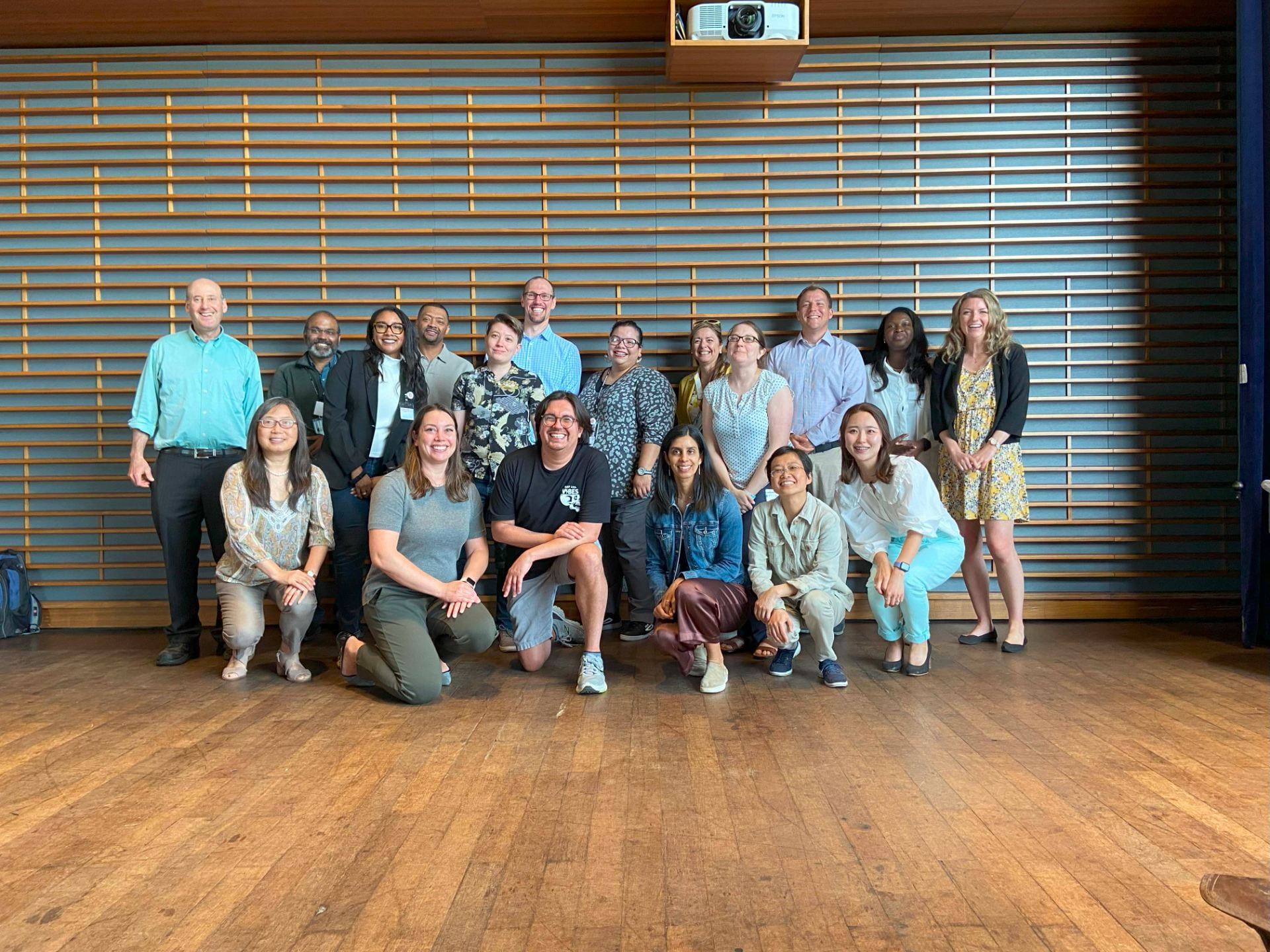
Pictured: Kenneth Frank, MQM program director and an MSU Research Foundation Distinguished Professor of Sociometrics, stands at the far left. Frank annually contributed to the Summer Institute in Advanced Research Methods for Science, Technology, Engineering and Mathematics in Education Research (University of Chicago).