What comes to mind when you hear “urban education”? Where do those ideas come from, and what might you discover by looking more closely?
The Urban Educators Cohort Program (UECP) invites you to explore these questions through Michigan school visits, conversations with educators, campus events and reflection.
UECP is a personal and professional academic development experience that you help shape around your interests. You don’t need to arrive with a commitment to teach in an urban school. Bring your curiosity and explore what matters to you as a future educator.
Explore the UECP Program Roadmap to see what to expect throughout your experience.
New Perspectives on Urban Education
No single story captures urban education. Schools and communities have distinct histories, strengths, priorities and experiences.
Through UECP, you’ll meet people whose perspectives may expand your understanding of urban schools.
Shape your UECP Experience
Connect your interests with opportunities to learn in schools, across campus and alongside your peers.
School Visits
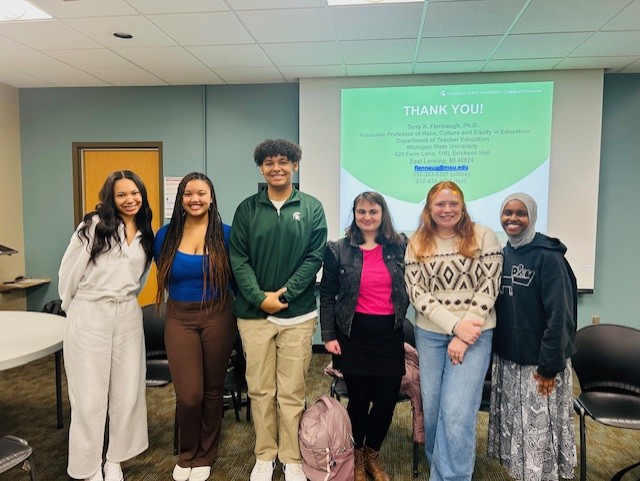
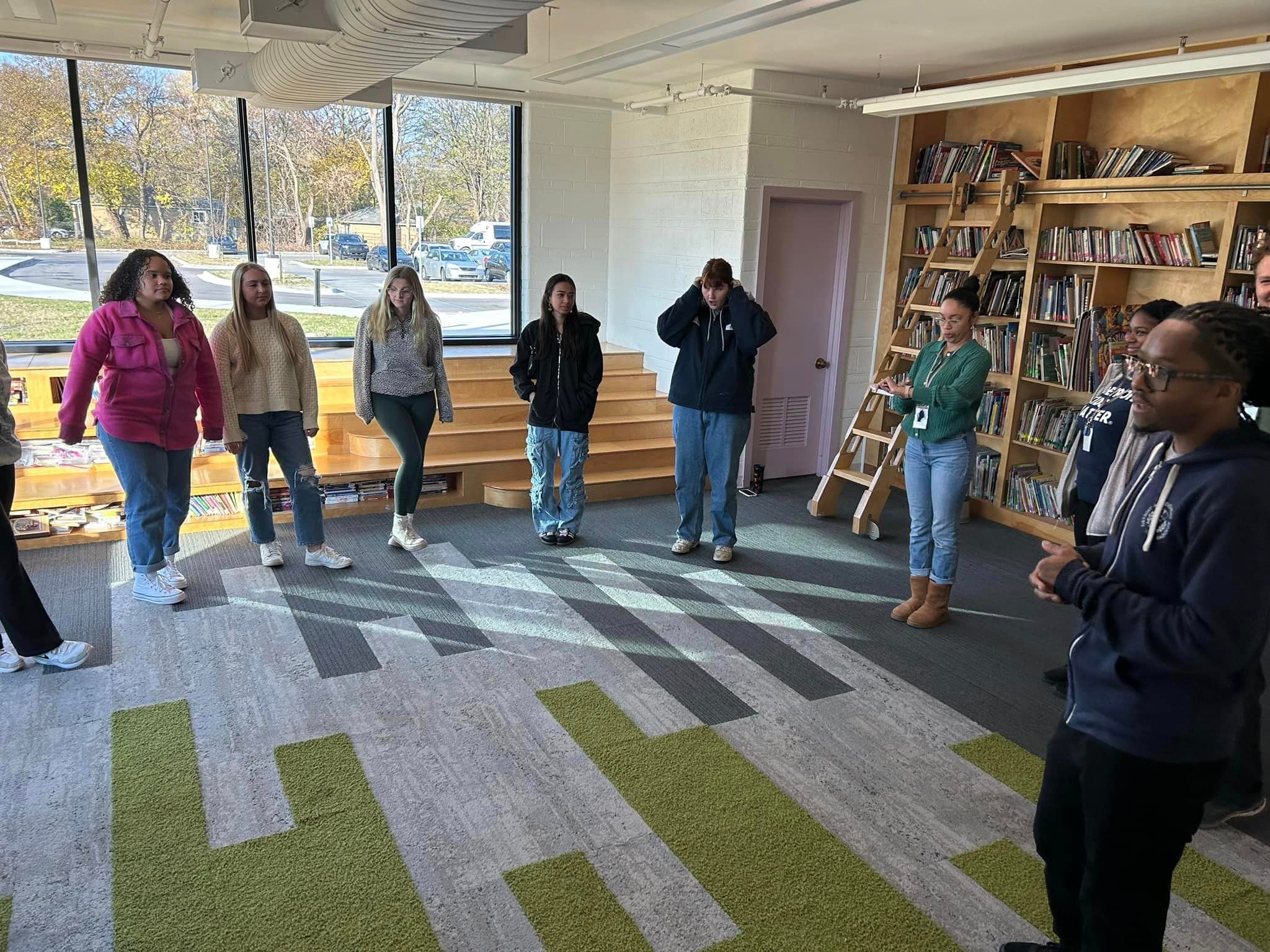
Meet educators and explore different school communities across Michigan.
Campus Connections
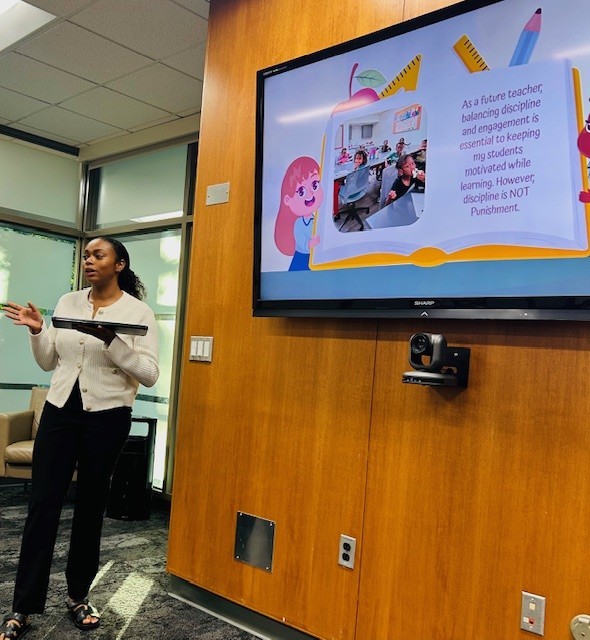
Learn through speakers, documentaries and events that connect with ideas from your coursework.
Reflection and Conversation
Consider what you’re learning, revisit assumptions and identify what you want to explore next.
Obtain admission to Michigan State University and indicate your intention to complete a teacher certificate in elementary or secondary education. Information on financial aid for students can be found on the Office of Financial Aid homepage.
After Acceptance to MSU, apply to the Urban Educators Cohort Program
Application reviews begin 2-4 weeks after submitting a completed application, which includes a student essay, grade point average, SAT or ACT scores, high school work and work activities, and written communication skills will be considered in the selection process.
The application review committee reviews applications on a rolling basis.
Applicants can expect to hear from the application review committee within 2-4 weeks of submission of an application.
Teacher Preparation Program
The Urban Educators Cohort Program is a specialized program within the teacher preparation program at Michigan State University. UECP students must therefore complete the same requirements as any Teacher Education student at Michigan State University. UECP simply provides added special emphasis in urban education themes.
When you complete UECP you will graduate from Michigan State University with a degree in Teacher Education and you will be eligible for teacher certification both in Michigan and, often with little or no extra requirements, in many other U.S. States.
For details on the teacher preparation program at Michigan State University, including program requirements, visit the teacher preparation program website.
Students attending our nation’s urban schools deserve teachers who have the knowledge, skills and dispositions to seize the opportunities and meet the challenges present in these learning environments. We know that teachers in urban schools play immensely important roles in either the perpetuation of highly problematic frameworks of teaching and learning in urban communities, or the dissemination of liberating pedagogies among communities most affected by systemic discrimination. That is why students in urban schools need teachers who know how to cultivate the resources and potential that others may fail to notice—so that all learners have the best chances to succeed. Those teachers are starting their preparation through the Urban Educators Cohort Program (UECP) at Michigan State University. UECP gives future educators the tools to understand the history and effects of social, cultural, political and economic issues that play out in urban schools, and to effectively meet the needs of all learners.
As a member of UECP, you will become part of a close-knit program along with peers who spend their freshman and sophomore years at MSU together visiting real classrooms and taking specialized courses together. You will receive instruction from renowned faculty in Urban Education and all the benefits of the nation’s top-ranked teacher preparation program, with a distinctly urban focus.
Through program participation, you will:
Examine the role of sociocultural issues in teaching and learning
Understand structures of power, privilege & oppression
Embrace cross-cultural differences
Create inclusive learning environments
Connect with families & communities
UECP students spend time in real schools and classrooms early in their preparation at MSU, through the end of their fifth-year internship. Special opportunities for UECP students include:
Educational tours in Chicago and Detroit
Special invitations to tutor, attend seminars and participate in undergraduate research
Mentoring from successful urban teachers and administrators
The (paid) Urban Immersion Fellowship in Detroit each summer
Special consideration for College of Education Undergraduate Scholarships
Official transcript acknowledgment of UECP Program Completion
Please explore our website to learn more. We look forward to you joining our unique and exciting program!
Below is an outline of the UECP program requirements. For a visual overview, you can also view the UECP Requirements infographic. Students must enroll in UECP designated sections for TE 101 and 102. Descriptions can be found on the MSU Course Description website.
The first year in the cohort sets the foundation. TE 101 and TE 102 offer an opportunity to learn about equity and justice through an urban education lens, and with like-minded peers, creating a learning community that lasts throughout your time at MSU.
Coursework:
Fall Semester: TE 101: Social Foundations of Justice and Equity in Education (must enroll in a UECP section)
Spring Semester: TE 102: Pedagogy and Politics of Justice and Equity in Education (must enroll in a UECP section)
Activities:
Participate in at least 1 Cohort Activity and submit short response on what was learned about urban education. Cohort activity can include:
Special lecture or Urban Education Speaker Series
Workshop
Research Presentation
School visit
Second Year
Coursework:
No specific classes to take.
It is recommended that you pursue a deeper understanding of equity, justice, and culturally responsive teaching through elective choices
Activities:
Participate in at least 1 Cohort Activity and submit short response on what was learned about urban education. Cohort activity can include:
Special lecture or Urban Education Speaker Series
Workshop
Research Presentation
School visit
Third Year
Coursework:
Urban Pre-Internship
Activities:
Participate in at least 1 Cohort Activity and submit short response on what was learned about urban education. Cohort activity can include:
Special lecture or Urban Education Speaker Series
Workshop
Research Presentation
School visit
Fourth Year
Coursework:
Urban Internship
Includes Lansing, Holt, Waverly, some schools in East Lansing, Detroit, Grand Rapids, Kentwood, Wyoming, many schools in South East Michigan, and some Oakland County schools.
Activity:
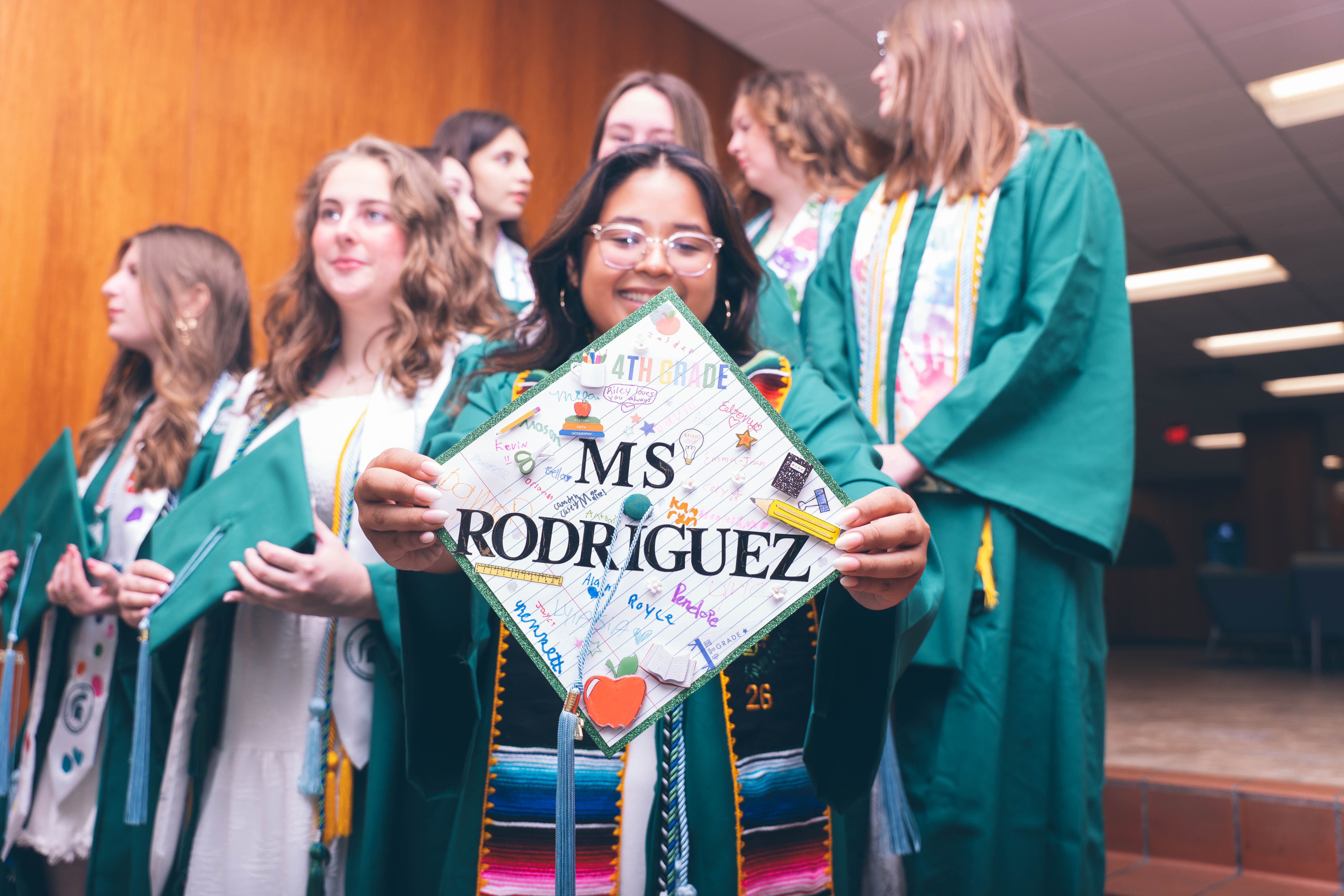
Participate in the Senior Photo Celebration and Recognition Ceremony
The following guidelines support our understanding of urban and may be used to determine urban placements:
At least 33% students of color and 1 or more of the following:
20%+ socio economically disadvantaged;
0%+ ELL;
less than 50% academic achievement in math or reading
At least 30 hours of service working with children, youth, and/or urban communities
Internship Year
To fulfill the urban internship requirement for UECP, students’ field placements must be in schools that are racially and/or socio economically minoritized. The following guidelines support our understanding of urban:
The school has a 50% + 1 students of color population
The school receives Title 1 funding, and/or
The school has a 50% + 1 free and reduced lunch population.
You can learn more about UECP’s program objectives in two formats: a diagram that provides a visual overview and a table that presents the objectives in a structured format.
"I really liked hearing from students who are relatable for me and hearing about their own experiences. They inspired me to be even more curious."
- UECP Student
"On the school visit I witnessed students within the urban district receiving the opportunity we had always deserved. I witness the common misconception about urban institutions be completed refuted by the quality of the material, classroom settings, technology, and educators. We heard both the perspectives of educators and students: each proving just how possible it is to exist within a community that values one's worth and/or potential. I am glad that my schoolmates and I were able to see that the education system does not have to remain traditionally limited."
- UECP Student
"Something that was said that made an impact on me was that you don’t need to take extravagant steps that solve injustice for all of society in order to be an abolitionist teacher. Standing in solidarity with your students, as well as fighting against unfair treatment and injustice in your community is just one way of doing so"
- UECP Student
"Learning about equity and doing equity are two different things."
- UECP Student
"I really liked hearing from students who are relatable for me and hearing about their own experiences. They inspired me to be even more curious."
- UECP Student
"On the school visit I witnessed students within the urban district receiving the opportunity we had always deserved. I witness the common misconception about urban institutions be completed refuted by the quality of the material, classroom settings, technology, and educators. We heard both the perspectives of educators and students: each proving just how possible it is to exist within a community that values one's worth and/or potential. I am glad that my schoolmates and I were able to see that the education system does not have to remain traditionally limited."