During this time of year, many teams are just starting their spring season. To make sure the team starts off in the best direction, it is essential that the coach develops a high level with the players and amongst team members.
By Jenny Nalepa
The Importance of Trust
One factor that contributes to team success is trust. Every coach should know the roles that trust has within their team and how they can develop it. Similar to using effective reinforcement, trust leads to strong team cohesion and enhances a coach’s ability to develop their athletes and team to reach their full potential. A lack of trust can disrupt the team’s focus, decrease performance, and contribute to the loss of a player’s confidence in the team, the coach, and one another.
A lack of trust . can disrupt the team’s focus, decrease performance, and contribute to the loss of a player’s confidence in the team, the coach, and one another.
Trust is an individual’s belief that another individual or group of individuals will perform a particular action and the belief that that action is consistent with one’s goals and objectives. When we trust someone, we believe enough in the probability that a person will perform a given action. As such we choose to cooperate with them. Trust, therefore, is a function of risk and responsibility. If we believe that someone is responsible enough, we are willing to take a risk on their doing what we expect. The greater the responsibility that the person demonstrates or the greater our belief in their responsibility, the greater the risk we are willing to take.
Four Levels of Trust on Teams
- Team’s trust in the coach. The athletes must be able to trust in the coach’s ability to develop them as athletes and individuals. The world of athletic competition often places huge physical and psychological demands on players. They have doubts in their abilities and may face grueling physical competition. Players therefore need to ‘trust’ that their coach will be there to offer them the technical/physical guidance to succeed and the psychosocial support if they do not.
- Coach’s trust in the team. The coach needs to be able to trust that the athletes will listen to the instructions given to them. Often, coaches are held accountable for the performance of their team and players. It makes sense therefore that coaches need to ‘trust’ that players are implementing the strategies and techniques that they have developed and practiced and giving 100% of their effort.
- Players’ trust in one another. Athletes need to trust one another to work together as a team and trust each other’s abilities during competition. In team sports the success of the team is a function of the player’s being able to perform collectively. Often players have different roles and responsibilities and therefore every player needs to ‘trust’ that everyone else will do what they need to do when they need to do it.
- Players’ trust/belief in him/herself.Players need to have a belief in their ability to execute the technical and tactical aspects of the game necessary for success. This is sometimes known as self-confidence or self-efficacy. Players who have low efficacy or confidence do not perform as well as players who have ‘trust’ in their abilities.
Coach’s Role in Building Trust
Trust is a product of a team’s culture. Therefore, coaches play an integral part in building trust on their team at all four levels. The coach has the responsibility to build trust within his team by shaping the team’s culture.
A team’s culture consists of the beliefs and behaviors of the athletes and coaches and communication between all those on the team. It is the coach’s role to influence these factors to shape and develop the culture on their team. As the leader of the team, it is the coach’s role to shape their team’s culture into one that embodies trust. To shape and develop the team’s culture, the coach needs to clearly display a leadership style that is consistent with the holistic development of the team and its members.
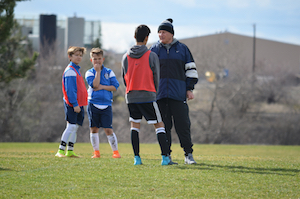
A coach’s leadership therefore must target both the physical aspects of sport as well as the psychological factors of the individual athlete. The coach must have extensive knowledge ofthe sport, substantial experience in the sport, and have the ability to give effective feedback to the athlete. Athletes are able to trust that their coach can develop their physical skills and help them reach their potential when the coach has expertise in techniques, tactics, and strategies of the sport. Coaches also need to make the psychological development of their athlete’s a priority. Athletes should feel that they are valued as both an athlete as well as an individual. They should feel confident that the coach values them as a person and not just by their performance in sport.
How to Build Trust On Your Team
Establish a Vision
A clear vision for the teams future lets athletes know the direction in which the team is heading. When coaches create measurable goals for the team, athletes can understand what is expected of them. Ultimately then the vision provides players with a yardstick against which they can assess the actions of the coach, their teammates and themselves. Trust is built when individuals display behavior, which is consistent or aligned with this vision and team goals.
Define clear Roles and Responsibilities
A coach that has defined roles and responsibilities for his players creates accountability on their team. By doing this, the coach is accountable to the team and simultaneously makes team members accountable to each other. This accountability facilitates the building of trust since there is a clear understanding of the role each member on the team should fulfill. When everyone has clear roles and responsibilities and everyone lives up to them, then trust can be built.
Reward & Sanction
Many coaches want to be friendly with their players and the team as a whole. While this is good to build camaraderie, coaches should ensure that they have in place a system that equitably rewards players when they perform and sanctions and corrects those who do not live up to expectations.One of the biggest obstacles to trust on a team is a coach who does not treatplayers equitably or players who think the coach is a pushover.
Build Confidence
Confidence in one’s self, in others on the team, and in the team as a whole can facilitate trust. Athletes need to have confidence that the coach will develop their skills, while the coach needs to have confidence in their athlete’s abilities. Confidence can be facilitated through the coach through a culture that involves supported and trusted interpersonal relationships between the athletes, teammates, and coaches. Team building and communication activities that focus on trust, understanding, and a collective team identity are tools in which coaches can instill confidence in their athletes.
Communicate openly
Athletes should understand what is expected of them and when it is expected. Coaches should be honest, direct, and open when they communicate with their team. They should also be able to listen and involve their athletes in decisions. Simultaneously, they need to be able to give accurate and timely feedback to their players. Additionally, coaches should create open channels of communication that encourage athletes to have more input. Players need to feel that they can express themselves, ask questions and clarify expectations or instructions.
Jennifer Nalepa is an Assistant Professor in the Department of Kinesiology. She works in the graduate programs in sport coaching and leadership and teaches courses in sport psychology, athlete development, and positive youth development. She conducts research on coach education and athlete development. Jennifer also coordinates the Summer Coaches School, a two day coach education event, at Michigan State University and the Institute for the Study of Youth Sports.