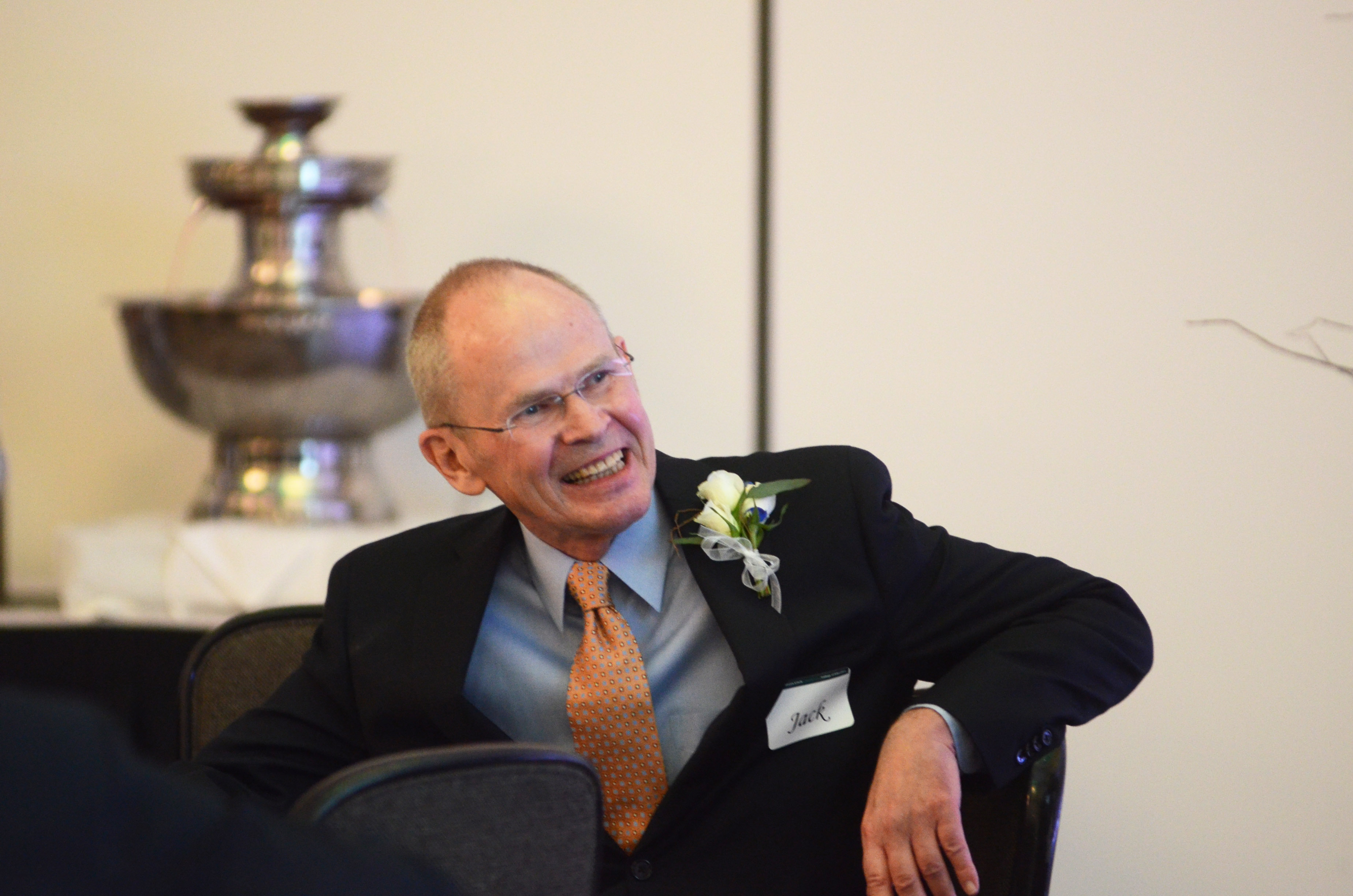
John “Jack” Schwille, a professor emeritus and former associate dean for the Office of International Studies in Education (OISE), died on September 21, 2026. Schwille, was with the college from September 1977 until May 2013.

Schwille was an influential leader on campus, but particularly within the College of Education, where he helped lay the foundation for international work. Schwille played a pivotal part in developing the Office of International Studies in Education (OISE), which recently celebrated its 40-year anniversary (founded in 1984). Schwille served as director of OISE for over 30 years.
Professor Emerita Maria Teresa Tatto spoke about Schwille’s work at MSU: “Jack was an extraordinary presence at Michigan State University and in the broader field of comparative and international education. For more than 35 years, he helped shape MSU’s international vision in the College of Education, encouraging students and colleagues to think boldly, work across borders, and take the promise of education seriously in global contexts.”
Retired Professor and Associate Dean for OISE Lynn Paine shared the impact of Schwille’s leadership with OISE, “His vision for internationalization and his tireless efforts at MSU helped to create the distinctive College of Education that we are. He helped recruit me to MSU (and regularly helped me see why our college was a uniquely stimulating community for learning and professional growth), and I know he helped bring many other faculty and students from all over the world to MSU, always showing genuine interest in our work and eager to help connect us to new possibilities.”
Dean and University Distinguished Professor Emeritus Robert Floden recalled Schwille’s work with OISE to improve teacher education internationally, “Under his leadership, the college engaged in several major projects, many aimed at improving the systems of teacher preparation in countries including Egypt, China, Pakistan, Tanzania and Chile. ... In all this work, Jack was a model of leadership who was thoughtful, purposeful and determined.”
As a researcher, Schwille contributed significantly to cross-national studies organized by the International Association for the Evaluation of Educational Achievement (IEA). Schwille and Tatto co-directed the 17-nation Teacher Education in Mathematics study (TEDS-M), which was the first international assessment of student learning in higher education based on national samples.
During his time with the College of Education, Schwille also supported and mentored numerous students and student groups.
Martial Dembélé, College of Education alum and current UNESCO Chair in Education Policy and the Teaching Profession at Université de Montréal, recalled his personal experiences with Schwille, “During the four and a half years I spent at MSU’s College of Education, I was actively involved in and chaired the African Educational Research Group. Jack was very supportive of this group, attending most of its speaker series and suggesting potential speakers. He did the same with the Asia Study Group. He truly made international students feel important and at home in the College of Education.”
Schwille cared deeply not just about his international work, but about bettering the lives of people he interacted with.
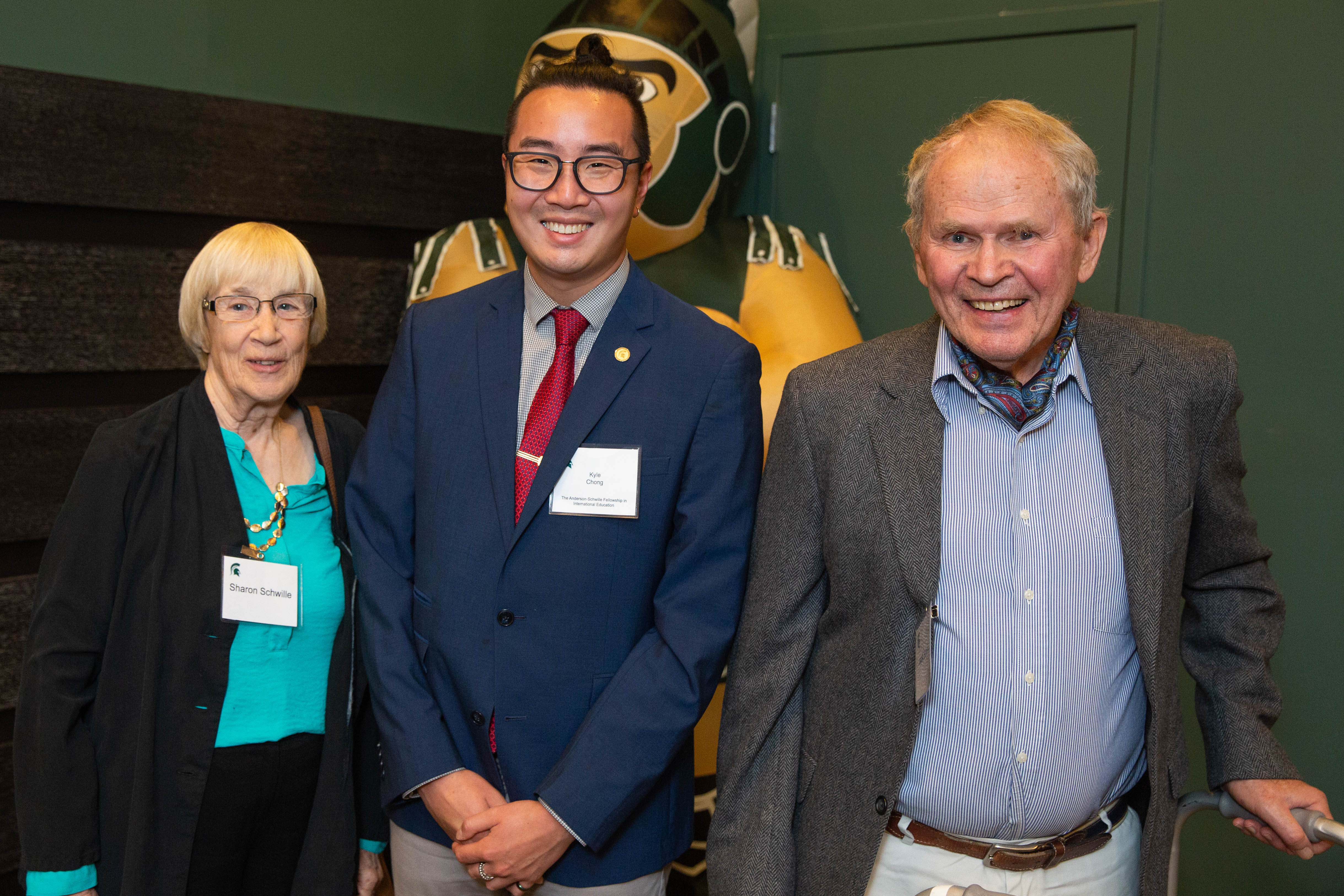
Current Associate Dean of International Studies in Education Amita Chudgar reflected on a sentiment that Schwille shared that has stuck with her: “Jack was incredibly successful, a brilliant scholar, thinker, senior leader. But truly, when I think about him, what I remember most is something he had shared in a speech before his retirement. He was talking about his career, and he said, ‘Ultimately, what matters to me are people.’ ... It is rare to meet senior scholars of Jack’s distinguished standing who are also so deeply dedicated to the people they work with. He embodied incredible professional values that I have strived to emulate.”
A few of Schwille’s notable career accomplishments include Honorary Member of the International Association for the Evaluation of Educational Achievement (2010), Honorary Fellow of the Comparative and International Education Society (2016) and special recognition from Michigan State University for Promoting International Understanding (2013).
Schwille also authored several books, including an in-depth book about internationalization in the MSU College of Education over several decades, “Internationalizing a School of Education: Integration and Infusion in Practice” (MSU Press, 2016).
Beyond his scholarly work, Schwille was a friend, mentor and colleague to many.
Tatto spoke about her experience working with Schwille, “I joined MSU in 1987 as an assistant professor, and as soon as I met Jack, I felt at home. From the beginning, he welcomed me with the attentiveness, warmth and generosity that so many of us came to associate with him. I had the privilege of working with Jack for more than twenty-five years. Across those many years, I came to know him not only as an influential scholar and leader but also as a deeply attentive and supportive colleague. He listened carefully, encouraged generously, and had a rare gift for bringing people into meaningful collaboration. He believed in ambitious projects and in the people who made them possible.”
Paine fondly recalled her friendship with Schwille, “Jack shouldered significant responsibilities throughout my tenure at MSU, but he always found time to listen to me and other colleagues, meet for long sessions with students and to invite us and push us to keep learning and growing. I have consistently been deeply touched by his interest in not only my work but also my family and our well-being; he actively sought out chances to get to know and keep abreast of our kids throughout their lives.”
Dembélé said, “It is clear to me that our personal and professional trajectories are in large part made up of critical encounters (of both people and events) and what we make of them. Mine have been significantly shaped by my encounters with Jack.”
Tatto shared, “I will remember Jack for his kindness, his intellectual generosity, his steadiness and his friendship…His influence will continue through the many students, colleagues and collaborators whose lives and work he touched.”