Michigan State University Professor Lisa Linnenbrink-Garcia received a William J. Beal Outstanding Faculty Award at this year’s All-University Awards. The award is annually given to faculty in recognition of their outstanding contributions to the university. Up to 10 faculty receive the honor annually.
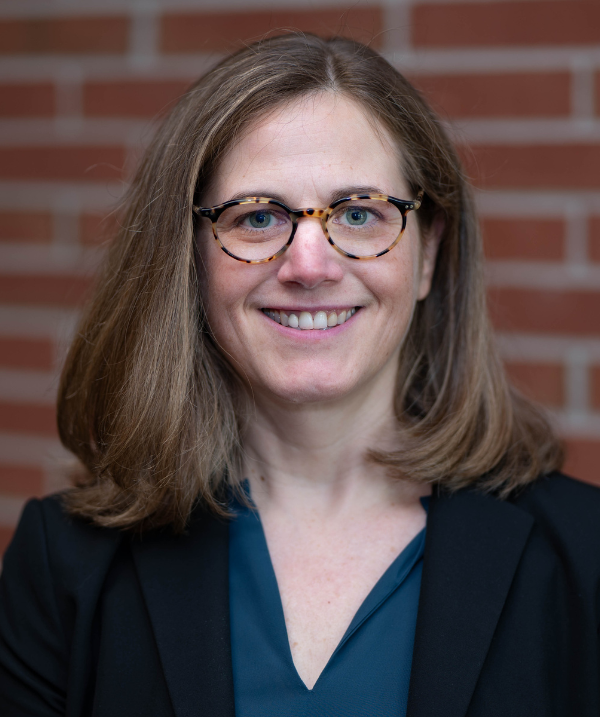
Linnenbrink-Garcia joined the College of Education’s Department of Counseling, Educational Psychology and Special Education in 2014 (becoming a full professor in 2017). In that time, she’s earned several national honors, including being selected as a Fellow of the American Psychological Association (Division 15) in 2022 and as a Fellow of the American Educational Research Association in 2024.
Linnenbrink-Garcia is a recognized leader in motivation science, with a focus on academic engagement and persistence and the application of educational psychology to science and engineering instruction. She has received nearly $10 million in external funding on grants in which she has served as the principal or co-principal investigator, including a $1.95 million grant from the National Institutes of Health in which she and Tony Perez (Old Dominion University) examined how contextual factors and psychological mechanisms supported or disrupted biomedical/biobehavioral career pathways. To date, her work has been cited more than 23,000 times.
“Through her interdisciplinary collaborations and use of rigorous research methodology and sophisticated analytic approaches, her work has solved previously unsolvable problems in both basic research in educational psychology and its application to growing and diversifying the workforce in STEM,” wrote John A. Hannah Distinguished Professor Barbara Schneider in a nomination letter.
For example, Linnenbrink-Garcia partnered with fellow MSU Professor Jennifer Schmidt to consider ways to increase students’ motivation to learn science. The result? M-PLANS, which helps educators plan and prepare engaging, data-informed science lessons. She has also collaborated for more than a decade with MSU Professor S. Patrick Walton in the College of Engineering to use motivational theory to enhance undergraduate engineering students’ persistence.
Linnenbrink-Garcia co-edited the ground-breaking "International Handbook of Emotions in Education" (Routledge, 2014), which “describe[s] in detail the ways in which emotions affect learning and instruction in the classroom as well as students’ and teachers’ development and well-being.” The first edition has seen significant success, according to Routledge leaders; Linnenbrink-Garcia is one of the scholars currently under contract to co-develop a second edition. It is “one of the most popular volumes we have published in the last decade,” wrote Patricia Alexander, a University Distinguished Professor at the University of Maryland and the handbook series editor.
“What sets Dr. Linnenbrink-Garcia apart, and [what] makes her scholarship truly outstanding, is her ability and willingness to look beyond her immediate findings to see what they imply about how researchers have conceptualized motivation, affect and learning,” Jeffrey A. Greene wrote in a nomination letter. Greene is the McMichael Professor of Educational Psychology and Learning Sciences and an associate dean at the School of Education at the University of North Carolina, Chapel Hill.
Linnenbrink-Garcia has published more than 60 scholarly articles and nearly 30 book chapters. Beyond publishing, she has also made a difference in academia through leadership, including serving on as co-editor Educational Psychologist (#1 ranked journal in educational psychology) from 2020 – 2024. She is also on the editorial boards for some of the leading journals in the field, including more than 20 years of service for both Contemporary Educational Psychology and the Journal of Educational Psychology.
At MSU, she is known for her collaborations.
Shortly after joining the college, she helped create the MI State Motivate Group, a “collaborative lab group consisting of faculty, post-doctoral scholars and doctoral students, which is now a vibrant research community with a shared lab space,” Schneider continued in her letter. This collaborative lab group investigates the role of motivation in engagement and social processes; it serves as both a physical space and intellectual space for scholars to come together to explore key questions related to motivation in educational settings.
In addition, Linnenbrink-Garcia is credited with helping to establish her academic department’s Faculty Mentoring Committee which, Schneider noted, has become “a key ‘selling point’ for recruiting new faculty.”
This spirit of collaboration is not limited to East Lansing.
Linnenbrink-Garcia has also served in various mentorship capacities for the American Educational Research Association and the American Psychological Association. She has organized 10 symposia as chair or co-chair at national/international conferences and has been an invited speaker at global conferences and presentations. “
Dr. Linnenbrink-Garcia is an eminent, internationally acclaimed scholar whose outstanding record of scholarly, academic and service activities mark her, in my estimation, as being among the top 10 scholars in all three areas worldwide,” wrote Kristy A. Robinson, an associate professor at McGill University.
Others echoed the statement.
“In thinking about her ‘status’ in [the] field of motivation, I regard her as the top scholar in her generation of scholars, and even beyond her generation,” wrote Allan Wigfield, professor emeritus of the University of Maryland. “In Dr. Linnenbrink-Garcia you have on your faculty at MSU one of the superstars in the educational psychology field.”