Jump to HeaderJump to Main ContentJump to Footer
Michigan State University
College of Education
  • Strategic Plan
  • Resources
  • People Directory
  • Alums
  • Contact
  • Give

College of Education

  • About
    • Mission & History
    • Strategic Plan
    • Points of Distinction
    • Leadership
    • Academic Departments, Centers, Institutes & Offices
    • Faculty and Staff Directory
    • Inclusion & Diversity
    • Outreach Efforts
    • Buildings & Facilities
    • Career Opportunities
    • Ways to Give
    Dean Jerlando Jackson stands in front of a sign that reads Michigan State University.

    Meet Dean Jackson

    Meet Dean Jerlando F. L. Jackson
  • |
  • Academics
    • Majors & Degree-Granting Programs
    • Undergraduate Programs
    • Master's Studies
    • Doctoral Studies
    • Online Studies
    • Graduate Certificates & Specializations
    • Undergraduate Student Support
    • Graduate Student Support
    • Assistantships
    • Scholarships
    • Accreditation
    Five Spartans pose for a photo in a row during an awards ceremony; three are holding paper awards and wearing medallions around their neck with a turquiose ribbon.

    Record-setting KIN Spartans

    Alums make history with national KIN honors
  • |
  • Certifications
    • Become Certified or Add an Endorsement
    • School Psychologist Certification
    • Student Affairs Office
    • MSU Academic Programs Catalog
    • MSU Office of Accreditation, Assessment, Curriculum & Compliance
    Individual bikes on MSU's campus

    Educator Preparation & Accreditation

    Explore our efforts
  • |
  • Research
    • Office of Research Administration
    • Centers & Institutes
    • Student Research Opportunities
    • Research & Award News
    • Faculty Directory
    Individual holds scans of a brain in two hands.

    Uncovering processes that lead to learning outcomes

    Read about our research
  • |
  • Outreach
    • Policy
    • K-12 Schools & Districts
    • Urban Areas
    • International Areas
    • Alumni
    • Institute for the Study of Youth Sports
    • Office of Access & Community Engagement
    • Office of International Studies in Education
    • Office of K-12 Outreach
    • All Offices, Centers & Institutes
    Young children line up for an activity in IM Sports circle. The children wear bright green shirts.

    Detroit youth learn about movement at MSU

    Explore the KIN Day of Action
  • |
  • News & Events
    • News
    • New Educator Magazine
    • Subscribe: ReviewED Newsletter
    • Events Listing
    Kristen Bieda wearing a blue blouse and glasses. There is a bookshelf full of books in the background.

    Celebrating: Kristen Bieda

    Bieda named Department of Teacher Education Chair
College of Education
  • About
  • Academics
  • Certifications
  • Research
  • Outreach
  • News & Events

< About

  • Mission & History
  • Strategic Plan
  • Points of Distinction
  • Leadership
  • Academic Departments, Centers, Institutes & Offices
  • Faculty and Staff Directory
  • Inclusion & Diversity
  • Outreach Efforts
  • Buildings & Facilities
  • Career Opportunities
  • Ways to Give
Dean Jerlando Jackson stands in front of a sign that reads Michigan State University.

Meet Dean Jackson

Meet Dean Jerlando F. L. Jackson

< Academics

  • Majors & Degree-Granting Programs
  • Undergraduate Programs
  • Master's Studies
  • Doctoral Studies
  • Online Studies
  • Graduate Certificates & Specializations
  • Undergraduate Student Support
  • Graduate Student Support
  • Assistantships
  • Scholarships
  • Accreditation
Five Spartans pose for a photo in a row during an awards ceremony; three are holding paper awards and wearing medallions around their neck with a turquiose ribbon.

Record-setting KIN Spartans

Alums make history with national KIN honors

< Certifications

  • Become Certified or Add an Endorsement
  • School Psychologist Certification
  • Student Affairs Office
  • MSU Academic Programs Catalog
  • MSU Office of Accreditation, Assessment, Curriculum & Compliance
Individual bikes on MSU's campus

Educator Preparation & Accreditation

Explore our efforts

< Research

  • Office of Research Administration
  • Centers & Institutes
  • Student Research Opportunities
  • Research & Award News
  • Faculty Directory
Individual holds scans of a brain in two hands.

Uncovering processes that lead to learning outcomes

Read about our research

< Outreach

  • Policy
  • K-12 Schools & Districts
  • Urban Areas
  • International Areas
  • Alumni
  • Institute for the Study of Youth Sports
  • Office of Access & Community Engagement
  • Office of International Studies in Education
  • Office of K-12 Outreach
  • All Offices, Centers & Institutes
Young children line up for an activity in IM Sports circle. The children wear bright green shirts.

Detroit youth learn about movement at MSU

Explore the KIN Day of Action

< News & Events

  • News
  • New Educator Magazine
  • Subscribe: ReviewED Newsletter
  • Events Listing
Kristen Bieda wearing a blue blouse and glasses. There is a bookshelf full of books in the background.

Celebrating: Kristen Bieda

Bieda named Department of Teacher Education Chair
  • Strategic Plan
  • Resources
  • People Directory
  • Alums
  • Contact
  • Give
Faculty and Staff

June 17, 2024 | Read time 4 min

Families’ voices: The trauma of preschool suspension and expulsion

Summary

New MSU research examines how preschool suspension and expulsion affect children and their families. Through interviews and focus groups, caregivers described these experiences as traumatic, often marked by feelings of blame, shame and rejection, while highlighting concerns about communication and support from early childhood programs. The findings underscore the need for more relationship-centered, inclusive approaches that help educators and families address challenges before exclusionary discipline occurs.

Preschool suspension rates are shocking across the nation. Across the U.S., about 250 preschoolers are suspended or expelled daily, according to findings from the Center for American Progress (2017) and the National Survey of Children’s Health (2016). 

But how do caregivers experience the tragic phenomenon?  
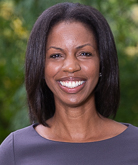
Charis Wahman smiles for the camera in an outdoor setting, standing in front of a bush lush with green leaves. Charis wears a dark puple shirt. Charis' black hair is about shoulder length.

Research led by Michigan State University Assistant Professor Charis Lauren Wahman summarizes their feelings in three words: blame, shame and rejection.

Her findings were published in Early Childhood Research Quarterly for a special issue on Advancing the Science to Prevent Early Childhood Expulsion.

“These stories from families are deeply troubling. We have a lot of work to do in early childhood to address how we build sustainable relationships with families, particularly families of children from racially and ethnically diverse backgrounds and children with diverse needs,” said Wahman. “One way is by asking families how suspension and expulsion impacts them to learn how the approaches are harmful.” 

Most other research on the topic examines the rates of suspension and expulsion across demographics (disability, race/ethnicity, gender, U.S. location), and how and why preschool children are suspended or expelled, particularly from the viewpoint of early childhood educators. This study analyzes an understudied element: how the exclusionary discipline approach impacts families. 

In addition, it extends Wahman’s earlier work on this topic by including a larger sample of families and a rigorous qualitative analytic approach to gain a deeper understanding of families’ experiences.    

Wahman’s collaborators included MSU Special Education doctoral student Karen Houston and School Psychology doctoral students Briana J. Williams and Maddy Esterer. Professor Elizabeth A. Steed and doctoral student Julianne Daniel from the University of Colorado, Denver were also collaborators.  

The research uncovered families’ general experiences and what the early childhood programs did or did not do to support them during, before and after the disciplinary action.  

Overall findings

The researchers used focus groups and interviews to learn from biological, adoptive or non-biological caregivers of children who were suspended or expelled from at least one early childhood classroom when the child was between 2-6 years old.  

Nearly half of the participants (45%) reported their child had been suspended or expelled multiple times.  

Children were mostly suspended from for-profit childcare centers (30%), faith-based affiliated programs (15%) and public preschools (25%).  

More than half (75%) of the caregivers noted that their children had special needs. 

Overwhelmingly, families described the experience as traumatic for both the families and the child.  

Researchers found the feelings were often rooted in how the program repercussions happened.  

Some families believed they had a positive relationship with the program or teachers before the suspension or expulsion and found the ramifications “confusing.” This was often attributed to a perceived lack of clear and positive communication with the schools.  

Some families in the study felt there was an “abrupt or unexpected escalation” to the punishment, with one participant sharing they felt that “there was really no fair warning.”  

Family impact

The words of the families within the study share the devastating scope of how suspensions and expulsions impacted their home lives.  

“[The discipline] felt like a rejection of my child,” said one participant.  

Echoed another: “It is hard when [your child] is not wanted.”  

Still another shared: “It literally just blew me away, and it was so devastating to my family. … It was so traumatizing.”  

While the study focused on the families’ feelings, not to be lost is how the repercussions impact the child.

Several participants referenced continued repercussions, including the need for therapy for anxiety and depression. Caregivers also reported an increase in negative self-images or self-talk following the exclusionary discipline.

Need for support

Most of the families in the research — 88% — also felt the early childhood program did not appropriately support the children before they ultimately decided to suspend or expel them. In various ways, the families shared concerns that teachers did not appear qualified to support children who engaged in perceived challenging behaviors, and if supports did exist to support the educator or the child, program personnel seemingly did not use them.  

These same feelings rang true whether the children had disabilities (with 18% of respondents indicating they felt there was inadequate support for their child), or whether the children had a history of trauma (5%).  

When families tried to find or provide support for their child to be successful, they were often met with resistance. Few suggested positive outcomes resulted from their efforts to seek support.  

“This research stresses a need for early childhood policies and practices that prioritize human connection over fear and inflexibility,” said Wahman. “While we need continued teacher training on evidence-based social-emotional practices, we also need to hold reflective spaces for preschool teachers to help them process how to engage children and families when challenges arise. Ultimately, treating children and families with dignity should lie at the core of our early childhood practice, and it starts with deep reflective work on the responses we choose and why.” 

Faculty and StaffResearch and Grants

Programs

  • Undergraduate Programs
  • Master's Programs
  • Doctoral Programs
  • Online Programs

Academic Departments

  • Counseling, Educational Psychology & Special Education
  • Educational Administration
  • Kinesiology
  • Teacher Education

For Students

  • Graduate Support
  • Undergraduate Support
  • Scholarships
  • Assistantships

For Faculty & Staff

  • Communications
  • Data & Analytics
  • Human Resources
  • Policies, Committees & More
  • Tech Services

Our College

  • Office of the Dean
  • Imagin[ED] 2030 Strategic Plan
  • Mission
  • Directory
  • Centers & Institutes
  • Accolades & Awards
  • Rankings
  • Subscribe to our Newsletter
  • "New Educator" Magazine
  • News
  • Jobs

Contact us

(517) 355-1734

Address

Michigan State University College of Education 620 Farm Lane East Lansing, MI 48824

Releases and Statements

Follow Us

  • Visit our Facebook page
  • Visit our page on X
  • Visit our Instagram page
  • Visit our LinkedIn page
  • Visit our YouTube page

If you're having accessibility issues, please let us know.

Know More: Campus Safety Information and ResourcesTransparency Reporting: Budget & Salary/Compensation
  • Contact Information|
  • Site Map|
  • Privacy Statement|
  • Site Accessibility|
  • Call MSU: (517) 355-1855|
  • Visit: msu.edu|
  • Notice of Nondiscrimination|

SPARTANS WILL|© Michigan State University|