Jump to HeaderJump to Main ContentJump to Footer
Michigan State University
College of Education
  • Strategic Plan
  • Resources
  • People Directory
  • Alums
  • Contact
  • Give

College of Education

  • About
    • Mission & History
    • Strategic Plan
    • Points of Distinction
    • Leadership
    • Academic Departments, Centers, Institutes & Offices
    • Faculty and Staff Directory
    • Inclusion & Diversity
    • Outreach Efforts
    • Buildings & Facilities
    • Career Opportunities
    • Ways to Give
    Dean Jerlando Jackson stands in front of a sign that reads Michigan State University.

    Meet Dean Jackson

    Meet Dean Jerlando F. L. Jackson
  • |
  • Academics
    • Majors & Degree-Granting Programs
    • Undergraduate Programs
    • Master's Studies
    • Doctoral Studies
    • Online Studies
    • Graduate Certificates & Specializations
    • Undergraduate Student Support
    • Graduate Student Support
    • Assistantships
    • Scholarships
    • Accreditation
    Five Spartans pose for a photo in a row during an awards ceremony; three are holding paper awards and wearing medallions around their neck with a turquiose ribbon.

    Record-setting KIN Spartans

    Alums make history with national KIN honors
  • |
  • Certifications
    • Become Certified or Add an Endorsement
    • School Psychologist Certification
    • Student Affairs Office
    • MSU Academic Programs Catalog
    • MSU Office of Accreditation, Assessment, Curriculum & Compliance
    Individual bikes on MSU's campus

    Educator Preparation & Accreditation

    Explore our efforts
  • |
  • Research
    • Office of Research Administration
    • Centers & Institutes
    • Student Research Opportunities
    • Research & Award News
    • Faculty Directory
    Individual holds scans of a brain in two hands.

    Uncovering processes that lead to learning outcomes

    Read about our research
  • |
  • Outreach
    • Policy
    • K-12 Schools & Districts
    • Urban Areas
    • International Areas
    • Alumni
    • Institute for the Study of Youth Sports
    • Office of Access & Community Engagement
    • Office of International Studies in Education
    • Office of K-12 Outreach
    • All Offices, Centers & Institutes
    Young children line up for an activity in IM Sports circle. The children wear bright green shirts.

    Detroit youth learn about movement at MSU

    Explore the KIN Day of Action
  • |
  • News & Events
    • News
    • New Educator Magazine
    • Subscribe: ReviewED Newsletter
    • Events Listing
    Kristen Bieda wearing a blue blouse and glasses. There is a bookshelf full of books in the background.

    Celebrating: Kristen Bieda

    Bieda named Department of Teacher Education Chair
College of Education
  • About
  • Academics
  • Certifications
  • Research
  • Outreach
  • News & Events

< About

  • Mission & History
  • Strategic Plan
  • Points of Distinction
  • Leadership
  • Academic Departments, Centers, Institutes & Offices
  • Faculty and Staff Directory
  • Inclusion & Diversity
  • Outreach Efforts
  • Buildings & Facilities
  • Career Opportunities
  • Ways to Give
Dean Jerlando Jackson stands in front of a sign that reads Michigan State University.

Meet Dean Jackson

Meet Dean Jerlando F. L. Jackson

< Academics

  • Majors & Degree-Granting Programs
  • Undergraduate Programs
  • Master's Studies
  • Doctoral Studies
  • Online Studies
  • Graduate Certificates & Specializations
  • Undergraduate Student Support
  • Graduate Student Support
  • Assistantships
  • Scholarships
  • Accreditation
Five Spartans pose for a photo in a row during an awards ceremony; three are holding paper awards and wearing medallions around their neck with a turquiose ribbon.

Record-setting KIN Spartans

Alums make history with national KIN honors

< Certifications

  • Become Certified or Add an Endorsement
  • School Psychologist Certification
  • Student Affairs Office
  • MSU Academic Programs Catalog
  • MSU Office of Accreditation, Assessment, Curriculum & Compliance
Individual bikes on MSU's campus

Educator Preparation & Accreditation

Explore our efforts

< Research

  • Office of Research Administration
  • Centers & Institutes
  • Student Research Opportunities
  • Research & Award News
  • Faculty Directory
Individual holds scans of a brain in two hands.

Uncovering processes that lead to learning outcomes

Read about our research

< Outreach

  • Policy
  • K-12 Schools & Districts
  • Urban Areas
  • International Areas
  • Alumni
  • Institute for the Study of Youth Sports
  • Office of Access & Community Engagement
  • Office of International Studies in Education
  • Office of K-12 Outreach
  • All Offices, Centers & Institutes
Young children line up for an activity in IM Sports circle. The children wear bright green shirts.

Detroit youth learn about movement at MSU

Explore the KIN Day of Action

< News & Events

  • News
  • New Educator Magazine
  • Subscribe: ReviewED Newsletter
  • Events Listing
Kristen Bieda wearing a blue blouse and glasses. There is a bookshelf full of books in the background.

Celebrating: Kristen Bieda

Bieda named Department of Teacher Education Chair
  • Strategic Plan
  • Resources
  • People Directory
  • Alums
  • Contact
  • Give
Diversity, Equity and Inclusion

May 1, 2024 | Read time 6 min

How corporal punishment is used in U.S. schools—and how to stop it

Summary

MSU researchers examined the continued use of corporal punishment in U.S. schools and found that nearly 70,000 students experienced physical discipline during the 2017–18 school year. The study revealed that corporal punishment is disproportionately applied to Black, Latinx and Native American students, as well as students with disabilities, and remains legal in a number of states. Researchers argue that historical practices, policy language and legal structures have allowed the practice to persist despite evidence of harm. Learn how MSU scholars are informing efforts to end corporal punishment in schools.

Nearly 70,000 American schoolchildren were physically disciplined in school settings in 2018, according to Michigan State University research.  

Moreover, the researchers found physical punishment — which includes spanking, kicking, paddling and other physical acts — is disproportionately applied to Black, Latinx, and Native American students and those with disabilities compared to their white counterparts.  
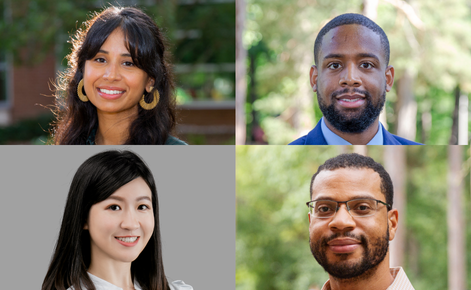
Headshots of Tasmin Dhaliwal, Jerome Graham, Andrew Johnson and Yi-Chih Chang.
Top row: Assistant Professors Tasmin Dhaliwal and Jerome Graham. Bottom row: Doctoral students Yi-Chih Chiang and Andrew S. Johnson.

“We urge policymakers and education leaders to prohibit the use of corporal punishment in schools immediately,” said Tasmin Dhaliwal, an assistant professor at the MSU College of Education and the lead author of the research. “This practice shockingly continues today, despite overwhelming evidence that its use is harmful to children.”  

The research’s co-authors include Assistant Professor Jerome Graham and doctoral students Yi-Chich Chiang (K-12 Educational Administration) and Andrew S. Johnson (Education Policy). Their work was published in the Educational Evaluation and Educational Policy journal. 

The research examined 2017-18 academic year data from 15 states that do not prohibit corporal punishment in their state codes and that report using the practices: Alabama, Arizona, Arkansas, Florida, Georgia, Indiana, Kentucky, Louisiana, Mississippi, Missouri, North Carolina, Oklahoma, South Carolina, Tennessee and Texas.* The researchers examined data including education codes, administrative regulations, guidance documents and data from the U.S. Department of Education’s Civil Rights Data Collection** and Common Core of Data.  

In the words of one researcher, what they found was “shocking” and “egregious.”  

“We compared the ratio of corporal punishment use to the student population,” said Johnson. “We found how many times more likely Black students or students with disabilities or other demographics were more often published than their peers. The findings were stark.”  

Black students in all states examined in the study were, on average, more than 2.5 times as likely to be corporally punished as their white peers. Researchers found that elementary, rural and traditional public schools had the largest share of their students corporally punished. 

The power of language

The researchers examined language and found areas that may support why the practice has continued and how the purported need for corporal punishment has been legitimized.  

“The students were rarely referred to as children” in school/district-wide documents, said co-author Jerome Graham. The documents used other ways of referring to children to make the practice appear or feel more palatable, such as calling the children ‘delinquents’ or ‘disruptive individuals.’ They aren’t [referenced in the codes as] students, minors or children. They are described as delinquents. These types of characterizations of students fail to humanize individuals who (mis)behave and to recognize their status as young children.”   

The authors argue that this type of language is problematic because it can inform practice, and practice can inform language, starting a vicious cycle of justified harm.   

Moreover, the researchers uncovered how policies incorporated protections — but not for students receiving corporal punishment.  

“The vast majority of protections outlined in state codes are for people administering the punishment,” Graham added.  

Students, parents and caregivers have little sway over adjusting how or if these policies are enacted in schools. The researchers found the legal framework often did not require schools to notify parents before or after corporal punishment. Few states mandated an opt-out process, wherein parents could prohibit its use for their children. In some cases where there were opt-out processes, the process was burdensome. In Georgia, for example, caregivers must bring a note from a medical doctor indicating corporal punishment would disturb the child’s development.  

“We found few ways for students to argue for themselves,” Chiang said. “Often, the only way to challenge the practice was to sue the school.” 

Historical usage

The authors also situate the administration of corporal punishment in its socio-historical context.  

According to the researchers, corporal punishment was commonly used in U.S. schools in the 18th and 19th centuries to “bring order.” 

Since the U.S. school system excluded non-white students, white students were the first to experience corporal punishment in schools. Corporal punishment was normalized through since-debunked theories of human development and racial hierarchy that reasoned that children, specifically children of color, were more responsive to physical sensation than reason. Some early critics opposed its practice on white students because they feared it “might socialize them to ‘develop the character or temper of a slave.'”  

In the 1970s, the practice was still legally permitted in 44 states. Since then, its legal usage in public schools has declined in most areas.  

How to stop corporal punishment in schools

So why has corporal punishment had such staying power?  

The researchers argue that it is a combination of history, how it has been rationalized and simply because it is still legally allowed. In the 15 states studied, some — but not all — individual schools chose to implement safeguards or limitations on corporal punishment.  

“Our data show that without its outright prohibition across the state or nationally, some schools will continue to use it and use it disproportionately for marginalized student groups,” Dhaliwal said. “We cannot rely on time and changes in public opinion to move away from the practice. Decisive action by state lawmakers is necessary to eradicate its use.”  

——— 

*In 2023, U.S. Secretary of Education Miguel Cardona called for states to prohibit corporal punishment in schools immediately. In the letter, Cardona shared details on which states allow (or at least do not expressly prohibit) corporal punishment, including the 15 states in this study. Some within that category allow corporal punishment in schools, but not for students with disabilities.  

**The research examined the 2017-18 school year of the Civil Rights Data Collection, which was the most recent at the time of article writing and review. Data from the 2020-21 school year has been released but was outside the scope of this research.  

The research in this article was included in a collection of articles for a special issue of Educational Evaluation and Educational Policy, which focused on critical examinations of policy in education research and was guest edited by Dominique Baker, Huriya Jabbar and Erica Turner. 

All the researchers in this study are part of the MSU College of Education Department of Educational Administration. 

Diversity, Equity and InclusionFaculty and StaffResearch and Grants

Programs

  • Undergraduate Programs
  • Master's Programs
  • Doctoral Programs
  • Online Programs

Academic Departments

  • Counseling, Educational Psychology & Special Education
  • Educational Administration
  • Kinesiology
  • Teacher Education

For Students

  • Graduate Support
  • Undergraduate Support
  • Scholarships
  • Assistantships

For Faculty & Staff

  • Communications
  • Data & Analytics
  • Human Resources
  • Policies, Committees & More
  • Tech Services

Our College

  • Office of the Dean
  • Imagin[ED] 2030 Strategic Plan
  • Mission
  • Directory
  • Centers & Institutes
  • Accolades & Awards
  • Rankings
  • Subscribe to our Newsletter
  • "New Educator" Magazine
  • News
  • Jobs

Contact us

(517) 355-1734

Address

Michigan State University College of Education 620 Farm Lane East Lansing, MI 48824

Releases and Statements

Follow Us

  • Visit our Facebook page
  • Visit our page on X
  • Visit our Instagram page
  • Visit our LinkedIn page
  • Visit our YouTube page

If you're having accessibility issues, please let us know.

Know More: Campus Safety Information and ResourcesTransparency Reporting: Budget & Salary/Compensation
  • Contact Information|
  • Site Map|
  • Privacy Statement|
  • Site Accessibility|
  • Call MSU: (517) 355-1855|
  • Visit: msu.edu|
  • Notice of Nondiscrimination|

SPARTANS WILL|© Michigan State University|