Jump to HeaderJump to Main ContentJump to Footer
Michigan State University
College of Education
  • Strategic Plan
  • Resources
  • People Directory
  • Alums
  • Contact
  • Give

College of Education

  • About
    • Mission & History
    • Strategic Plan
    • Points of Distinction
    • Leadership
    • Academic Departments, Centers, Institutes & Offices
    • Faculty and Staff Directory
    • Inclusion & Diversity
    • Outreach Efforts
    • Buildings & Facilities
    • Career Opportunities
    • Ways to Give
    Dean Jerlando Jackson stands in front of a sign that reads Michigan State University.

    Meet Dean Jackson

    Meet Dean Jerlando F. L. Jackson
  • |
  • Academics
    • Majors & Degree-Granting Programs
    • Undergraduate Programs
    • Master's Studies
    • Doctoral Studies
    • Online Studies
    • Graduate Certificates & Specializations
    • Undergraduate Student Support
    • Graduate Student Support
    • Assistantships
    • Scholarships
    • Accreditation
    Five Spartans pose for a photo in a row during an awards ceremony; three are holding paper awards and wearing medallions around their neck with a turquiose ribbon.

    Record-setting KIN Spartans

    Alums make history with national KIN honors
  • |
  • Certifications
    • Become Certified or Add an Endorsement
    • School Psychologist Certification
    • Student Affairs Office
    • MSU Academic Programs Catalog
    • MSU Office of Accreditation, Assessment, Curriculum & Compliance
    Individual bikes on MSU's campus

    Educator Preparation & Accreditation

    Explore our efforts
  • |
  • Research
    • Office of Research Administration
    • Centers & Institutes
    • Student Research Opportunities
    • Research & Award News
    • Faculty Directory
    Spartan statue with the sun peeking around the top of the statue

    MSU scholars earn William T. Grant Foundation awards

    Read about our research objectives
  • |
  • Outreach
    • Policy
    • K-12 Schools & Districts
    • Urban Areas
    • International Areas
    • Alumni
    • Institute for the Study of Youth Sports
    • Office of Access & Community Engagement
    • Office of International Studies in Education
    • Office of K-12 Outreach
    • All Offices, Centers & Institutes
    Young children line up for an activity in IM Sports circle. The children wear bright green shirts.

    Detroit youth learn about movement at MSU

    Explore the KIN Day of Action
  • |
  • News & Events
    • News
    • New Educator Magazine
    • Subscribe: ReviewED Newsletter
    • Events Listing
    Kristen Bieda wearing a blue blouse and glasses. There is a bookshelf full of books in the background.

    Celebrating: Kristen Bieda

    Bieda named Department of Teacher Education Chair
College of Education
  • About
  • Academics
  • Certifications
  • Research
  • Outreach
  • News & Events

< About

  • Mission & History
  • Strategic Plan
  • Points of Distinction
  • Leadership
  • Academic Departments, Centers, Institutes & Offices
  • Faculty and Staff Directory
  • Inclusion & Diversity
  • Outreach Efforts
  • Buildings & Facilities
  • Career Opportunities
  • Ways to Give
Dean Jerlando Jackson stands in front of a sign that reads Michigan State University.

Meet Dean Jackson

Meet Dean Jerlando F. L. Jackson

< Academics

  • Majors & Degree-Granting Programs
  • Undergraduate Programs
  • Master's Studies
  • Doctoral Studies
  • Online Studies
  • Graduate Certificates & Specializations
  • Undergraduate Student Support
  • Graduate Student Support
  • Assistantships
  • Scholarships
  • Accreditation
Five Spartans pose for a photo in a row during an awards ceremony; three are holding paper awards and wearing medallions around their neck with a turquiose ribbon.

Record-setting KIN Spartans

Alums make history with national KIN honors

< Certifications

  • Become Certified or Add an Endorsement
  • School Psychologist Certification
  • Student Affairs Office
  • MSU Academic Programs Catalog
  • MSU Office of Accreditation, Assessment, Curriculum & Compliance
Individual bikes on MSU's campus

Educator Preparation & Accreditation

Explore our efforts

< Research

  • Office of Research Administration
  • Centers & Institutes
  • Student Research Opportunities
  • Research & Award News
  • Faculty Directory
Spartan statue with the sun peeking around the top of the statue

MSU scholars earn William T. Grant Foundation awards

Read about our research objectives

< Outreach

  • Policy
  • K-12 Schools & Districts
  • Urban Areas
  • International Areas
  • Alumni
  • Institute for the Study of Youth Sports
  • Office of Access & Community Engagement
  • Office of International Studies in Education
  • Office of K-12 Outreach
  • All Offices, Centers & Institutes
Young children line up for an activity in IM Sports circle. The children wear bright green shirts.

Detroit youth learn about movement at MSU

Explore the KIN Day of Action

< News & Events

  • News
  • New Educator Magazine
  • Subscribe: ReviewED Newsletter
  • Events Listing
Kristen Bieda wearing a blue blouse and glasses. There is a bookshelf full of books in the background.

Celebrating: Kristen Bieda

Bieda named Department of Teacher Education Chair
  • Strategic Plan
  • Resources
  • People Directory
  • Alums
  • Contact
  • Give
Faculty and Staff

Aug. 7, 2023 | Read time 4 min

Teacher reflections & MSU research: Pre-K during COVID-19

Summary

Research from Michigan State University scholars is examining what the first year of teaching during COVID-19 was like for 25 pre-K teachers in Michigan.

Research from Michigan State University scholars is examining what the first year of teaching during COVID-19 was like for 25 pre-K teachers in Michigan.

The work was led by Associate Professor Bethany Wilinski and Assistant Professor Alyssa Morley from the College of Education and Assistant Professor Jamie Heng-Chieh Wu from the College of Social Science. Their research, published in the Early Childhood Education Journal, suggests three central themes that guided teachers then — and could have implications for education in the future.

Supporting families

In the earliest days of the pandemic, learning or teaching was not the focus. Instead, it was a culture of care.

Bethany Wilinski headshot; she wears a black and white stripe shirt under a black cardigan. Her brown hair is cut about chin-length.
Bethany Wilinski

“We did a lot less teaching in April [2020] and a lot more … providing families with resources as opposed to providing lessons,” said one educator quoted in the study. “We were just supporting [students’] families.”

Examples included teachers working with school districts to provide meals for families and working with community organizations (such as YMCA) to distribute diapers. In one case, a teacher helped a family secure housing when the teacher learned they had no place to live.

Fostering partnerships

“[When COVID came, teachers] had to just immediately leave the school. No materials, no lessons,” said an administrator in the study. “[The teachers] were, like, ‘Now, what am I going to do?‘"
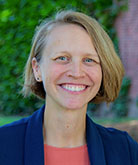
Alyssa Morley smiles for the camera while standing outside of a brick and ivy-covered building. Morley wears a coral shirt under a navy blue blazer. Morley's blonde hair is chin-length.

Among the priorities was connecting with caregivers and working together to help the students learn. Teachers often relied on families to facilitate asynchronous lessons, such as with paper packets or pre-recorded videos. They also sometimes asked families to assist during live, online class sessions. The educators and administrators in the study argued the necessary and temporary learning situation fostered increased caregiver involvement.

“I have never in my 25 years seen the amount of family engagement that we have had this year [2020],” said one school official. “I think our communication modes with families will never go back [to the way they were pre-pandemic].”

Making learning accessible

One school in the study created “home learning kits” to help families follow lessons and even conduct lessons on their own. Other teachers turned to household items, such as sorting socks or counting utensils, to keep kids engaged.

“At a time when there was no script,” the article reads, “teachers developed approaches to support children’s learning that demonstrated an awareness of families’ situations and drew on the resources available to them.”

The pandemic also created a modern shift in policies. Pre-pandemic, school policies often required teachers to use specific platforms or applications to communicate with families. The policies were relaxed during COVID-19. Teachers established Facebook groups, provided their cell phone numbers so families could call or text them, and held daily “office hours” where parents could join a Zoom call to chat.

Teaching as improvization

Amongst the “limited” literature on family engagement practices in early childhood education settings throughout COVID, this article examines the response in a new way: teaching as improvisation.

“Teachers partnered with families in entirely new ways they might never have explored during ‘normal’ times,” said Wilinski. “[Viewing teachers’ response through this lens] directs attention to the creative and responsive practice of pre-K teaching.”

Wilinski and her coauthors liken teaching, in this study, to a series of scripts. Teachers must follow the “scripts” of policy, curricula, building and classroom norms or limitations. It shapes the day-to-day classroom life.

But, teachers must also be adaptable — or improvise.

In the case of this study, the teachers adopted a “yes, and” mentality to allow the “scene” to continue.

“The experiences of teachers in this study highlight approaches that emerge when assumptions of practice are deeply disrupted,” Wilinski explained. “They show what is possible when ‘scripts’ — policies, insular practice, relations of power and so on — can no longer be taken for granted.”

Such ways of thinking and doing could inform practice in the future. Some schools have maintained COVID-19 policies indefinitely, such as allowing varied communication modalities with families.

“Educators and policymakers are imagining what a post-pandemic educational landscape might look like,” Wilinski added. “We hope that these examples of highly responsive teaching and family engagement that center on the needs and well-being of children and families can help form that vision. Reconceptualizing family engagement as an improvisational practice can help to transform pre-K teaching in a post-pandemic world.”


Wilinski, Morley and Hu are also co-authors on “Uncovering new opportunities for family engagement during COVID-19” (Phi Delta Kappan, 2022).

Learn about our Teacher Preparation Program: education.msu.edu/teacher-preparation

Faculty and StaffResearch and Grants

Programs

  • Undergraduate Programs
  • Master's Programs
  • Doctoral Programs
  • Online Programs

Academic Departments

  • Counseling, Educational Psychology & Special Education
  • Educational Administration
  • Kinesiology
  • Teacher Education

For Students

  • Graduate Support
  • Undergraduate Support
  • Scholarships
  • Assistantships

For Faculty & Staff

  • Communications
  • Data & Analytics
  • Human Resources
  • Policies, Committees & More
  • Tech Services

Our College

  • Office of the Dean
  • Imagin[ED] 2030 Strategic Plan
  • Mission
  • Directory
  • Centers & Institutes
  • Accolades & Awards
  • Rankings
  • Subscribe to our Newsletter
  • "New Educator" Magazine
  • News
  • Jobs

Contact us

(517) 355-1734

Address

Michigan State University College of Education 620 Farm Lane East Lansing, MI 48824

Releases and Statements

Follow Us

  • Visit our Facebook page
  • Visit our page on X
  • Visit our Instagram page
  • Visit our LinkedIn page
  • Visit our YouTube page

If you're having accessibility issues, please let us know.

Know More: Campus Safety Information and ResourcesTransparency Reporting: Budget & Salary/Compensation
  • Contact Information|
  • Site Map|
  • Privacy Statement|
  • Site Accessibility|
  • Call MSU: (517) 355-1855|
  • Visit: msu.edu|
  • Notice of Nondiscrimination|

SPARTANS WILL|© Michigan State University|