Jump to HeaderJump to Main ContentJump to Footer
Michigan State University
College of Education
  • Strategic Plan
  • Resources
  • People Directory
  • Alums
  • Contact
  • Give

College of Education

  • About
    • Mission & History
    • Strategic Plan
    • Points of Distinction
    • Leadership
    • Academic Departments, Centers, Institutes & Offices
    • Faculty and Staff Directory
    • Inclusion & Diversity
    • Outreach Efforts
    • Buildings & Facilities
    • Career Opportunities
    • Ways to Give
    Dean Jerlando Jackson stands in front of a sign that reads Michigan State University.

    Meet Dean Jackson

    Meet Dean Jerlando F. L. Jackson
  • |
  • Academics
    • Majors & Degree-Granting Programs
    • Undergraduate Programs
    • Master's Studies
    • Doctoral Studies
    • Online Studies
    • Graduate Certificates & Specializations
    • Undergraduate Student Support
    • Graduate Student Support
    • Assistantships
    • Scholarships
    • Accreditation
  • |
  • Certifications
    • Become Certified or Add an Endorsement
    • School Psychologist Certification
    • Student Affairs Office
    • MSU Academic Programs Catalog
    • MSU Office of Accreditation, Assessment, Curriculum & Compliance
    Individual bikes on MSU's campus

    Educator Preparation & Accreditation

    Explore our efforts
  • |
  • Research
    • Office of Research Administration
    • Centers & Institutes
    • Student Research Opportunities
    • Research & Award News
    • Faculty Directory
    Aerial view of a driver in a race car

    Cooler, safer race car tech via MSU study

    Read about our research
  • |
  • Outreach
    • Policy
    • K-12 Schools & Districts
    • Urban Areas
    • International Areas
    • Alumni
    • Institute for the Study of Youth Sports
    • Office of Access & Community Engagement
    • Office of International Studies in Education
    • Office of K-12 Outreach
    • All Offices, Centers & Institutes
    oise

    40+ years of the Office of International Studies

    Explore our impact
  • |
  • News & Events
    • News
    • New Educator Magazine
    • Subscribe: ReviewED Newsletter
    • Events Listing
    Ann Austin poses for the camera in front of a bookshelf

    Celebrating: Ann E. Austin

    Austin named Fellow of American Association for the Advancement of Science
College of Education
  • About
  • Academics
  • Certifications
  • Research
  • Outreach
  • News & Events

< About

  • Mission & History
  • Strategic Plan
  • Points of Distinction
  • Leadership
  • Academic Departments, Centers, Institutes & Offices
  • Faculty and Staff Directory
  • Inclusion & Diversity
  • Outreach Efforts
  • Buildings & Facilities
  • Career Opportunities
  • Ways to Give
Dean Jerlando Jackson stands in front of a sign that reads Michigan State University.

Meet Dean Jackson

Meet Dean Jerlando F. L. Jackson

< Academics

  • Majors & Degree-Granting Programs
  • Undergraduate Programs
  • Master's Studies
  • Doctoral Studies
  • Online Studies
  • Graduate Certificates & Specializations
  • Undergraduate Student Support
  • Graduate Student Support
  • Assistantships
  • Scholarships
  • Accreditation

< Certifications

  • Become Certified or Add an Endorsement
  • School Psychologist Certification
  • Student Affairs Office
  • MSU Academic Programs Catalog
  • MSU Office of Accreditation, Assessment, Curriculum & Compliance
Individual bikes on MSU's campus

Educator Preparation & Accreditation

Explore our efforts

< Research

  • Office of Research Administration
  • Centers & Institutes
  • Student Research Opportunities
  • Research & Award News
  • Faculty Directory
Aerial view of a driver in a race car

Cooler, safer race car tech via MSU study

Read about our research

< Outreach

  • Policy
  • K-12 Schools & Districts
  • Urban Areas
  • International Areas
  • Alumni
  • Institute for the Study of Youth Sports
  • Office of Access & Community Engagement
  • Office of International Studies in Education
  • Office of K-12 Outreach
  • All Offices, Centers & Institutes
oise

40+ years of the Office of International Studies

Explore our impact

< News & Events

  • News
  • New Educator Magazine
  • Subscribe: ReviewED Newsletter
  • Events Listing
Ann Austin poses for the camera in front of a bookshelf

Celebrating: Ann E. Austin

Austin named Fellow of American Association for the Advancement of Science
  • Strategic Plan
  • Resources
  • People Directory
  • Alums
  • Contact
  • Give

June 10, 2020

MSU researchers develop clearer, more intuitive method of relaying scientific results

Summary

Faced with confusing or contradictory COVID-19 health news, the public needs more help in understanding complex scientific studies. Michigan State University researchers say. “Scientific studies, especially those in health and medicine, are often interesting—or at least relevant—to the general public. If results are conveyed accurately and thoughtfully, the hope is that they can inform heathy… Read More »

Faced with confusing or contradictory COVID-19 health news, the public needs more help in understanding complex scientific studies. Michigan State University researchers say.

“Scientific studies, especially those in health and medicine, are often interesting—or at least relevant—to the general public. If results are conveyed accurately and thoughtfully, the hope is that they can inform heathy choices and behavior,” said Kenneth Frank, MSU Foundation professor of sociometrics and a professor in the Department of Counseling, Educational Psychology and Special Education. “The problem is that science isn’t certain. And it can be difficult to communicate the uncertainty of scientific results.”
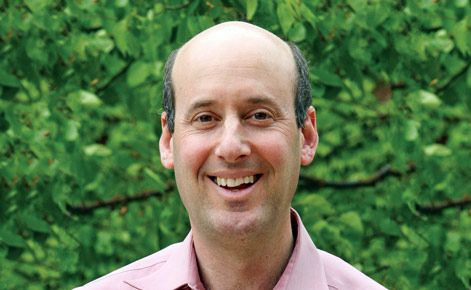
Kenneth Frank

A new paper authored by Frank and MSU colleagues Thomas Dietz and Lixin Zhang—as well as colleagues from University of Chicago, Arizona State University, the University of Connecticut, the University of Tennessee and Optinose Inc.—maps out a clearer and more effective way of expressing this uncertainty. Their method is all the more relevant now, since the coronavirus pandemic has jump-started the rate at which scientific information is disseminated.

Frank said that a good example of the difficulty in communicating study results comes from a recent talk by Anthony Fauci, the director of the National Institute for Allergy and Infectious Diseases. Fauci relayed trial results from a potential COVID-19 therapy, remdesivir: “Remdesivir improved recovery from 15 days to 11 days with a P value of 0.001. … We would have normally waited several more days. The data may change, but the conclusion won’t.”

Some people may be familiar with the P- value as a way of expressing certainty or uncertainty in a study result, but Frank said that the concept is unintelligible to most.

“Even Fauci doesn’t have the language to talk about this kind of finding in easily relatable terms,” said Frank, who teaches in the College of Education’s Measurement and Quantitative Methods doctoral program. “Many people can’t understand it. So, our goal is really to improve the conversation. We propose a novel way of framing the uncertainty of results in terms of patient outcomes, rather than P-values alone.”

The crux of the method is this: Results are defined as the number of patients who would have had to experience a different outcome for the study’s conclusion to change.

“In this way, the method generates statements such as ‘xx of the treatment cases that experienced improvement would have to have experienced no improvement to change the conclusion at conventional levels of statistical significance,’” Frank said.

Sometimes as little as one switch is necessary to shift the results from “significant” to “insignificant” or vice versa.

Take as an example an early randomized trial of hydroxychloroquine, a medication that has been tested as a potential treatment for COVID-19. Frank’s paper finds that if just one participant in the study had had a negative or neutral response rather than a positive one, it would shift the results from significant to insignificant.

“One switch is not a lot,” Frank said. “It means that an estimate is right on the borderline of what is typically considered conclusive-inconclusive. And the new scientific debate that has ensued about the hydroxychloroquine studies coming out reinforces that uncertainty.”

Frank and his team have already made the algorithm available to the public in the form of an app http://konfound-it.com that performs the calculation after the user inputs basic data found in most results tables; they are also sharing real-time updates on their blog.

Some researchers are already beginning to adopt the method and Frank’s hope is that more will begin to do so, adding the extra conceptualization to their papers as an addendum to the usual reporting of results.

“Communicating the uncertainty of new findings, especially now with COVID-19, in the relatable terms of patients’ experiences is critical for informing public policy and clinical practice,” Frank said. “It’s more accessible to clinicians, researchers and the public. The underscore for me is that we’re talking in the very human terms of patient experiences and outcomes. In other words, we’re talking about the people behind the P-values.”


This post, originally written by Caroline Brooks, first appeared on MSUToday.

Programs

  • Undergraduate Programs
  • Master's Programs
  • Doctoral Programs
  • Online Programs

Academic Departments

  • Counseling, Educational Psychology & Special Education
  • Educational Administration
  • Kinesiology
  • Teacher Education

For Students

  • Graduate Support
  • Undergraduate Support
  • Scholarships
  • Assistantships

For Faculty & Staff

  • Communications
  • Data & Analytics
  • Human Resources
  • Policies, Committees & More
  • Tech Services

Our College

  • Office of the Dean
  • Imagin[ED] 2030 Strategic Plan
  • Mission
  • Directory
  • Centers & Institutes
  • Accolades & Awards
  • Rankings
  • Subscribe to our Newsletter
  • "New Educator" Magazine
  • News
  • Jobs

Contact us

(517) 355-1734

Address

Michigan State University College of Education 620 Farm Lane East Lansing, MI 48824

Releases and Statements

Follow Us

  • Visit our Facebook page
  • Visit our page on X
  • Visit our Instagram page
  • Visit our LinkedIn page
  • Visit our YouTube page

If you're having accessibility issues, please let us know.

Know More: Campus Safety Information and ResourcesTransparency Reporting: Budget & Salary/Compensation
  • Contact Information|
  • Site Map|
  • Privacy Statement|
  • Site Accessibility|
  • Call MSU: (517) 355-1855|
  • Visit: msu.edu|
  • Notice of Nondiscrimination|

SPARTANS WILL|© Michigan State University|