Jump to HeaderJump to Main ContentJump to Footer
Michigan State University
College of Education
  • Strategic Plan
  • Resources
  • People Directory
  • Alums
  • Contact
  • Give

College of Education

  • About
    • Mission & History
    • Strategic Plan
    • Points of Distinction
    • Leadership
    • Academic Departments, Centers, Institutes & Offices
    • Faculty and Staff Directory
    • Inclusion & Diversity
    • Outreach Efforts
    • Buildings & Facilities
    • Career Opportunities
    • Ways to Give
    Dean Jerlando Jackson stands in front of a sign that reads Michigan State University.

    Meet Dean Jackson

    Meet Dean Jerlando F. L. Jackson
  • |
  • Academics
    • Majors & Degree-Granting Programs
    • Undergraduate Programs
    • Master's Studies
    • Doctoral Studies
    • Online Studies
    • Graduate Certificates & Specializations
    • Undergraduate Student Support
    • Graduate Student Support
    • Assistantships
    • Scholarships
    • Accreditation
  • |
  • Certifications
    • Become Certified or Add an Endorsement
    • School Psychologist Certification
    • Student Affairs Office
    • MSU Academic Programs Catalog
    • MSU Office of Accreditation, Assessment, Curriculum & Compliance
    Individual bikes on MSU's campus

    Educator Preparation & Accreditation

    Explore our efforts
  • |
  • Research
    • Office of Research Administration
    • Centers & Institutes
    • Student Research Opportunities
    • Research & Award News
    • Faculty Directory
    Aerial view of a driver in a race car

    Cooler, safer race car tech via MSU study

    Read about our research
  • |
  • Outreach
    • Policy
    • K-12 Schools & Districts
    • Urban Areas
    • International Areas
    • Alumni
    • Institute for the Study of Youth Sports
    • Office of Access & Community Engagement
    • Office of International Studies in Education
    • Office of K-12 Outreach
    • All Offices, Centers & Institutes
    oise

    40+ years of the Office of International Studies

    Explore our impact
  • |
  • News & Events
    • News
    • New Educator Magazine
    • Subscribe: ReviewED Newsletter
    • Events Listing
    Ann Austin poses for the camera in front of a bookshelf

    Celebrating: Ann E. Austin

    Austin named Fellow of American Association for the Advancement of Science
College of Education
  • About
  • Academics
  • Certifications
  • Research
  • Outreach
  • News & Events

< About

  • Mission & History
  • Strategic Plan
  • Points of Distinction
  • Leadership
  • Academic Departments, Centers, Institutes & Offices
  • Faculty and Staff Directory
  • Inclusion & Diversity
  • Outreach Efforts
  • Buildings & Facilities
  • Career Opportunities
  • Ways to Give
Dean Jerlando Jackson stands in front of a sign that reads Michigan State University.

Meet Dean Jackson

Meet Dean Jerlando F. L. Jackson

< Academics

  • Majors & Degree-Granting Programs
  • Undergraduate Programs
  • Master's Studies
  • Doctoral Studies
  • Online Studies
  • Graduate Certificates & Specializations
  • Undergraduate Student Support
  • Graduate Student Support
  • Assistantships
  • Scholarships
  • Accreditation

< Certifications

  • Become Certified or Add an Endorsement
  • School Psychologist Certification
  • Student Affairs Office
  • MSU Academic Programs Catalog
  • MSU Office of Accreditation, Assessment, Curriculum & Compliance
Individual bikes on MSU's campus

Educator Preparation & Accreditation

Explore our efforts

< Research

  • Office of Research Administration
  • Centers & Institutes
  • Student Research Opportunities
  • Research & Award News
  • Faculty Directory
Aerial view of a driver in a race car

Cooler, safer race car tech via MSU study

Read about our research

< Outreach

  • Policy
  • K-12 Schools & Districts
  • Urban Areas
  • International Areas
  • Alumni
  • Institute for the Study of Youth Sports
  • Office of Access & Community Engagement
  • Office of International Studies in Education
  • Office of K-12 Outreach
  • All Offices, Centers & Institutes
oise

40+ years of the Office of International Studies

Explore our impact

< News & Events

  • News
  • New Educator Magazine
  • Subscribe: ReviewED Newsletter
  • Events Listing
Ann Austin poses for the camera in front of a bookshelf

Celebrating: Ann E. Austin

Austin named Fellow of American Association for the Advancement of Science
  • Strategic Plan
  • Resources
  • People Directory
  • Alums
  • Contact
  • Give

Oct. 30, 2018

MSU research helps diabetic racecar drivers go four-seconds faster

Summary

Two new publications from Michigan State University’s David Ferguson highlight the world of motorsports—and give critical competitive-edge insights for athletes, especially those with diabetes. “With racing, driver heart rates are at 170 beats per minute for 2 to 4 hours. They burn 2,000 calories. Their core temperature can increase to 103 degrees Fahrenheit depending on… Read More »

Two new publications from Michigan State University’s David Ferguson highlight the world of motorsports—and give critical competitive-edge insights for athletes, especially those with diabetes.

“With racing, driver heart rates are at 170 beats per minute for 2 to 4 hours. They burn 2,000 calories. Their core temperature can increase to 103 degrees Fahrenheit depending on the ambient environment. They are undergoing immense physical stress at 200 miles per hour,” said Ferguson, an assistant professor in the Department of Kinesiology. The physicality can influence diabetic racers, who have to keep in mind their own bodily needs on top of the intense sport.
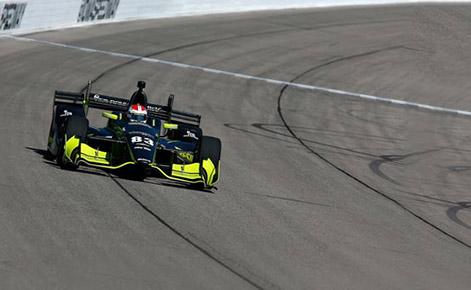
Charlie Kimball drives on a racetrack

IndyCar Series driver Charlie Kimball. Photo courtesy of LAT Photo USA.

The four-second difference

IndyCar driver Charlie Kimball, a long-time partner in research with Ferguson, is featured in both publications.

When Kimball, a Type 1 diabetic, first started racing in the “elite level” in 2010, he was one of the very few racers to be a diabetic. Ferguson has spent the last six years working with Kimball to determine Kimball’s physical fitness, how it changed over time and how diabetes had an impact, if any, on his racing performance. The research was highlighted in the 2016-17 New Educator—and a September publication in the Journal of Strength and Conditioning with fellow MSU scholar Nicholas Myers is the “conclusion” of the story.

“The research is specific to all diabetic racers, though it is a case study on Charlie,” said Ferguson.

Since Kimball began racing, the number of male Type 1 diabetic drivers has escalated to more than one hundred in eight years across all levels of racing. To date, there are no female diabetic racers that Ferguson was able to identify.

“Drivers are seeing, if Charlie can do it, so can I. We’ve been researching how blood glucose influences performance, but individuals don’t always have the finances, physicians or research backing them like Charlie. Racers need this information.”

Ferguson and Myers found through the years of data and testing that the typical driver has a “sweet spot” of blood glucose in which they are four seconds faster than when they are outside that range: 140-168 milligrams/deciliter. The researchers found this over and over in test results, and regardless of track type.

“In the context of racing, this glucose window is ideal for performance. With that being said, someone who has a normally functioning pancreas (non-diabetic) will already be in that range. To get on a level playing field, this is the info drivers with diabetes need,” said Ferguson.
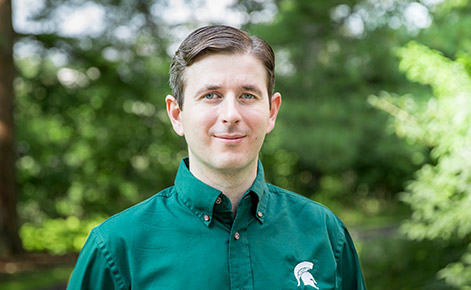
David Ferguson headshot

David Ferguson

Racing: More than just turning left

Kimball also contributed a chapter to a book Ferguson edited: “The Science of Motorsport” (Routledge, 2019).

Comprised of practitioner experience and academic research, including a chapter on psychology from Karl Erickson and Dan Gould of MSU, the textbook covers all facets of racing, including IndyCar, NASCAR, Formula 1 and others. It is an important addition to an understudied area, and provides an accessible and up-to-date resource for stakeholders at all levels of motorsport.

“The book addresses physiology, sports medicine, nutrition, psychology, physical training, safety, managing a concussion and information for pit crews and officials on and off the track,” Ferguson said.

Ferguson collaborated with leaders in the industry—such as Jeff Horton and Dr. Terry Trammel, the head engineer and physician from IndyCar—to contribute chapters. Ferguson wrote the introduction with 2017 Kinesiology graduate Lydia Pineault, and a chapter on driver and team interactions.

“This book shares all the data we know, and how it can be beneficial to drivers,” Ferguson continued. “We haven’t unlocked all the physiology of racers just yet, but this is a big step in getting there.”

Programs

  • Undergraduate Programs
  • Master's Programs
  • Doctoral Programs
  • Online Programs

Academic Departments

  • Counseling, Educational Psychology & Special Education
  • Educational Administration
  • Kinesiology
  • Teacher Education

For Students

  • Graduate Support
  • Undergraduate Support
  • Scholarships
  • Assistantships

For Faculty & Staff

  • Communications
  • Data & Analytics
  • Human Resources
  • Policies, Committees & More
  • Tech Services

Our College

  • Office of the Dean
  • Imagin[ED] 2030 Strategic Plan
  • Mission
  • Directory
  • Centers & Institutes
  • Accolades & Awards
  • Rankings
  • Subscribe to our Newsletter
  • "New Educator" Magazine
  • News
  • Jobs

Contact us

(517) 355-1734

Address

Michigan State University College of Education 620 Farm Lane East Lansing, MI 48824

Releases and Statements

Follow Us

  • Visit our Facebook page
  • Visit our page on X
  • Visit our Instagram page
  • Visit our LinkedIn page
  • Visit our YouTube page

If you're having accessibility issues, please let us know.

Know More: Campus Safety Information and ResourcesTransparency Reporting: Budget & Salary/Compensation
  • Contact Information|
  • Site Map|
  • Privacy Statement|
  • Site Accessibility|
  • Call MSU: (517) 355-1855|
  • Visit: msu.edu|
  • Notice of Nondiscrimination|

SPARTANS WILL|© Michigan State University|