Jump to HeaderJump to Main ContentJump to Footer
Michigan State University
College of Education
  • Strategic Plan
  • Resources
  • People Directory
  • Alums
  • Contact
  • Give

College of Education

  • About
    • Mission & History
    • Strategic Plan
    • Points of Distinction
    • Leadership
    • Academic Departments, Centers, Institutes & Offices
    • Faculty and Staff Directory
    • Inclusion & Diversity
    • Outreach Efforts
    • Buildings & Facilities
    • Career Opportunities
    • Ways to Give
    Dean Jerlando Jackson stands in front of a sign that reads Michigan State University.

    Meet Dean Jackson

    Meet Dean Jerlando F. L. Jackson
  • |
  • Academics
    • Majors & Degree-Granting Programs
    • Undergraduate Programs
    • Master's Studies
    • Doctoral Studies
    • Online Studies
    • Graduate Certificates & Specializations
    • Undergraduate Student Support
    • Graduate Student Support
    • Assistantships
    • Scholarships
    • Accreditation
  • |
  • Certifications
    • Become Certified or Add an Endorsement
    • School Psychologist Certification
    • Student Affairs Office
    • MSU Academic Programs Catalog
    • MSU Office of Accreditation, Assessment, Curriculum & Compliance
    Individual bikes on MSU's campus

    Educator Preparation & Accreditation

    Explore our efforts
  • |
  • Research
    • Office of Research Administration
    • Centers & Institutes
    • Student Research Opportunities
    • Research & Award News
    • Faculty Directory
    Aerial view of a driver in a race car

    Cooler, safer race car tech via MSU study

    Read about our research
  • |
  • Outreach
    • Policy
    • K-12 Schools & Districts
    • Urban Areas
    • International Areas
    • Alumni
    • Institute for the Study of Youth Sports
    • Office of Access & Community Engagement
    • Office of International Studies in Education
    • Office of K-12 Outreach
    • All Offices, Centers & Institutes
    oise

    40+ years of the Office of International Studies

    Explore our impact
  • |
  • News & Events
    • News
    • New Educator Magazine
    • Subscribe: ReviewED Newsletter
    • Events Listing
    Ann Austin poses for the camera in front of a bookshelf

    Celebrating: Ann E. Austin

    Austin named Fellow of American Association for the Advancement of Science
College of Education
  • About
  • Academics
  • Certifications
  • Research
  • Outreach
  • News & Events

< About

  • Mission & History
  • Strategic Plan
  • Points of Distinction
  • Leadership
  • Academic Departments, Centers, Institutes & Offices
  • Faculty and Staff Directory
  • Inclusion & Diversity
  • Outreach Efforts
  • Buildings & Facilities
  • Career Opportunities
  • Ways to Give
Dean Jerlando Jackson stands in front of a sign that reads Michigan State University.

Meet Dean Jackson

Meet Dean Jerlando F. L. Jackson

< Academics

  • Majors & Degree-Granting Programs
  • Undergraduate Programs
  • Master's Studies
  • Doctoral Studies
  • Online Studies
  • Graduate Certificates & Specializations
  • Undergraduate Student Support
  • Graduate Student Support
  • Assistantships
  • Scholarships
  • Accreditation

< Certifications

  • Become Certified or Add an Endorsement
  • School Psychologist Certification
  • Student Affairs Office
  • MSU Academic Programs Catalog
  • MSU Office of Accreditation, Assessment, Curriculum & Compliance
Individual bikes on MSU's campus

Educator Preparation & Accreditation

Explore our efforts

< Research

  • Office of Research Administration
  • Centers & Institutes
  • Student Research Opportunities
  • Research & Award News
  • Faculty Directory
Aerial view of a driver in a race car

Cooler, safer race car tech via MSU study

Read about our research

< Outreach

  • Policy
  • K-12 Schools & Districts
  • Urban Areas
  • International Areas
  • Alumni
  • Institute for the Study of Youth Sports
  • Office of Access & Community Engagement
  • Office of International Studies in Education
  • Office of K-12 Outreach
  • All Offices, Centers & Institutes
oise

40+ years of the Office of International Studies

Explore our impact

< News & Events

  • News
  • New Educator Magazine
  • Subscribe: ReviewED Newsletter
  • Events Listing
Ann Austin poses for the camera in front of a bookshelf

Celebrating: Ann E. Austin

Austin named Fellow of American Association for the Advancement of Science
  • Strategic Plan
  • Resources
  • People Directory
  • Alums
  • Contact
  • Give

Nov. 15, 2013

How teens choose their friends

Summary

It’s a common perception portrayed in movies from “The Breakfast Club” to “Mean Girls.” Teenage friendships are formed by joining cliques such as jocks, geeks and goths. But a national study led by a Michigan State University scholar finds that the courses students take have powerful effects on the friendships they make. The study was… Read More »

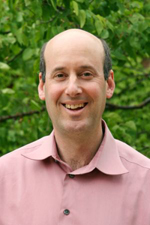
Kenneth Frank

Kenneth Frank

It’s a common perception portrayed in movies from “The Breakfast Club” to “Mean Girls.” Teenage friendships are formed by joining cliques such as jocks, geeks and goths.

But a national study led by a Michigan State University scholar finds that the courses students take have powerful effects on the friendships they make. The study was funded by the National Science Foundation and the National Institutes of Health.

The findings, published in the American Journal of Sociology, indicate the pattern of course-taking is distinctive to each high school. In one school, for example, friendships may form among students taking woodshop, Spanish and European history, while in another it may be among students taking agricultural business management, advanced accounting and calculus.

“People generally want to think that kids are choosing their friends from the well-known categories like jocks and nerds – that it’s like “The Breakfast Club” and the same at every school,” said Kenneth Frank, professor in MSU’s College of Education.

“But our argument is that the opportunities an adolescent has to choose friends are guided by the courses the adolescent takes and the other students who take the courses with them. Moreover, the pattern of opportunities differs from school to school.”

Frank and colleagues analyzed survey data and academic transcripts from some 3,000 students at 78 high schools across the United States. The researchers developed a new computer algorithm and software to identify the unique sets of students and courses from the transcripts in each school.

Students were more likely to make friends in small classes, often electives, which set them off from the general student population. Friendships were more likely to be created in Latin 4 and woodshop, for example, than in a large physical education class that is required of everyone in a particular grade.

Students who take the same set of courses tend to get to know each another very well and focus less on social status, such as how “cool” someone is. They’re also less likely to judge classmates on visible characteristics like race and gender.

In addition, Frank said girls are more likely to take more demanding math classes if other girls in their shared sets of courses took advanced math. “In other words,” he said, “the peer groups that formed around shared courses had implications for students’ academic effort as well as their social world.”

The findings have implications for school administrators as well. Schools that simply offer classes without thought to mixing up high- and low-achieving students run the risk of driving them apart socially and academically, Frank said.

To combat this, he said schools could better highlight the value of certain academic pursuits – such as math – and also group students together in ninth grade so the low-achievers have high-achievers in their classes potentially throughout high school.

“This would give the students in the lower group a ‘beacon’ of sorts – or others who could be there as a marker to help them move along.”

Frank’s co-authors were Chandra Muller from the University of Texas and Anna Mueller from the University of Memphis.

Michigan State University

Programs

  • Undergraduate Programs
  • Master's Programs
  • Doctoral Programs
  • Online Programs

Academic Departments

  • Counseling, Educational Psychology & Special Education
  • Educational Administration
  • Kinesiology
  • Teacher Education

For Students

  • Graduate Support
  • Undergraduate Support
  • Scholarships
  • Assistantships

For Faculty & Staff

  • Communications
  • Data & Analytics
  • Human Resources
  • Policies, Committees & More
  • Tech Services

Our College

  • Office of the Dean
  • Imagin[ED] 2030 Strategic Plan
  • Mission
  • Directory
  • Centers & Institutes
  • Accolades & Awards
  • Rankings
  • Subscribe to our Newsletter
  • "New Educator" Magazine
  • News
  • Jobs

Contact us

(517) 355-1734

Address

Michigan State University College of Education 620 Farm Lane East Lansing, MI 48824

Releases and Statements

Follow Us

  • Visit our Facebook page
  • Visit our page on X
  • Visit our Instagram page
  • Visit our LinkedIn page
  • Visit our YouTube page

If you're having accessibility issues, please let us know.

Know More: Campus Safety Information and ResourcesTransparency Reporting: Budget & Salary/Compensation
Michigan State University
  • Contact Information|
  • Site Map|
  • Privacy Statement|
  • Site Accessibility|
  • Call MSU: (517) 355-1855|
  • Visit: msu.edu|
  • Notice of Nondiscrimination|

SPARTANS WILL|© Michigan State University|