Michigan State University’s programs in P-12 Leadership and K-12 Administration prepare educators for prominent leadership and policy roles in schools and educational organizations locally, nationally and internationally.
Preparing the Next Generation of School Leaders
Throughout all our programs—including master’s, Ed.D. and Ph.D. options—students are encouraged to study and build their careers to make a difference throughout classrooms, policy and beyond.
- Interested in school-level leadership?
- The M.A. in P-12 Educational Leadership program is designed to build knowledge and skills for effective administrator and teacher school leadership, and to link students to cutting-edge developments. It is approved by the Michigan Department of Education and qualifies graduates for school administrator certification and endorsements. Applicants who hold a master’s degree might qualify for the Certification Pathway Program.
- Interested in system- or district-level leadership?
- The Doctorate in Educational Leadership (EdD) is a program designed for working educational professionals. It highlights the practical application of knowledge and skills in effective systems, puts student in touch with policymakers and thought leaders and supports the creation of knowledge and educational solutions through group capstone projects.
- Interested in becoming a researcher or faculty member as your next career move?
- The Doctorate in K-12 Educational Administration (PhD) emphasizes inquiry and scholarship in preparation for academic or research careers at highly regarded universities or research and policy centers. Most students attend full-time, and are supported through doctoral assistantships.
Led by Renowned Faculty
Students will collaborate with nationally recognized faculty working on critical issues in school leadership and improvement, educational policy, international education and related areas.
National Partners
Since 2020, Michigan State University has served as host of the University Council for Educational Administration. MSU faculty, including Professors Terah Venzant Chambers and Gerardo López, served as past-presidents of the national organization.
Among the best
U.S. News & World Report in its annual graduate program rankings has consistently ranked the MSU College of Education across its program areas. In the 2026 U.S. News Best Education Schools Rankings, MSU’s programs in Educational Administration & Supervision ranked #2 in the nation. Check out other rankings!
Making a difference
Our programs work with external and internal programs to make a lasting change on schools and communities. We are committed to working hands-on in classroom environments in urban contexts and beyond.
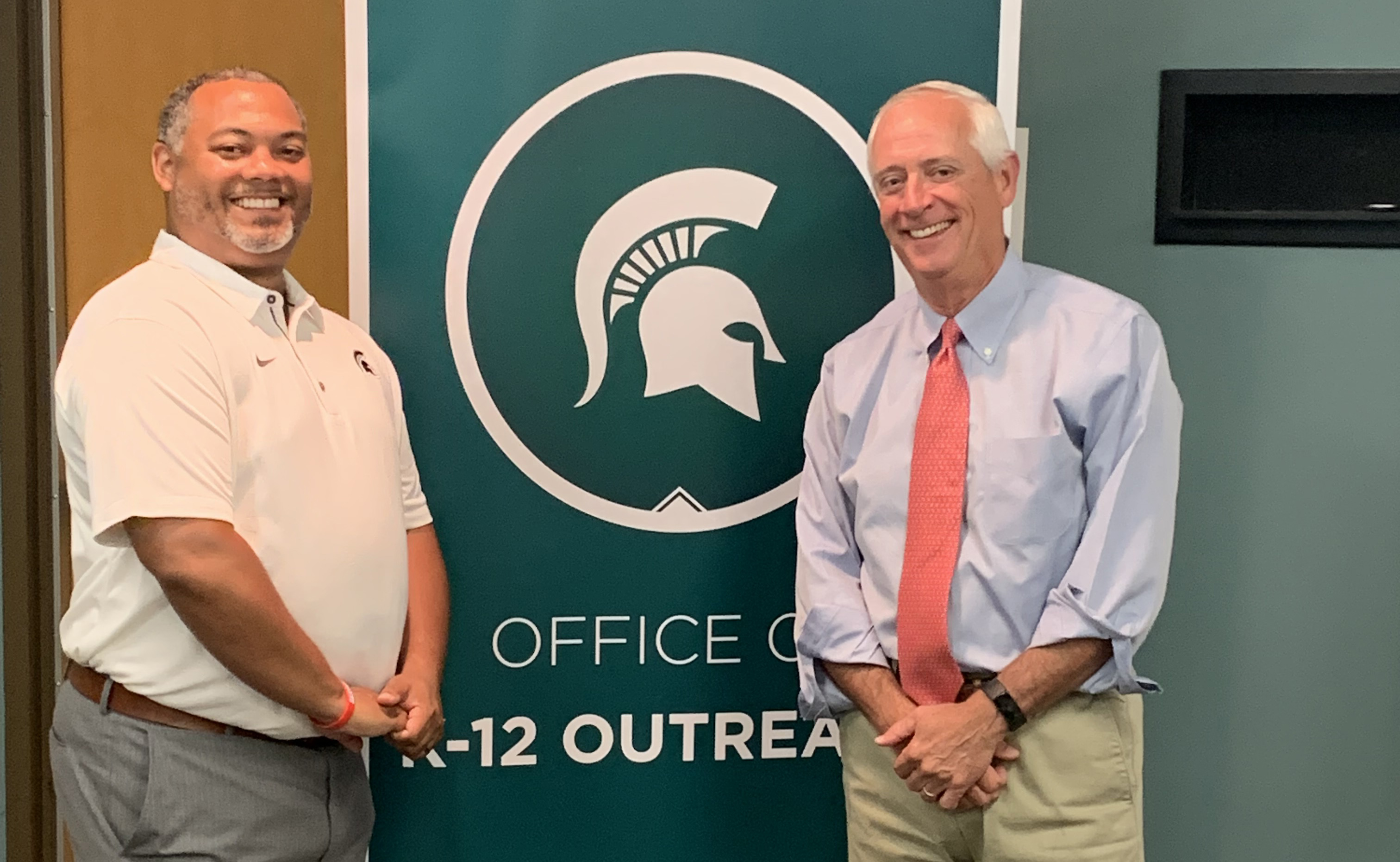
In the college, we work with the Office of K-12 Outreach to design informative and relevant professional development for Michigan educators.